
Hakeem “HK” Murray died on Nov. 24, 2017, less than a year after his brother T.Roy was killed. To people outside Chicago, HK’s name would later surface through King Von, Muwop, O’Block documentaries and the mythology surrounding Get Back Gang. To the people who knew him, the story was simpler and more painful: two brothers from the same family were gone within nine months.
HK was not a mainstream rapper and did not leave behind a major solo catalog. That is exactly why his story became so vulnerable to internet reconstruction. Over time, short clips, screenshots, lyrics, Reddit posts and YouTube documentaries turned his final months into a revenge narrative with a level of certainty the public record does not support.
This Raptology documentary separates what is documented from what is alleged, then looks at why HK’s name still matters to Chicago drill history years after his death.
Editorial standard: This article distinguishes police reporting, first-person recollections, music references and unverified street lore. Allegations about specific shootings or retaliation are not presented as fact unless supported by reliable public records.
HK’s Real Name Was Hakeem Murray
HK’s real name was Hakeem Murray. Contemporary reporting identified him as a 22-year-old Chicago resident who lived in Englewood and was fatally shot in the Parkway Gardens area on the night after Thanksgiving in 2017.
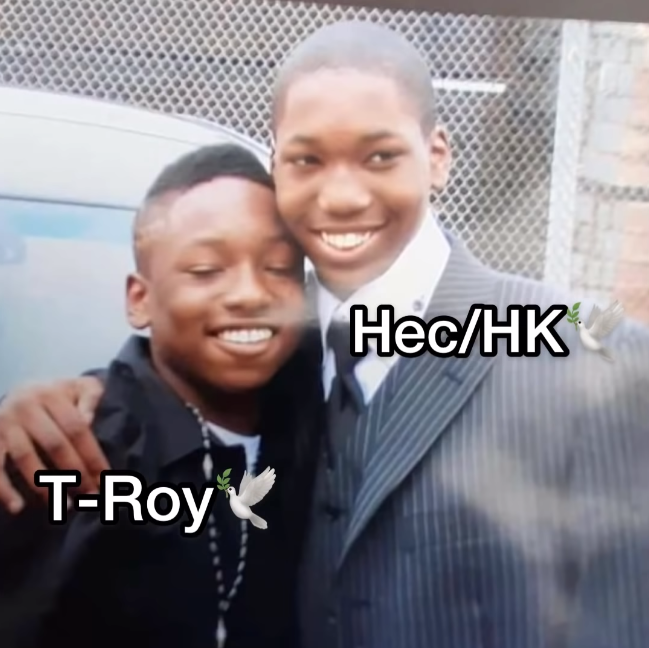
His connection to O’Block was not something invented later by fans. Murray moved within the same Parkway Gardens circle that included his brother T.Roy, King Von and other young men whose names later became part of drill music history.
One of the clearest first-person descriptions comes from O’Block rapper DQ. In a later interview, DQ described T.Roy and Slutty as older brothers, called HK the youngest of the group and said he had been close with HK on an everyday basis. That recollection matters because so much of HK’s biography has otherwise been reconstructed by people who never knew him.
The Family Connection to T.Roy
Any serious account of HK has to begin with T.Roy. James “T.Roy” Johnson was shot inside a South Shore store on Feb. 14, 2017. Chicago police said someone walked up to Johnson inside the store in the 2000 block of East 71st Street and shot him in the chest. He was taken to Northwestern Memorial Hospital, where he died. He was 23.
Raptology has already documented T.Roy’s place in O’Block history in The Legacy of T.Roy: The Chiraq Rambo. His death became one of the defining losses attached to O’Block’s 2017 story, and HK’s name became linked to his brother almost immediately afterward.
The internet version of the story often jumps directly from T.Roy’s death to alleged retaliation. That is where caution is necessary. Social-media narratives frequently assign specific shootings to HK and describe his final months as a campaign of revenge. Some of those claims have been repeated for years, but repetition is not the same thing as a court record, police finding or named firsthand account.
What is certain is that HK lost his brother in February. By November, HK himself would be dead.
2017: Two Brothers Lost in Nine Months
James “T.Roy” Johnson is fatally shot inside a South Shore store. He dies at Northwestern Memorial Hospital.
Police respond to gunfire near Parkway Gardens and find Hakeem Murray shot multiple times in the 6400 block of South Calumet.
Murray is pronounced dead at Northwestern Memorial Hospital. He is 22 years old.
Get Featured on Raptology
Independent artist, label or manager? Raptology publishes professionally edited artist features, interviews and long-form stories for serious emerging talent.
Submit Your MusicThe Final Hours: What Police Reporting Actually Establishes
The confirmed account of HK’s final hours is brief.
Shortly before 8 p.m. on Friday, Nov. 24, 2017, Chicago police responded to a call of shots fired in the 6400 block of South Calumet Avenue, in the Parkway Gardens area. Officers found Murray lying on the ground with multiple gunshot wounds.
He was transported to Northwestern Memorial Hospital and pronounced dead at 8:53 p.m., according to Chicago police and the Cook County medical examiner’s office. Contemporary reports identified him as 22 years old and said he lived in Englewood.
At the time, Area Central detectives were conducting a homicide investigation.
What Is Documented
- HK’s real name was Hakeem Murray.
- He was 22 when he died.
- He was shot on Nov. 24, 2017.
- Police found him in the 6400 block of South Calumet near Parkway Gardens.
- He had been shot multiple times.
- He was taken to Northwestern Memorial Hospital and pronounced dead at 8:53 p.m.
- Contemporary reporting did not identify a convicted killer in the public account reviewed for this documentary.
Those facts are enough to tell the core of the final-hours story. They do not establish the detailed chase narratives, names of alleged shooters or retaliation claims that circulate online.
Why So Many Versions of HK’s Death Exist
HK died at a moment when Chicago drill culture was already being documented in real time by social media, but not necessarily by traditional reporting. Posts were deleted. Accounts disappeared. People spoke in nicknames and coded references. Rival communities told different versions of the same events.
That environment created a problem that still exists today. Once a claim appears in one documentary, another creator repeats it. Then a third video cites the second. Years later, a rumor can look like established history simply because it has been copied hundreds of times.
Raptology’s own older archive reflects how easily that happened. Earlier Chicago drill coverage often repeated street claims more aggressively than we would today. The editorial standard now is different. A named person can be described as suspected only when police, prosecutors, court records or clearly identified firsthand sources support that characterization.
That does not make the internet history useless. It means it has to be labeled correctly.
O’Block Was Already Carrying Years of Loss
HK’s death did not happen in isolation. Parkway Gardens had already become one of the most discussed locations in Chicago drill. The block took the O’Block name after the 2011 killing of Odee Perry, a story Raptology recently revisited in The Final Hours of Odee Perry.
Chief Keef’s rise pushed the neighborhood name into rap culture. King Von later made O’Block central to his identity, eventually naming his 2020 album Welcome to O’Block. Media coverage of Parkway Gardens frequently focused on violence, but residents, families and young artists were living inside the reality behind those headlines.
That is the context in which names such as Odee, T.Roy and HK became more than private memories. Music carried them outward.

For related background, read King Von: From O’Block to Crazy Story and a Rise Cut Short and The Deadliest GD: FBG “King Opp” Wooski.
Support Raptology’s Independent Hip-Hop Journalism
Long-form stories like this require archive work, source checking and careful separation of documented history from internet rumor. If you value this kind of reporting, help keep Raptology independent.
Support RaptologyThe Get Back Gang Mythology
After the deaths of T.Roy and HK, “Get Back Gang” and the initials GBG became increasingly associated with people from O’Block and connected circles. Online discussions often define the phrase through a literal retaliation ledger. That is the most sensational reading, but it is not the only way the term functioned.
It also became a memorial identity, shorthand for loyalty to people who had died and a phrase carried into music. That dual meaning is important. In drill culture, remembrance and threat can occupy the same line, while listeners outside the neighborhood may hear only the most dramatic interpretation.
HK’s name became permanently attached to that vocabulary even though he was not a nationally known recording artist himself.
King Von and Muwop Kept HK’s Name in the Music
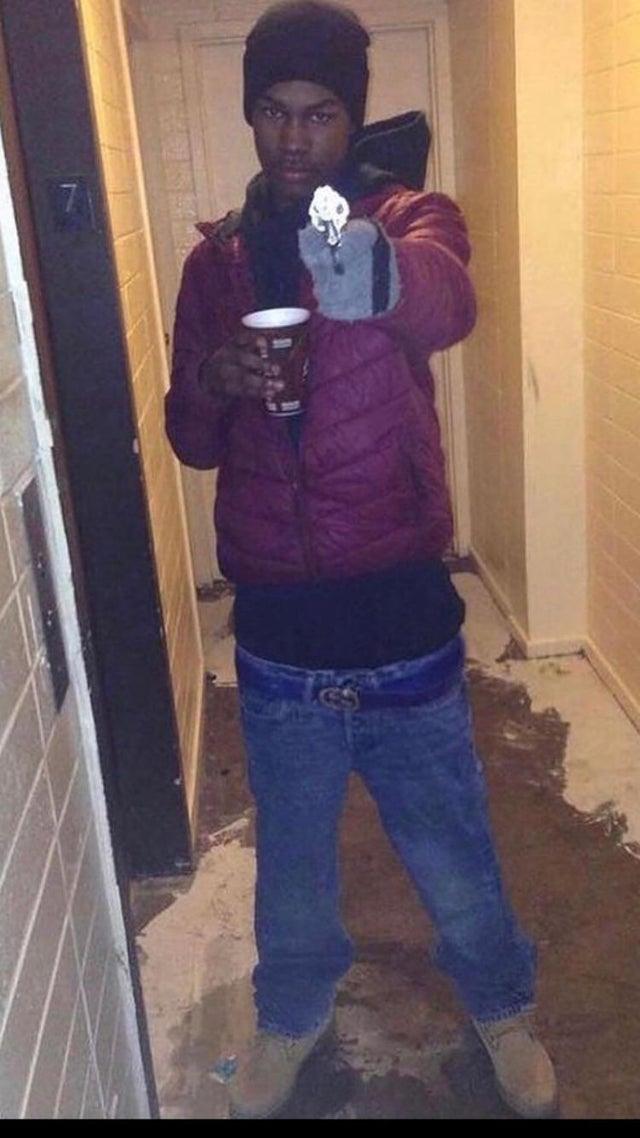
Years after HK’s death, Muwop and King Von released “Nobody Move.” The official track arrived on April 2, 2021, after Von’s own death, through Get Back Gang / 100k with distribution by Create Music Group.
The record became one of the clearest musical bridges between HK’s era and the later audience that discovered O’Block through Von’s success. The official video has accumulated millions of views, exposing a much larger audience to the names, imagery and memory culture surrounding the neighborhood.
Muwop featuring King Von, “Nobody Move.” Official video released in 2021.
HK Was Not Primarily Known as a Rapper
This distinction matters because drill audiences often encounter people backward. A nickname appears in a song, then listeners search it and assume the person was another rapper.
HK was not primarily known for a professional solo music career. His visibility came through family, neighborhood relationships and the people who kept his name alive after his death.
That makes his story closer to Odee Perry’s than King Von’s. The music made the name famous after the person was gone.
It also explains why so much of HK’s biography exists in fragments. There are no major press runs, long-form interviews or conventional artist profiles to reconstruct. In many ways, the strongest evidence comes from the people who knew him and the contemporary report of his death.
The Problem With Turning Real Deaths Into Scoreboards
Chicago drill history is often consumed like serialized entertainment. Fans map alliances, count alleged bodies, assign motives and argue over who “won” conflicts that left young people dead across multiple families.
HK’s story shows the limits of that approach.
T.Roy died in February 2017. HK died in November. Whatever else people believe about the months between those dates, the verified human story is that one family lost two brothers in the same year.
Those deaths then became raw material for songs, documentaries and online arguments. The music preserved their names, but the internet frequently flattened their lives into roles: shooter, target, get-back, opp.
That language may reflect the culture surrounding the events, but journalism should not stop there.
The Final Hours of HK Were Shorter Than the Legend
There is no responsible way to produce a minute-by-minute account of Hakeem Murray’s final day from the available public record. We do not know every place he went, every person he spoke with or whether he believed danger was close.
What the record does establish is that shortly before 8 p.m. on Nov. 24, 2017, police were called to gunfire near Parkway Gardens. Murray was found on the ground, suffering from multiple gunshot wounds. Less than an hour later, he was pronounced dead.
He was 22.
The detailed stories that followed may continue to be debated by people connected to Chicago drill history, but uncertainty should remain uncertainty until stronger evidence exists.
Why HK’s Story Still Matters
HK remains searchable because O’Block became globally recognizable, King Von became a star, and drill listeners kept decoding the names behind the music.
But his story also matters for a more important reason. It shows how quickly grief can turn into mythology when a neighborhood becomes entertainment to the outside world.
Hakeem Murray was a brother before he was an acronym in a drill documentary. He was a friend before he was part of a comment-section debate. The public record of his death is painfully simple, while the legend built afterward became increasingly complicated.
That difference is worth preserving.
Reader Poll
Why do you think HK’s name still resonates with Chicago drill fans years later?
Reporting and Source Notes
- CBS Chicago: Hakeem Murray killed during Thanksgiving weekend shootings
- Chicago Sun-Times: Man, 22, fatally shot in Parkway Gardens
- Chicago Sun-Times: T.Roy, James Johnson, killed inside South Shore store
- WBEZ: Parkway Gardens, O’Block and Chicago drill context
- Muwop ft. King Von: “Nobody Move” official video
Raptology Editorial is the official newsroom voice of Raptology, covering breaking hip-hop news, artist developments, industry trends, and in-depth editorial reports from across the global rap landscape.









Leave a Reply