
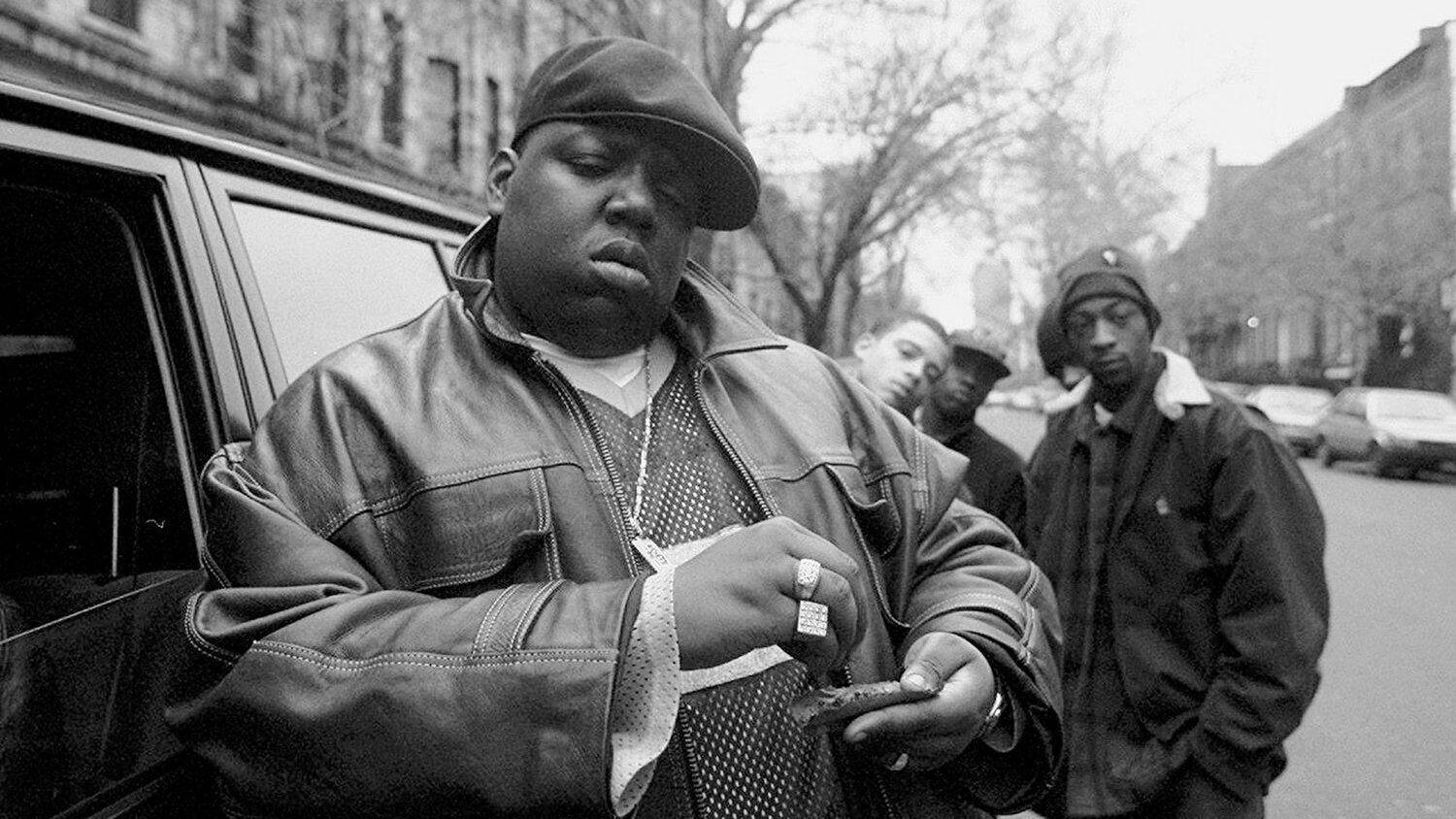
On March 9, 1997, Christopher Wallace was leaving a Los Angeles music-industry party when a gunman opened fire on the SUV carrying him. The rapper known worldwide as the Notorious B.I.G. was 24. Nearly three decades later, the music remains foundational, but his murder remains unsolved. In 2026, a conviction in Tupac Shakur’s killing renewed attention to the intertwined investigations. It did not identify Biggie’s killer.
To understand the significance of that distinction, the story has to begin well before the intersection on Wilshire Boulevard. It begins in Brooklyn, with an artist whose storytelling changed the vocabulary of mainstream rap, and continues through the unanswered questions that followed his death.
Brooklyn Before the Crown
Christopher George Latore Wallace was born on May 21, 1972, in Brooklyn, New York, and raised by his mother, Voletta Wallace, in Bedford-Stuyvesant. Long before the world knew him as the Notorious B.I.G., he was a kid whose surroundings supplied the language, personalities and contradictions that would later animate his records. He could describe a street corner with the precision of a reporter, then turn the same scene into a dark joke. That range became his signature. The neighborhood was neither an accessory nor an explanation for everything he became. It was the setting in which he learned to observe people and tell stories. His records would later transform those observations into sharply drawn characters: hustlers, friends, lovers, rivals, mothers and children. Biggie’s gift was not simply that he could rhyme about danger. It was that he could make a listener understand the emotional stakes inside a few bars. His early life also included selling drugs, a history he discussed publicly. That biography should not be confused with every criminal scenario in his lyrics. Rap narratives can borrow from experience while remaining works of imagination.
From Local Freestyles to Bad Boy
Wallace’s recordings circulated on the New York underground before his mainstream breakthrough. A demo reached the attention of music executive Sean Combs, then associated with Uptown Records. When Combs established Bad Boy Records, Biggie became its defining voice. His early singles demonstrated how easily he could move between menacing street detail and accessible, memorable hooks. “Party and Bullshit” introduced his personality to a wider audience, while “Juicy” turned his ascent into an autobiographical anthem. The latter did more than celebrate success. It gave the genre a durable narrative about economic mobility, family and the cost of ambition. The success also changed what a major-label New York rapper could sound like during a period when West Coast artists dominated much of the national conversation. Biggie was not working alone. Producers, DJs, guest artists, executives and the wider Brooklyn scene shaped the recordings. Yet the command of the microphone was unmistakably his. Even on records designed for radio, his internal rhymes, pacing and conversational delivery remained unusually intricate.
Ready to Die and the Art of the Rap Narrative
Released in September 1994, Ready to Die made the Notorious B.I.G. a central figure in the next era of New York rap. Its title was deliberately unsettling. Across the album, he performed a version of himself caught between hunger, bravado, paranoia, success and despair. The record was full of unforgettable contrasts: the exuberance of “Big Poppa,” the personal memory of “Juicy,” the violence of “Gimme the Loot” and the bleakness of “Suicidal Thoughts.” None of these songs should be read as a literal police report. Together, they formed a portrait of a young artist imagining the possibilities and consequences of a life transformed by money and fame. Biggie’s technical strength was in making complicated flows sound effortless. He could switch voices, change the emotional temperature of a scene and land a punchline without breaking the rhythm. The album’s commercial success also helped establish Bad Boy as a major force and opened doors for a broader wave of East Coast releases. It remains essential not only because of its influence but because of how carefully it was written.
Friendship, Rivalry and the Dangerous Simplification of Two Coasts
Biggie and Tupac Shakur were not always enemies. Their relationship began with mutual respect and developed into one of hip-hop’s most publicly scrutinized ruptures. The 1994 shooting of Shakur at New York’s Quad Studios intensified suspicion and accusations. Wallace denied involvement. Public hostility escalated as the media and industry framed disagreements as a confrontation between East Coast and West Coast rap. That framing was powerful, but it obscured the many artists and communities who were not part of the dispute. It also turned personal accusations into a marketable narrative. Tupac’s 1996 diss record “Hit ‘Em Up” attacked Biggie directly, making their conflict impossible to separate from the national conversation around rap. In September 1996, Shakur was shot in Las Vegas and died days later. His death changed the atmosphere around the entire industry. It did not, by itself, establish who would later kill Wallace or why. Any claim that the murders were ordered by particular music executives, police officers or gang figures must be evaluated against evidence, not repetition on social media. Raptology’s Tupac biography provides further historical context.
A Second Album and a Career at Full Speed
By early 1997, Biggie was preparing to release Life After Death, an ambitious double album that would arrive after his killing. Its scope revealed how far his craft had developed. He could construct a cinematic crime story, deliver a radio-ready performance, collaborate across regional boundaries and still sound entirely recognizable. The project featured material that expanded the Bad Boy sound beyond the template of his debut. The title later acquired a tragic significance that could not have been intended as a factual prediction. Wallace was also a father and a public figure facing the pressures of celebrity, security concerns and relentless speculation about the conflict with Shakur. Those pressures were real, but they should not flatten his final months into a single feud. He was actively making music, promoting an album and planning the next stage of his career. His artistic future was not exhausted when he died at 24.
Los Angeles, March 1997: The Final Days
Wallace traveled to Los Angeles in March 1997 amid promotional activity surrounding the new album. In a radio interview shortly before his death, he spoke about wanting the East Coast–West Coast hostility to end. That statement matters because it complicates the retrospective mythology that he was seeking confrontation. On the evening of March 8, he attended a music-industry event at the Petersen Automotive Museum on Wilshire Boulevard. As the gathering ended in the early hours of March 9, Wallace left in a convoy. He was seated in the front passenger seat of a Chevrolet Suburban. At a traffic light, a dark Chevrolet Impala pulled alongside. A gunman opened fire. Wallace was struck multiple times and taken to Cedars-Sinai Medical Center, where he was pronounced dead shortly after 1 a.m. He was 24 years old. These basic circumstances are supported by contemporary reporting and federal investigative records. The exact identity of the shooter and the person, if anyone, who commissioned the killing have not been established through a criminal conviction. The distinction between the documented sequence and later theories is fundamental to understanding the case.
What the FBI Files Actually Establish
The FBI investigated whether Wallace’s killing involved civil-rights violations or police corruption. The bureau eventually closed its federal inquiry in 2005 without sufficient evidence to prosecute. Files released later under the Freedom of Information Act describe investigative leads, interviews, ballistics and allegations that were explored. Their existence is not proof that every theory recorded in them was true. A file may document what a witness claimed, what an investigator suspected or what a search revealed, without establishing guilt. That distinction has often been lost in popular retellings. The FBI’s publicly released records are valuable precisely because readers can examine the documentary trail rather than rely on a sensational summary. A separate wrongful-death lawsuit brought by Wallace’s family raised serious allegations about the LAPD. The department denied wrongdoing. The litigation did not produce a criminal conviction identifying Wallace’s killer. Unproven accusations against named individuals should not be converted into settled history simply because they appeared in a complaint, interview or documentary.
Why the Murder Remained Unsolved
Investigators faced the problems common to old homicide cases: limited cooperation, conflicting accounts, the passage of time and questions about the original investigative process. The publicity surrounding the killing added another obstacle. Almost every theory became a headline, and the volume of commentary made it difficult to distinguish fresh evidence from recycled allegations. Some writers and former investigators have proposed competing accounts of the shooter and motive. Their claims remain contested. The most responsible summary is narrower than many online documentaries suggest: Wallace was murdered in Los Angeles in 1997, authorities investigated multiple possible explanations, and no one has been convicted of that murder. That is not the same as saying every theory is equally plausible. It means the public record does not justify presenting a specific person as the proven killer. The uncertainty is itself an important part of the story, particularly for a family that has spent decades without a criminal resolution.
The 2026 Update: A Breakthrough in Tupac’s Case, Not Biggie’s
In August 2026, a Las Vegas jury convicted Duane “Keffe D” Davis in Tupac Shakur’s murder. The verdict marked a major development in one of rap history’s most scrutinized homicide investigations. But it did not solve Wallace’s killing. Reporting by the Los Angeles Times and BBC explained how the investigations had intersected. In 2008, investigators working on Wallace’s murder interviewed Davis; statements made during that process later became significant in the Shakur prosecution. The historical connection is striking: efforts to investigate one rapper’s death contributed to the resolution of the other’s case. Yet the LAPD told the BBC in September 2026 that Wallace’s murder remained an open, unsolved investigation. That is the central 2026 update. The conviction in Las Vegas renews public attention and may encourage further scrutiny, but it provides no basis to announce a breakthrough in Biggie’s case that authorities have not reported. Nor should the Davis verdict be retroactively used as proof of speculative theories about Wallace’s death.
Life After Death, Released After Death
Life After Death arrived on March 25, 1997, a little more than two weeks after the killing. Its success was enormous, but the numbers alone do not explain the record’s place in rap history. Tracks such as “Hypnotize,” “Mo Money Mo Problems” and “Sky’s the Limit” showed the reach of Biggie’s style. Other songs displayed the detailed narrative construction and dark humor that had made his debut distinctive. Listeners heard the album under the shadow of his death, giving certain lines an emotional weight they would not otherwise have carried. It is tempting to treat the entire project as a farewell, but it was made by a living artist with plans, collaborators and commercial ambitions. That perspective respects the work more than reducing it to an omen. His death also affected the careers and public narratives of artists around him, including Lil’ Kim, Junior M.A.F.I.A. and the wider Bad Boy roster. The music remained a source of influence for generations of rappers who studied his phrasing and storytelling.
The Legacy Beyond the Case File
Biggie’s influence can be heard in the conversational authority of later New York rappers, in the use of elaborate first-person narratives and in the expectation that a mainstream rap artist could be both technically formidable and commercially accessible. His verses are frequently discussed as demonstrations of timing: how to sit behind a beat, where to place a pause, when to accelerate and how to make a character feel real. Those achievements belong to his life, not to the mystery of his death. The unsolved murder is part of his history, but it should not consume the full account of his career. In 2026, the enduring question is not merely who fired the shots on Wilshire Boulevard. It is how a young Brooklyn writer built a body of work so influential that the music remains central almost three decades later. His story is both an extraordinary artistic ascent and a devastating loss. The investigation deserves continued scrutiny; the records deserve to be heard on their own terms.
Further Reading and Reporting Notes
Explore the Raptology documentary archive, latest rap news, and Featured Stories.
Primary reporting and records: FBI Vault; Los Angeles Times (September 2026); BBC (September 2026); CNN (August 2026); CBS News on the FBI records. Allegations are distinguished from findings and no uncharged individual is identified as the proven killer.

Raptology Editorial is the official newsroom voice of Raptology, covering breaking hip-hop news, artist developments, industry trends, and in-depth editorial reports from across the global rap landscape.





Leave a Reply