
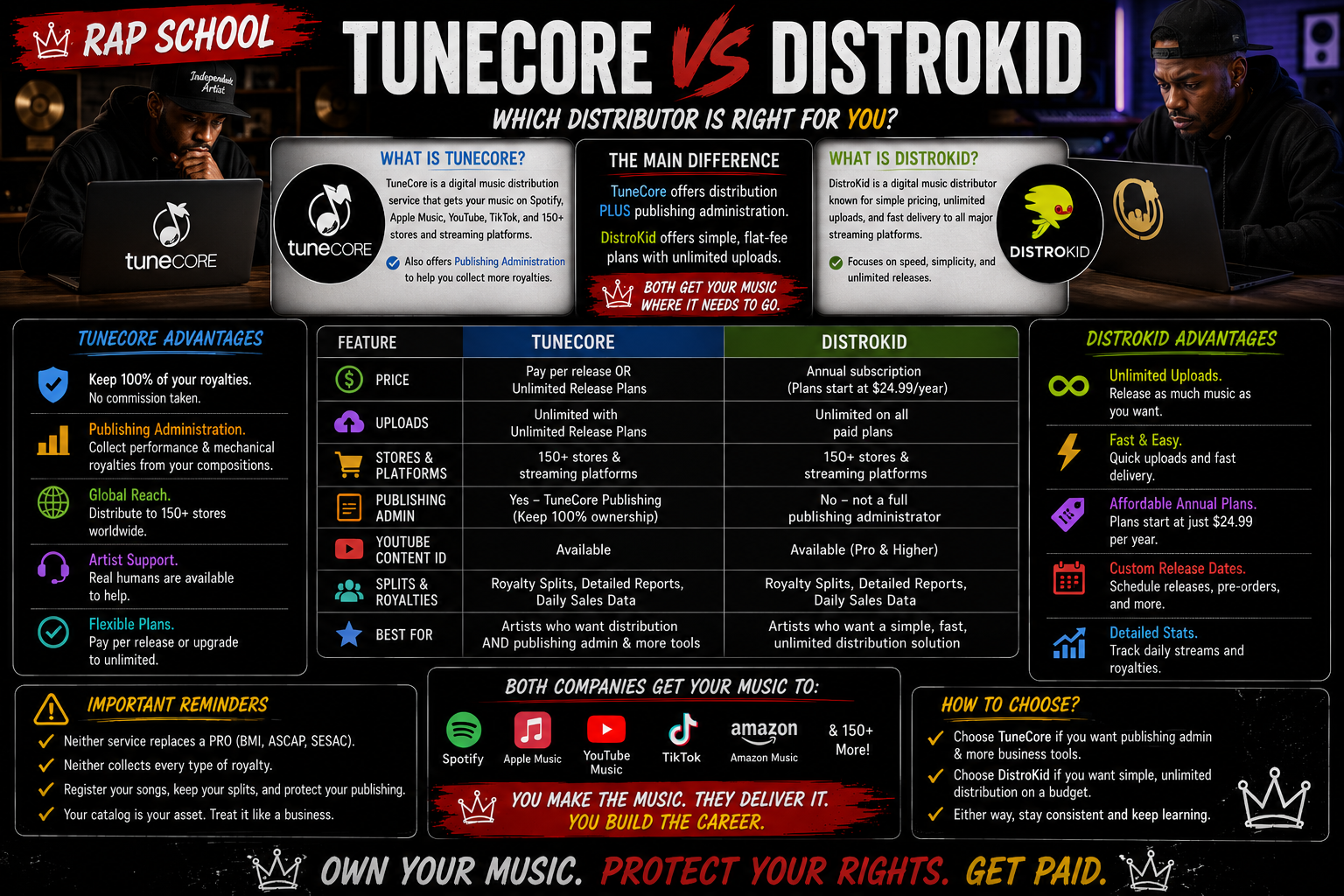
TuneCore vs DistroKid
TuneCore and DistroKid are two popular music distribution services that help independent artists release music to Spotify, Apple Music, YouTube Music, TikTok, and other digital platforms.
TuneCore vs DistroKid is one of the biggest questions independent rappers and musicians face when preparing to release music. Both companies help artists distribute songs to major streaming platforms, but they are built differently and may fit different types of artists.
The best choice depends on your release schedule, budget, publishing needs, royalty collection setup, artist team, and long-term catalog strategy. A rapper dropping frequent singles may need something different from an artist releasing one carefully planned album per year.
Simple definition: TuneCore and DistroKid are digital music distributors. They help artists deliver music to streaming platforms and stores, but they do not replace every part of royalty collection, publishing, marketing, or rights management.
Important note: Pricing and features can change. Always check the official TuneCore and DistroKid websites before choosing a plan or releasing music. DistroKid currently promotes annual plans starting at $24.99, while TuneCore promotes unlimited distribution plans and also offers publishing administration services. :contentReference[oaicite:0]{index=0}
What Is TuneCore?
TuneCore is a digital music distribution company that helps artists release music to streaming platforms and online stores. TuneCore describes itself as a leading digital music aggregator and promotes unlimited distribution plans for artists who want to upload music and reach major services like Spotify and Apple Music. :contentReference[oaicite:1]{index=1}
One major difference with TuneCore is that it also offers publishing administration. TuneCore Publishing Administration says it administers compositions by licensing, registering, and collecting royalties on behalf of songwriters while allowing the songwriter to retain ownership and control of their compositions. :contentReference[oaicite:2]{index=2}
What Is DistroKid?
DistroKid is a digital music distribution service known for simple annual plans and unlimited music uploads. Its pricing page lists plans such as Musician, Musician Plus, and Ultimate, with annual billing and features that vary by plan. :contentReference[oaicite:3]{index=3}
DistroKid’s core appeal is speed, simplicity, and unlimited releases for a flat yearly subscription. It is often attractive to independent artists who release frequently and want a straightforward way to get music onto major streaming platforms.
TuneCore vs DistroKid: Quick Comparison
| Category | TuneCore | DistroKid |
|---|---|---|
| Main Service | Digital music distribution with additional publishing administration options. | Digital music distribution with subscription-based unlimited uploads. |
| Best Known For | Distribution plus publishing administration and royalty collection tools. | Fast, simple uploads and unlimited releases under annual plans. |
| Publishing Administration | Available through TuneCore Publishing. | Not the same as a full publishing administrator. |
| Release Volume | Good for artists who want distribution plus broader rights services. | Strong option for artists releasing many singles or projects each year. |
| Royalties | Distribution royalties and optional publishing administration collection. | Distributor payouts from platforms; artists still need separate publishing/PRO setup. |
| Best Fit | Artists who want distribution and may also want publishing administration. | Artists who want a simple, fast, annual distribution setup. |
The Main Difference
The main difference is that DistroKid is often viewed as a simple, fast distribution service built around annual subscription plans, while TuneCore combines distribution with additional music business services, especially publishing administration. That does not automatically mean one is better than the other. It means they may serve different needs.
If you only want to upload music quickly and frequently, DistroKid may feel easier. If you are thinking more seriously about publishing, composition royalties, and long-term catalog administration, TuneCore’s publishing services may be worth considering.
Distribution Is Not the Same as Publishing
One of the biggest mistakes independent artists make is thinking that a distributor collects every royalty. A distributor helps deliver your music to streaming platforms and stores. That is usually connected to master-side income from the sound recording.
Publishing is different. Publishing is tied to the composition: lyrics, melody, and songwriting ownership. TuneCore explains that publishing administration is an additional revenue source beyond distribution income and involves administering compositions, licensing, registering, and collecting royalties. :contentReference[oaicite:4]{index=4}
Rap School Example
If you release a song through a distributor, you may see streaming income in your distributor dashboard. But that does not always mean you are collecting every publishing, mechanical, performance, or international royalty connected to the song. Distribution and publishing collection are separate parts of the music business.
Which Is Better for Rappers?
For rappers who release music constantly, DistroKid can be attractive because of its simple annual structure and unlimited uploads. DistroKid’s official pricing page lists plans that include unlimited songs, with higher tiers offering additional artist slots and features such as customizable release dates, label names, preorder dates, and daily streaming stats. :contentReference[oaicite:5]{index=5}
For rappers who want a more complete royalty setup, TuneCore may be attractive because of its publishing administration option. TuneCore Publishing says it can register unlimited songs worldwide and collect royalties from many pay sources, while keeping ownership with the songwriter. :contentReference[oaicite:6]{index=6}
Which Is Better for Producers?
Producers should think beyond distribution. If a producer releases beat tapes, instrumental albums, or solo projects, they need a distributor. But if they contribute composition to other artists’ songs, they also need proper split sheets, PRO registration, publishing information, and accurate credits.
A producer may use either TuneCore or DistroKid for their own releases. The bigger issue is making sure producer splits, publishing shares, beat licenses, and songwriter credits are handled correctly before the track goes live.
Costs and Add-Ons
Both services may offer different plans, add-ons, or upgraded features. DistroKid lists annual plans with different features by tier, while TuneCore offers distribution plans and additional publishing administration services. Because prices and options can change, artists should check each official pricing page before paying.
The cheapest plan is not always the best plan. Artists should look at what they actually need: number of artist profiles, release scheduling, label name control, YouTube monetization, sync or publishing support, team access, royalty splits, and long-term catalog control.
What They Do Not Replace
Neither TuneCore nor DistroKid should be treated as the entire music business. Even if a distributor gets your music onto platforms, you may still need other registrations and documents to protect your income.
- A PRO: BMI, ASCAP, SESAC, or another performing rights organization for performance royalties.
- Split sheets: Written proof of songwriter, producer, and collaborator ownership percentages.
- Publishing administration: A system for collecting certain publishing royalties beyond basic distribution.
- SoundExchange registration: For certain digital performance royalties tied to sound recordings.
- Clean metadata: Correct artist names, legal names, song titles, ISRC codes, and credits.
- Marketing: A distributor does not automatically create fans, press, playlists, or momentum.
Common Mistakes Artists Make
One common mistake is choosing a distributor only because another artist uses it. The best distributor depends on your release strategy. An artist releasing one album every few years may not need the same setup as an artist dropping singles every month.
Another mistake is ignoring publishing. Many artists focus only on Spotify and Apple Music payouts while forgetting about the composition side of the song. This can lead to missed income, especially when songs involve multiple writers, producers, features, or sync opportunities.
Basic Checklist Before Choosing
- Decide how often you plan to release music.
- Compare annual pricing, features, and add-ons.
- Check whether you need one artist profile or multiple artist profiles.
- Confirm whether you need customizable release dates and label names.
- Set up your PRO before or during your release process.
- Complete split sheets before uploading music.
- Understand whether you need publishing administration.
- Keep all metadata, ISRCs, writer names, producer names, and splits organized.
So Which One Should You Choose?
Choose DistroKid if you want a simple annual distribution system, plan to release frequently, and already understand that you still need separate publishing and royalty collection setup. DistroKid can be a strong fit for artists who want speed and convenience.
Choose TuneCore if you want distribution and are also interested in publishing administration, broader royalty collection support, and a more rights-focused setup. TuneCore can be a strong fit for artists who are thinking about their catalog as a long-term business asset.
Final Thoughts
TuneCore and DistroKid can both help independent artists release music professionally. The right choice depends on your goals, not just the brand name. Distribution is only one piece of the music business, and artists should understand royalties, publishing, splits, metadata, and promotion before releasing.
For rappers and producers, the smartest move is to build a full release system. Choose the distributor that fits your workflow, register your songs properly, document your splits, protect your publishing, and promote every release with a plan.
Continue Learning in Rap School
Visit the Rap School hub for more lessons on rap lyrics, songwriting, royalties, publishing, promotion, and hip-hop history.
Recommended next lessons: How Music Royalties Work, BMI vs ASCAP, and Music Publishing Explained.