
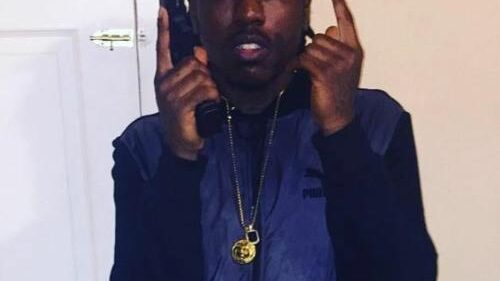
On October 9, 2018, Chicago rapper Dooski Tha Man was shot in the head on South Michigan Avenue. He was 25. Thirteen days later, mourners leaving his funeral were caught in another burst of gunfire that wounded six people, including FBG Wooski. The two shootings became some of the most discussed events in Chicago drill’s violent history, but the artist at the center of the story deserves more than a conspiracy-filled timeline.
Born Vantrease Criss, Dooski had been recording music and collaborating with fellow Chicago artists in the months before his death. This documentary follows the verified timeline, the music he left behind and the consequences of a funeral attack that drew national attention.
The Day the Music Stopped
On October 9, 2018, Vantrease Criss was standing on the South Side of Chicago when gunfire erupted. The 25-year-old rapper, known as Dooski Tha Man, was struck in the head. A 20-year-old woman was wounded in the foot. Both were taken to the University of Chicago Medical Center, where Criss was pronounced dead at 4:33 p.m. The woman survived. The shooting happened shortly before 4 p.m. in the 5600 block of South Michigan Avenue, according to contemporary reports drawing on Chicago police and the Cook County medical examiner. These details establish the central tragedy. They do not identify the person who fired the fatal shot, and they do not prove why Criss was targeted. The distinction matters because his death would soon be folded into a much larger internet narrative about Chicago drill, rival factions and alleged retaliation. Those narratives are not interchangeable with a criminal investigation. The most important fact remains the simplest: a young rapper with music still circulating online was killed in broad daylight, leaving behind friends, family and a creative community that would gather to mourn him less than two weeks later.
Vantrease Criss Behind the Name
The public record contains far more information about the circumstances of Dooski’s death than about his childhood. He was 25 when he died, and contemporary news organizations identified him as Vantrease Criss. Some reports spell his given name differently, an inconsistency worth acknowledging rather than silently treating one rendering as certain. What listeners know more directly is the identity he built in music. Dooski Tha Man was a voice in Chicago’s independent drill network, associated in music discussions with the MOB circle. His recordings moved through YouTube and independent music platforms rather than a conventional national-label campaign. That environment offered artists a way to be heard without a gatekeeper. It also meant that much of their biography was preserved in videos, interviews, comments and social posts rather than traditional press profiles. The scarcity of independently reported personal details should not be filled with fan speculation. It is possible to document his work and the people around him while respecting what is not publicly established about his family and private life.
Chicago Drill in 2018
By 2018, Chicago drill had become an international musical language. Early videos from Chief Keef and other pioneers had shown how local rappers could build enormous audiences with direct performances, minimal budgets and recognizable neighborhoods as backdrops. The next wave expanded the sound, drawing on fast-moving YouTube channels, independent producers and small video crews. Artists did not need radio play to make an impact. A striking performance could travel through reaction videos and fan pages, finding listeners thousands of miles from the South Side. The movement was never just about violence, although conflict dominated many outside portrayals. Its records also contained ambition, technical experimentation, humor and the desire to escape difficult circumstances. For a rapper like Dooski, the opportunity was tangible. His recordings could be discovered alongside those of artists with much larger followings. At the same time, a culture of publicly naming rivals encouraged some listeners to treat songs as investigative evidence. That is a dangerous shortcut. Music can document an environment, but a lyric alone does not prove responsibility for a real-world crime.
The MOB Connection and Its Limits
Dooski is frequently associated with MOB in accounts of the South Side drill scene. That association is part of the public music history around him, but it does not establish his individual participation in a specific criminal act. Online timelines often combine alleged gang membership, neighborhood friendships and music collaborations into one simplified chart. The reality is less orderly. People can know one another through family, school, music or geography without sharing every conflict attributed to a group. In Dooski’s case, the available mainstream reporting establishes his death and the violence at his funeral, but it does not provide a court-tested biography of his affiliations. Responsible coverage can explain the language and social setting without declaring disputed claims to be facts. Raptology’s history of Chicago street-rap rivalries offers broader context, while the artist’s own recordings are the clearest evidence of the public identity he was developing.
Who Run It and a Defining Performance
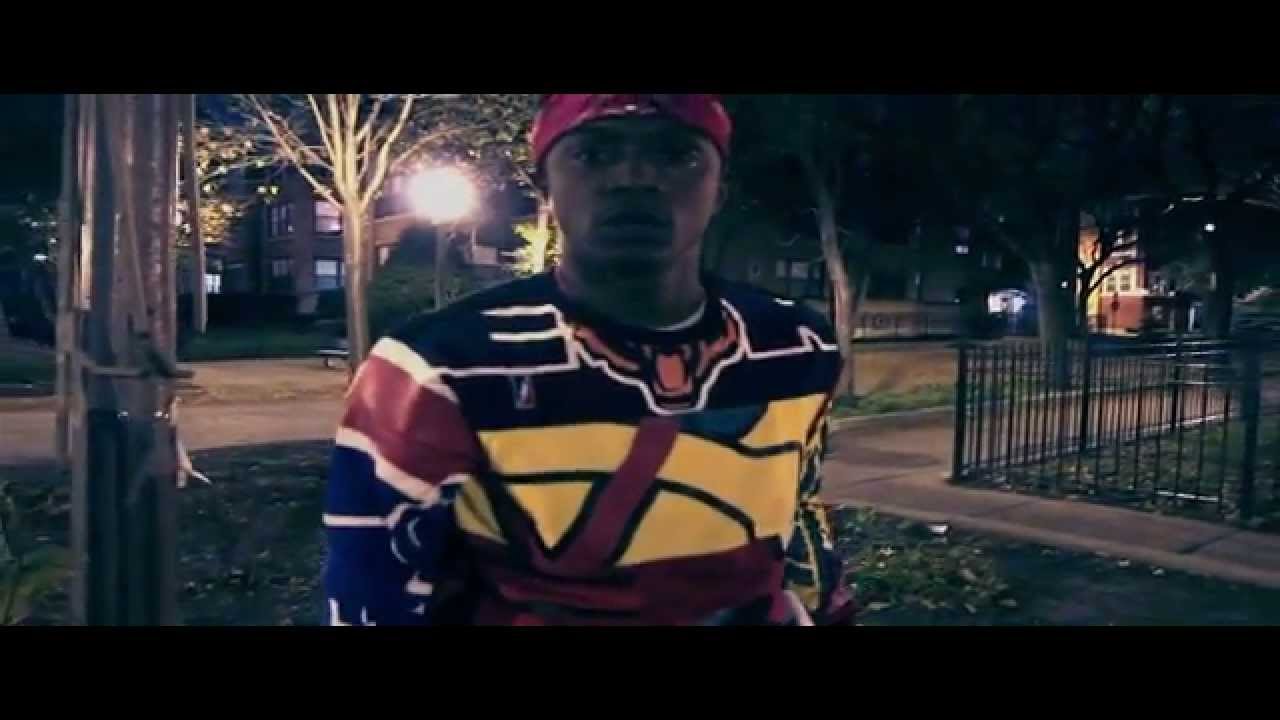
One of the strongest surviving documents of Dooski’s talent is his “Who Run It Remix,” released by Yardie Films Production on May 15, 2018. The video shows him performing directly to the camera, with the kind of forceful, unvarnished delivery that made Chicago drill distinctive. Its significance is not merely that it circulated widely. It is an independently verifiable piece of work released while the artist was alive, and it gives viewers a better understanding of his presence than secondhand accounts of his death. The performance also belongs to a broader remix moment in hip-hop, when rappers used recognizable instrumentals to demonstrate technical ability and personality. For Dooski, it served as a compact introduction: urgent flow, street-centered writing and a visible command of the frame. Any claim that it guaranteed a major commercial breakthrough would be speculative. What it demonstrates is that he had material capable of reaching beyond his immediate circle, and that he was actively recording during the year he died.
Shooters and the Wooski Collaboration
Dooski’s connection to FBG Wooski was musical as well as social. A recording circulated under the title “Shootas” or “Shooters,” and behind-the-scenes footage from the project survives on the Chiraq Underground YouTube channel, posted in February 2018. That footage is useful because it places the artists together in a documented creative setting before the tragedies that later dominated headlines. Their collaboration would take on a different meaning after the October funeral shooting, when Wooski was among those wounded. But the music came first. The pair were working on material, participating in the same independent scene and appearing in videos that fans could share. Their relationship should not be reduced to the violence that followed. The songs also complicate the idea that Chicago drill was a collection of isolated personalities. It was a network of artists who regularly crossed paths through recordings, videos and shared audiences. Those creative links deserve attention independent of speculation about their private disputes.
The October 9 Shooting
The most detailed contemporaneous reconstruction places the shooting just before 4 p.m. on October 9 in the 5600 block of South Michigan Avenue. Police said Criss was shot in the head and a woman nearby was struck in the left foot. Both were transported to the University of Chicago Medical Center. Criss died there at 4:33 p.m.; the woman was stabilized. A contemporaneous report, reproduced by According2HipHop from Chicago Sun-Times reporting, said the woman told investigators the shots might have come from a passing brown vehicle. That description is a reported witness account, not an identification of a suspect. Other online versions assert a precise sequence of movements, name a particular shooter or assign the killing to a specific faction. The reliable public reporting examined here does not establish those claims. A final-hours documentary must be especially careful about that boundary. The shooting is documented. The victim and date are documented. The identity of the gunman and motive are not established by the available sources.
What the Internet Says and What It Proves
Chicago drill fan communities have spent years assembling elaborate timelines of deaths, songs, social posts and neighborhood disputes. Dooski’s murder appears in many of them, often alongside claims that one faction carried out the shooting and another immediately retaliated. Such accounts can appear authoritative because they contain specific dates, street names and nicknames. Precision in a narrative, however, is not the same thing as verification. A person posting an accusation anonymously does not become a credible witness simply because the claim is repeated across dozens of videos. A lyric released after a death may be interpreted as a boast, an insult, a fictional threat or a reference to another event. Without corroboration from investigators, sworn testimony or reliable reporting, none of those interpretations identifies a murderer. The appropriate conclusion is narrower. Dooski died from a gunshot wound on October 9, 2018. A woman was also wounded. No credible source used for this account establishes a conviction for his killing. That uncertainty should remain visible rather than being disguised as a dramatic revelation.
A Funeral That Became Another Crime Scene
On October 22, 2018, mourners gathered at Bethlehem Star Missionary Baptist Church, 9231 South Cottage Grove Avenue, in Chicago’s Burnside neighborhood. The service was intended to honor Criss. Around 12:30 p.m., as attendees left the church and approached their cars, gunfire broke out. Six people were wounded. The shooting stretched across a large area outside the church and prompted a major police response. CBS Chicago reported that more than 50 shots were fired. ABC7 described victims ranging from 18 to 27 years old and a nearby day-care center placed on lockdown. The horror was not confined to people attending the service. Residents, workers and children nearby were also exposed to danger. The violence transformed a funeral into a second major news event, overshadowing the person mourners had come to remember. For Criss’s family and friends, a gathering meant to offer some measure of closure instead brought another wave of fear.
FBG Wooski Was Among the Wounded
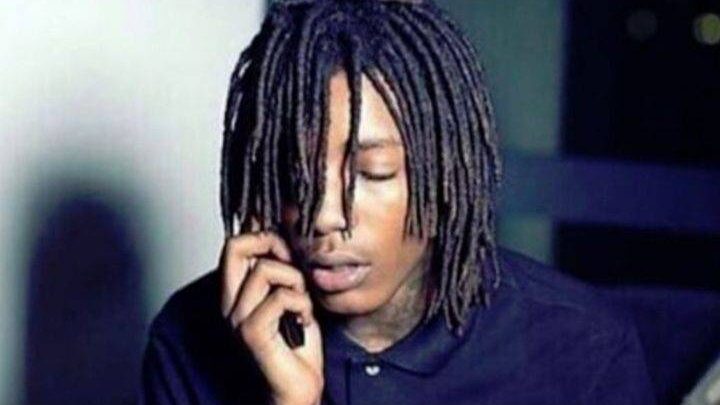
One of the six victims was Marvel “FBG Wooski” Williams, a rapper whose “Computers Remix” had gained attention in Chicago drill circles. He suffered a gunshot wound to the head. Initial reports described his condition as critical; later coverage said he survived and was recovering. The Associated Press identified Wooski and described police efforts to prevent further violence. The severity of his injury made him the central figure in much of the coverage that followed. But five other people were wounded, and their experiences should not disappear simply because they were less recognizable to music fans. A funeral is a public gathering with families, friends, neighbors and bystanders. The attack demonstrated how quickly a conflict involving a few people could threaten an entire crowd. It also changed the way Dooski’s name circulated online. Search results began pairing his identity with the funeral shooting, sometimes giving more attention to the attack than to his actual recordings.
Police Feared Further Retaliation
In the days after the funeral shooting, Chicago police monitored online threats and planned community meetings intended to reduce the risk of additional violence. The Associated Press reported that authorities were investigating possible connections between the attack and ongoing neighborhood conflicts. On October 26, CBS Chicago carried an Associated Press report saying police believed another shooting in Washington Park might have been retaliation for the funeral attack. That was a police assessment of a possible connection, not a judicial finding establishing the identities or motives of everyone involved. The distinction is essential. Multiple shootings occurring close together can be part of a wider pattern, but proving a particular retaliatory chain requires evidence. The public conversation often moved faster than investigators could verify events. Music pages and fan accounts treated the sequence as a finished story while police were still trying to determine what had happened. The result was a climate in which fear, grief and speculation reinforced one another.
A City Confronts Violence at Funerals
The October 22 attack drew attention to a problem larger than one music scene. Cook County officials had recently formed a Funeral and Cemetery Violence Task Force involving law enforcement, prosecutors and cemetery or funeral-home representatives. Its purpose was to address shootings and threats associated with funerals. CBS Chicago’s October 22 report described the new initiative and the concern that ordinary mourning rituals were becoming unsafe. A funeral is supposed to create a protected space for remembrance, even among people who have disagreements. When gunfire erupts outside a church, that expectation is shattered. The danger extends to people who have no role in any dispute. In Burnside, the lockdown at a nearby day-care center was a particularly stark reminder. The issue was not whether the deceased rapper’s lyrics were provocative or whether listeners had strong opinions about neighborhood conflicts. It was the safety of a public street, a congregation and families attending a memorial service.
Why Dooski’s Music Still Matters
The events surrounding Dooski’s death can easily overwhelm the records he made. His “Who Run It Remix” remains an accessible example of his delivery, and the “Shootas” collaboration documents his place within a network of Chicago artists. A 2017 SoundCloud posting of “Fuck Em’ Ova,” credited to producer Ice Starr, shows that his recordings circulated before the final year of his life. These songs are the evidence of an artist at work. They do not require a fictional career trajectory to justify attention. Dooski did not live to develop a decade-long catalog or a national commercial profile. He left a smaller body of music, much of it distributed through channels where upload dates, reposts and ownership details can be difficult to establish. That makes careful attribution especially important. Listeners interested in his legacy should begin with verifiable recordings and the creators who documented them, rather than treating every posthumous compilation as an authoritative account of his artistic intentions.
The Wider Chicago Drill Archive
Dooski’s story connects to several other important strands of Chicago drill history. FBG Wooski’s survival after the funeral attack became a major subject of online discussion. Raptology’s FBG Wooski profile and coverage of his 2018 career provide related reading, while the FBG Brick documentary examines a separate loss within the broader scene. These links should help readers understand the community without merging unrelated cases. The artists shared a musical ecosystem, but each death, shooting and investigation has its own evidence. The most useful archive does not simply catalog casualties. It preserves recordings, dates, contemporary reporting and the cultural setting in which these artists worked. That approach gives future listeners something more durable than a rumor-driven timeline.
The Cost of Turning Grief Into Entertainment
The internet made Chicago drill visible to the world, but it also created incentives to treat violent incidents as a competitive narrative. Names became hashtags. Memorial videos attracted speculation about who would be next. Anonymous accounts claimed inside knowledge, sometimes accusing living people of murder without evidence. Dooski’s story shows the human cost of that habit. The October 9 shooting killed a 25-year-old man and wounded a woman. The October 22 attack wounded six people and frightened a neighborhood. Those facts are serious enough without adding unsupported details. Responsible music journalism can discuss how conflicts shaped the environment, acknowledge the words artists used in their songs and examine police reporting. It should not assign criminal responsibility through association, lyric interpretation or internet consensus. Nor should it turn the victims into interchangeable characters in an endless feud. The people involved had lives outside the clips that survived them.
Remembering Vantrease Criss
Eight years after the shooting, Dooski Tha Man remains recognizable to listeners who followed Chicago’s independent drill scene in 2018. His voice survives in the “Who Run It Remix,” in collaborations and in recordings shared by the people who worked with him. The circumstances of his death are documented, but the publicly verified account does not resolve every question. On October 9, Vantrease Criss was shot on South Michigan Avenue and died at the University of Chicago Medical Center. Thirteen days later, six people were wounded as mourners left his funeral. Those two events are connected by grief and chronology, but the available evidence does not justify naming an unproven killer or inventing a complete chain of retaliation. The most meaningful way to remember Dooski is to keep the music and the human story in view together. He was a young artist making records in a scene that was changing rap. His life ended before anyone could know how far that work might have taken him.
Reporting and Related Stories
Contemporary reporting: CBS Chicago, October 22, 2018; ABC7, October 23, 2018; Associated Press, October 24, 2018; CBS / AP, October 26, 2018.
Explore the Raptology documentary archive, Latest Rap News, and Featured Stories and related reading.

Raptology Editorial is the official newsroom voice of Raptology, covering breaking hip-hop news, artist developments, industry trends, and in-depth editorial reports from across the global rap landscape.







Leave a Reply