
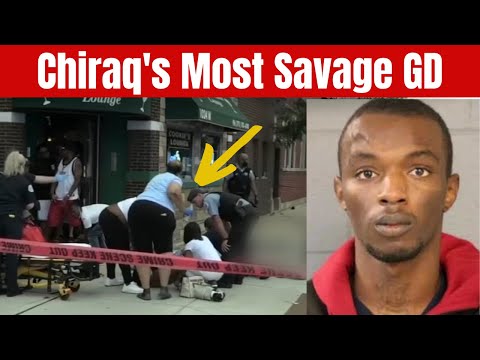
Marvel Williams, known to rap listeners as FBG Wooski, came to wider attention during Chicago drill’s 2018 surge. His music circulated in a scene where neighborhood history and social-media rivalry were often inseparable from the records. Then, in October 2018, he was critically wounded when gunfire erupted outside a fellow rapper’s funeral. The shooting was documented in contemporary news reports; many of the other sensational stories attached to his name are far harder to substantiate. This retrospective traces the music, the reported violence and the gap between the facts and the mythology.
“Computers” and an artist’s rise
Wooski’s “Computers” helped define the moment when Chicago’s drill audience was expanding rapidly online. Apple Music lists the single with a January 2, 2018 release date, one concrete reference amid years of reposted videos and fan uploads. The record’s uncompromising tone fit a scene where neighborhood references and public rivalries frequently became part of the music. Its cultural impact can be discussed without assuming that every line is a literal account of real-world events. Listening to the recording and proving an allegation are two very different exercises.

Reputation, neighborhood ties and online claims
Accounts of Wooski’s life frequently mention Parkway Gardens, STL/EBT, Fly Boy Gang and other circles associated with Chicago drill. Some accounts focus on personal relationships, others on rivalries and allegations of violence. Many of those details circulate through commentary rather than verifiable records. The most responsible approach is to distinguish reported history from assertions based on lyrics or internet posts. A person’s reputation in drill culture, however powerful it may become, cannot establish that they committed a specific act.
The platforms that brought Chicago drill to audiences worldwide also carried neighborhood disputes beyond their original setting. A video might introduce a rapper’s voice to thousands of strangers while viewers, without direct knowledge of events, built competing explanations of the real-world conflicts around him. Wooski became part of that environment. His public persona and the reactions to his music deserve examination, but neither offers a shortcut to determining what happened in any criminal case. That requires documented evidence, not a fan-generated timeline.
Some retellings assign responsibility for particular killings to Wooski or other figures by piecing together lyrics, nicknames and alleged affiliations. Those reconstructions are not judicial findings. An allegation must be corroborated before it is stated as fact, particularly when the accusation concerns a murder. This account does not endorse those unsourced claims. The distinction protects accuracy for readers and fairness for the people being discussed, including victims’ relatives. A criminal charge, a police theory, a social-media rumor and a conviction are different kinds of information and must never be presented as interchangeable.
The October 2018 funeral shooting
On October 22, 2018, gunfire erupted outside Bethlehem Star Missionary Baptist Church in Chicago’s Burnside neighborhood after a funeral service for rapper Vantrease Criss, known as Dooski Tha Man. The Chicago Sun-Times documented six people wounded near 92nd Street and Cottage Grove Avenue around 12:30 p.m. The next day, Associated Press reporting identified 21-year-old Marvel “FBG Wooski” Williams as the most seriously injured person.
According to the Associated Press, Williams suffered a gunshot wound to the head and initially underwent surgery in critical condition. His condition was later upgraded to stable but serious. Five others were injured that afternoon. Reporting published immediately after the shooting supplied these details, rather than the elaborate accounts that later surfaced online. The event was not just another entry in a feud timeline. People had gathered to mourn a friend and performer, and more families were suddenly confronting the prospect of loss. Details about a specific perpetrator or an orchestrated retaliation require more evidence than the fact that the shooting occurred.

Police warnings and the aftermath
In the days after the shooting, Chicago police monitored online threats and discussed efforts to prevent another attack. The Associated Press reported plans for community meetings intended to ease tensions. The Chicago Sun-Times placed the violence in the longer history of security concerns at Chicago funerals. Those measures show that authorities feared further bloodshed, but fear of retaliation is not proof that a particular suspect committed a crime.
The funeral shooting is sometimes reduced in retellings to one headline about a rapper surviving a gunshot wound. That version leaves out the other five people injured, the funeral congregation and the family already mourning Dooski Tha Man. It also collapses a complicated public-safety issue into a story of supposedly inevitable retaliation. The initial reporting documented the violence and police concerns. It did not provide a definitive account of the gunmen’s identities or motives. The distinction matters when writing about real people whose lives were changed that afternoon.
Music versus street mythology
Rap records can include autobiography, rivalry, performance and exaggeration at the same time. Wooski’s confrontational style, like other recordings from Chicago’s drill wave, attracted listeners because of its specificity and intensity. But musical interpretation is different from a criminal investigation. A lyric may describe a persona, a feeling or a dispute; it does not automatically prove that the performer did what a listener assumes. Separating artistry from allegation gives the music room to stand on its own while keeping the account of real events responsible.
Online commentary can freeze artists at the moment a particular video goes viral. Old clips are circulated as new evidence, short excerpts lose their original context and speculation is repeated until it appears authoritative. That pattern has shaped discussion of Wooski and many other Chicago artists. It is possible to understand why his story still attracts listeners without treating anonymous posts, lyrics or edited compilations as testimony about individual crimes. When an allegation is unsupported, describing it as a rumor is not an editorial weakness. It is an accurate statement about the available evidence.
What the record tells us
Wooski’s place in the 2018 drill conversation and his survival of a widely reported shooting are both part of the public record. Neither fact requires adopting every dramatic narrative attached to his name. The artist’s music, the wounded mourners and the community affected by the funeral shooting are all more substantial than the speculative scorekeeping that often surrounds this history. The most useful way to revisit the era is through dates, original coverage and the voices of people whose experiences can actually be documented.
For more coverage, read Raptology’s later FBG Wooski profile and its broader examination of Chicago drill rivalries. This account draws on contemporary reporting by the Associated Press and Chicago Sun-Times, alongside music-release records. Those sources establish a reliable foundation without pretending to settle questions that remain unresolved.
Hulda Hicks was born in Brooklyn, NY in the late ’70s, at the time when Hip-Hop music was just emerging as an art form. Her entire life was influenced by the culture, having grown up in the epicenter of the creative movement.
As a trained musician and vocalist, Hulda got exposed to the industry in her twenties and has worked on projects with iconic figures such as the Chiffons, the Last Poets, and Montell Jordan, to name a few. Her passion for music extended past the stage on to the page when she began to write ad copy and articles as a freelancer for several underground publications.
A written review from “Jubilee Huldafire” is as authentic as it gets, hailing from one creative mind that has a unique voice, on paper and in person.



Leave a Reply