
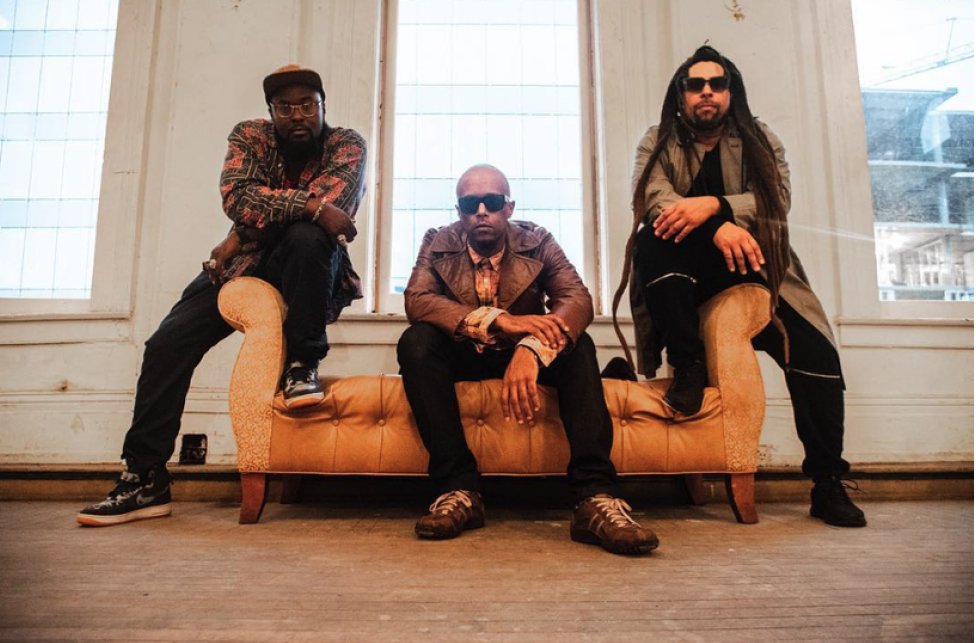
Kentucky has contributed far more to American music than any single genre can contain. The state’s musical history stretches from country and bluegrass to soul, funk, R&B, alternative rock and hip-hop. On their latest project, THESE OLD KENTUCKY ROADS, The Off Daze bring those traditions together while presenting a deeply personal interpretation of the place they call home.
The collective features Deacon the Villain, Natti and Sheisty Khrist, three artists connected through decades of friendship, collaboration and independent music.
Deacon and Natti have spent more than 20 years creating together as members of the acclaimed Kentucky hip-hop group CunninLynguists. Sheisty Khrist, meanwhile, has been one of Natti’s closest friends and musical collaborators throughout much of that journey. The formation of The Off Daze was not the result of an industry meeting or a calculated attempt to launch a new brand. It grew naturally from relationships that had already been established through years of shared experiences.
Even the group’s name reflects that sense of creative freedom.
If CunninLynguists represents the workweek, The Off Daze represents the moment when the obligations end and experimentation begins. The collective functions as a space where its members can follow their curiosity without being restricted by expectations, formulas or traditional genre boundaries.
Every idea is considered. Every member contributes. The strongest concept moves forward regardless of who introduced it.
That democratic approach has become central to the group’s identity. The Off Daze are not interested in following a rigid creative hierarchy. Instead, their music is shaped through discussion, experimentation and the willingness to let an unexpected idea change the direction of an entire record.
That openness is especially fitting for a group representing Kentucky, a state whose musical identity is often reduced to country and bluegrass despite its significant contributions to numerous genres.
Sheisty Khrist and Natti are from Lexington, while Deacon the Villain comes from the neighboring city of Versailles. Although their music has reached listeners internationally, the members continue to create from Kentucky. Rather than treating their home state as background information, they place it at the center of THESE OLD KENTUCKY ROADS.
The project is a musical love letter to the Commonwealth, but it is not structured like a conventional tribute album.
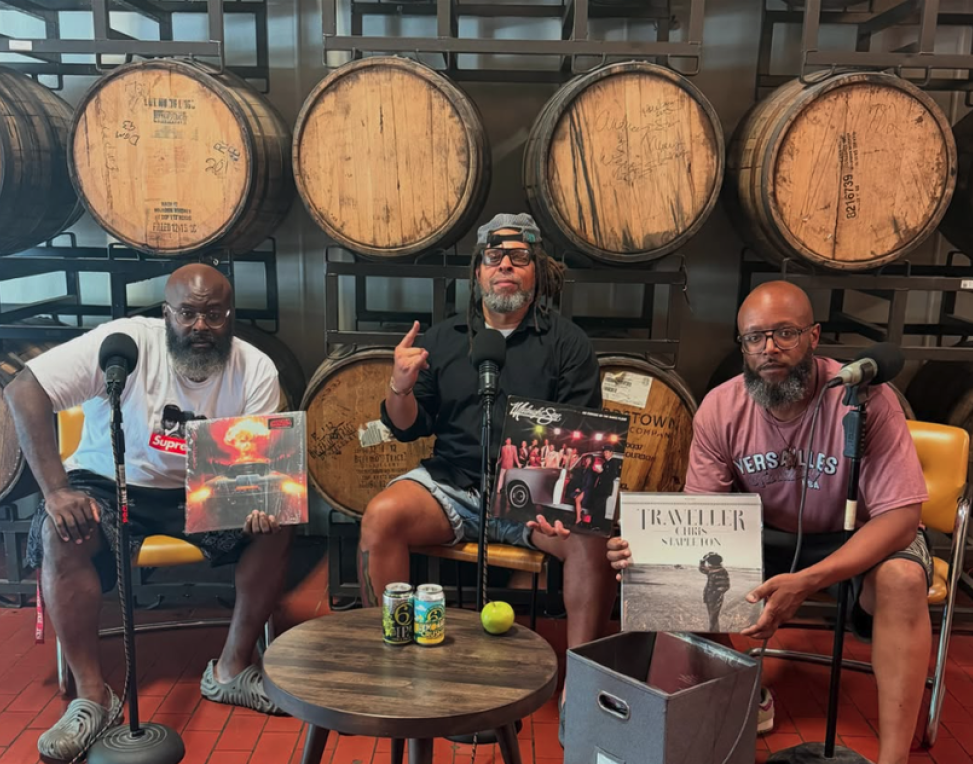
Instead of simply reproducing familiar songs, The Off Daze reinterpret music connected to Kentucky artists from different eras and stylistic traditions. The project draws inspiration from Tyler Childers, Bryson Tiller, Midnight Star, Chris Stapleton, Nappy Roots, My Morning Jacket, Cage the Elephant, Playa, The New Birth and Sturgill Simpson.
On paper, those names may appear to occupy completely separate musical worlds. Childers and Stapleton are closely associated with modern country and roots music. Bryson Tiller and Playa represent different generations of Kentucky R&B. Midnight Star and The New Birth helped establish the state’s place in funk and soul. Nappy Roots brought rural Southern identity into mainstream hip-hop, while My Morning Jacket and Cage the Elephant carried Kentucky into alternative rock.
For The Off Daze, those distinctions are less important than the emotional connections between the music.
Hip-hop remains the collective’s foundation, but genre has never been its primary starting point. Soul, funk, country, rock, jazz and R&B are treated as creative languages rather than separate territories. Each style offers a different tool that can be used to communicate a feeling, strengthen a story or transform the atmosphere of a song.
The group’s understanding of those traditions is rooted in what each genre taught them. Hip-hop provided a model for storytelling. Soul demonstrated vulnerability. Funk emphasized groove. Country revealed the power of direct honesty, while rock encouraged fearlessness.
Those lessons can be heard in the group’s wide range of influences. OutKast, A Tribe Called Quest, Goodie Mob, The Roots and J Dilla helped shape their approach to hip-hop, collaboration and production. Stevie Wonder and Parliament-Funkadelic demonstrated how ambitious musical ideas could remain emotionally accessible. Willie Nelson represented uncompromising songwriting and individuality. Radiohead showed how reinvention could become part of an artist’s identity.
The connection between those artists is not a shared sound. It is their refusal to remain confined to one creative category.
The Off Daze carry that philosophy into their own work. Whether they are building an original song or reimagining an existing composition, the objective is not to prove that they can move between genres. The goal is to create something honest, adventurous and human.
That distinction is important. Genre experimentation can sometimes feel like a technical exercise, especially when artists focus more on demonstrating versatility than communicating emotion. The Off Daze take the opposite approach. Their musical choices are guided by the story, allowing the necessary style to emerge from the material.
THESE OLD KENTUCKY ROADS also includes original songs and collaborations with Kentucky musicians who contributed to the character of the project. Their involvement helps prevent the album from becoming a distant historical overview. It is instead presented as a living conversation between generations, communities and musical traditions.
The project asks listeners to reconsider what Kentucky music sounds like.
It can sound like a country singer delivering an unfiltered account of hardship. It can sound like a futuristic funk arrangement, a deeply personal R&B record, an experimental rock song or a Southern hip-hop anthem. It can also sound like all of those traditions meeting in the same room.
For The Off Daze, that room has always existed.
The collective’s members have spent decades developing careers outside of traditional industry structures. They have toured internationally, released critically respected independent music and collaborated with artists from across the musical spectrum. Their longevity is one of their most significant accomplishments, particularly within an industry that frequently pressures artists to sacrifice ownership, identity or creative control for visibility.
Remaining independent has allowed them to continue working on their own terms. That freedom is not treated as a slogan. It is reflected in how they organize their creative process, choose their collaborators and approach projects like THESE OLD KENTUCKY ROADS.
After more than two decades of making music, experimentation has not disappeared from their work. It has become even more essential.
The Off Daze represent what can happen when experienced artists allow themselves to remain curious. Their music is informed by history without becoming trapped inside it. Their Kentucky roots are clearly present, but those roots do not prevent the collective from reaching outward into different sounds, ideas and audiences.
With THESE OLD KENTUCKY ROADS, the group offers more than a collection of reinterpretations. The album functions as an expression of gratitude toward the artists, cities, communities and traditions that shaped its members.
It also makes a broader argument about regional identity.
A place does not have to be represented by only one sound. Kentucky’s musical story includes country, but it also includes hip-hop, funk, soul, R&B and rock. The Off Daze bring those histories together, not to erase their differences, but to reveal the connections that have always existed between them.
For listeners unfamiliar with the full scope of Kentucky’s musical legacy, the project offers an invitation to explore. For those who already understand that history, it provides a new perspective shaped by three artists who have spent much of their lives contributing to it.
The Off Daze may describe their work as what happens after the workweek ends, but THESE OLD KENTUCKY ROADS carries the weight of decades spent studying, creating and protecting their independence.
It is music made without a clock, a formula or a boundary, guided by friendship and grounded in home.

Hulda Hicks was born in Brooklyn, NY in the late ’70s, at the time when Hip-Hop music was just emerging as an art form. Her entire life was influenced by the culture, having grown up in the epicenter of the creative movement.
As a trained musician and vocalist, Hulda got exposed to the industry in her twenties and has worked on projects with iconic figures such as the Chiffons, the Last Poets, and Montell Jordan, to name a few. Her passion for music extended past the stage on to the page when she began to write ad copy and articles as a freelancer for several underground publications.
A written review from “Jubilee Huldafire” is as authentic as it gets, hailing from one creative mind that has a unique voice, on paper and in person.


















Leave a Reply