

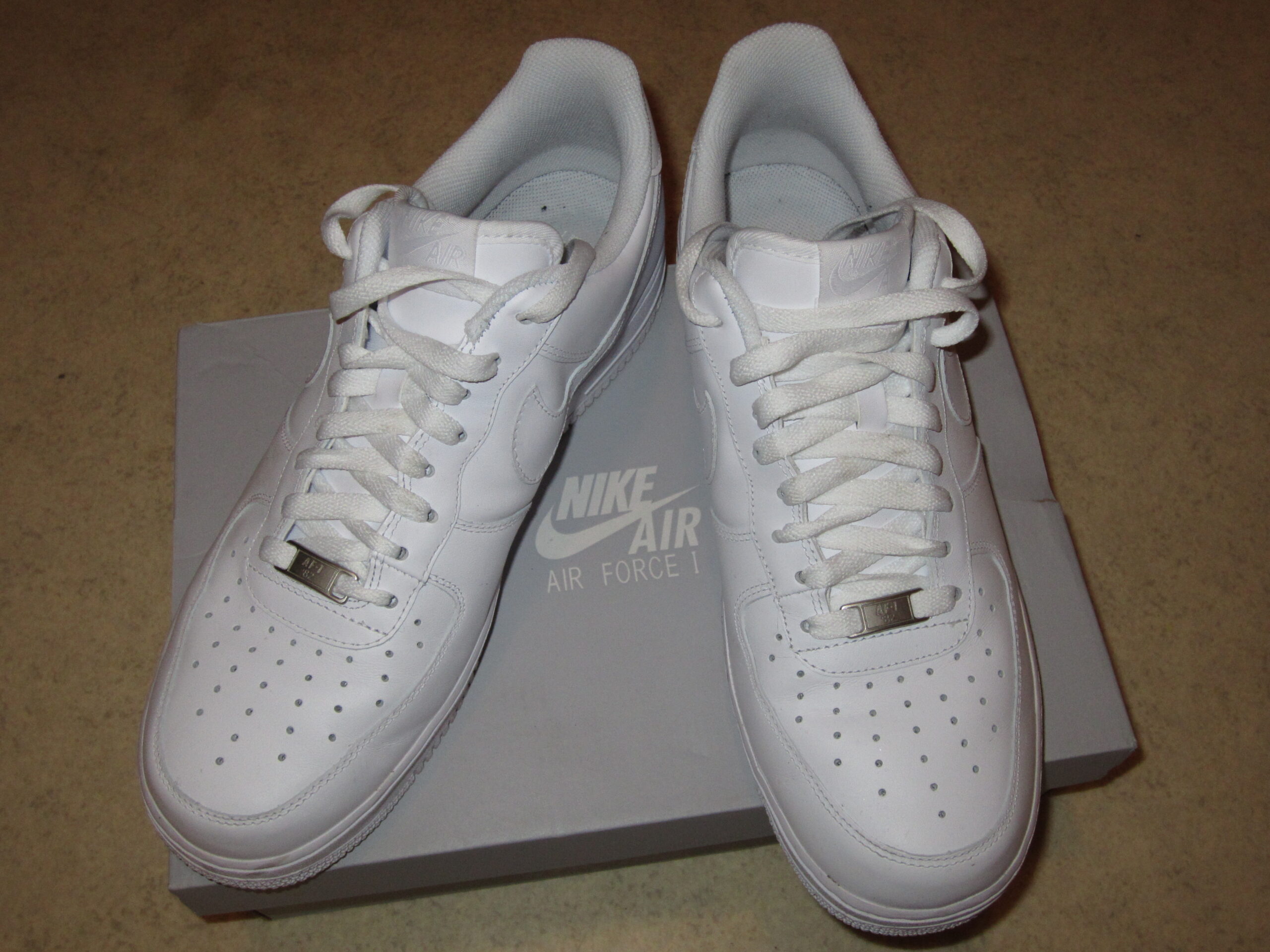
Few sneakers command the same respect on the streets of New York as a fresh pair of white-on-white Nike Air Force 1s. From Harlem sidewalks to Atlanta recording studios and international fashion runways, the silhouette has become one of the most recognizable symbols of hip-hop style.
Long before limited-edition releases turned sneakers into speculative assets, neighborhood retailers and music fans were building a market around a basketball shoe. Their story offers a lesson in how communities create value that corporations cannot manufacture by advertising alone.
1982: From the basketball court to the streets
When Nike introduced the Air Force 1 in 1982, hip-hop was reaching a new audience. Grandmaster Flash and the Furious Five released “The Message,” graffiti artists were attracting international attention, and breaking was traveling beyond its New York roots. Nike designer Bruce Kilgore was working in a completely different arena: performance basketball.
The sneaker brought Nike Air cushioning to basketball footwear. Its substantial sole, ankle strap and circular traction pattern gave the original high-top a distinctive profile. Moses Malone, Michael Cooper, Jamaal Wilkes, Bobby Jones, Mychal Thompson and Calvin Natt became associated with its early promotional campaign. A low-top version subsequently made the sneaker increasingly adaptable to everyday clothing.
The shoe arrived when athletic brands were competing to make basketball footwear more technically sophisticated. Yet the feature that ultimately gave the Air Force 1 its extraordinary longevity was not a technical specification. It was the ability to wear the shoe outside the gym without looking as though you were dressed for a game.
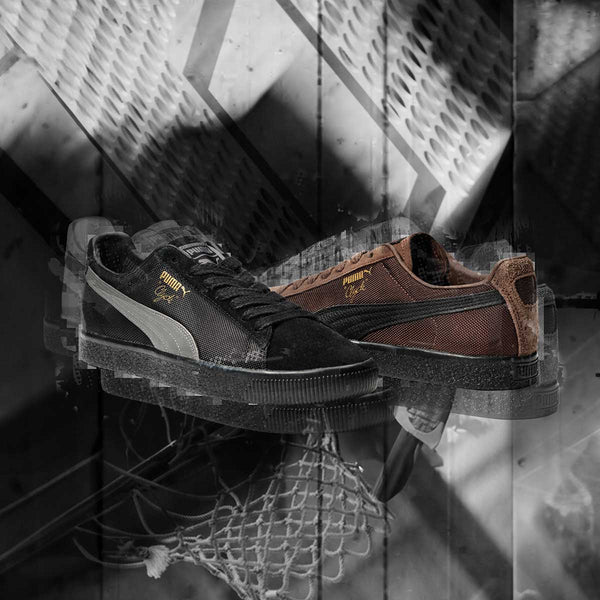
For comparison, read our history of the PUMA Clyde and Suede in early hip-hop. Both stories demonstrate that the audience can give an athletic product a second life far removed from the sport for which it was designed.
How Baltimore kept the Air Force 1 alive
New York is central to the shoe’s identity, but Baltimore deserves recognition for its survival. Nike was moving on from the model in the mid-1980s when local retailers recognized continuing demand. A group of Baltimore shops persuaded the company to supply new editions, establishing a precedent for regional releases.
As documented in Sotheby’s history of the Air Force 1, the resulting program attracted collectors from outside Maryland. Before online raffles and resale apps, sneaker enthusiasts relied on knowledgeable shop owners, word of mouth and visits to stores in other cities.
Think about what that meant for a customer in the 1980s. Finding out what a shop had in stock required a phone call or a trip. Owning an unusual colorway could tell a story about where you had traveled, the people you knew and the effort you had invested. The local retailer was an essential participant in the culture, not simply a distribution outlet.
Why Harlem called them Uptowns
The nickname Uptowns reflects the sneaker’s association with upper Manhattan. Harlem’s influence on American fashion reaches far beyond footwear, and the Air Force 1 became part of a visual language in which presentation mattered.
A clean pair of white sneakers could complement designer denim, sportswear, leather jackets or jewelry. Unlike shoes with elaborate color blocking, the neutral design allowed the wearer to decide which part of an outfit would attract attention. The same basic sneaker could work with a restrained wardrobe or an extravagant one.
Harlem’s Dapper Dan also provided an early example of the intersection between custom footwear and luxury branding. His customized Air Force 1 appeared on DJ E-Z Rock on the cover of the 1988 Rob Base and DJ E-Z Rock album It Takes Two. The image connected the sneaker to a tradition of adapting familiar products into individual statements. Sotheby’s account of this fashion history traces that relationship to later luxury collaborations.
The white-on-white phenomenon
Fashion ordinarily relies on novelty. A manufacturer introduces a new shape or color and encourages consumers to leave the previous generation behind. The white-on-white Air Force 1 follows a different logic: familiarity is part of the attraction.
Keeping the shoes clean became a ritual. Laces, toe boxes and midsoles received special attention because the monochrome design made dirt immediately visible. Some customers preferred to maintain their shoes carefully, while others replaced worn pairs rather than experimenting with an unfamiliar model.
The standard release also gave consumers an alternative to increasingly expensive collectible sneakers. Someone who cared about hip-hop fashion did not need access to a celebrity collaboration or a substantial collection. A single pair could anchor numerous outfits.
That distinction is important to the history of streetwear. Exclusivity can make a product desirable, but widespread recognition makes it a shared cultural reference. The Air Force 1 managed to develop both characteristics without requiring its basic design to change fundamentally.
Roc-A-Fella and the record-label era
During the late 1990s and early 2000s, Roc-A-Fella Records helped establish a version of rap entrepreneurship in which music, fashion and business ownership were closely connected. Jay-Z, Damon Dash and Kareem “Biggs” Burke built a brand whose identity was visible far beyond album packaging.
The Roc-A-Fella Air Force 1 expressed this relationship with unusual restraint. The record-label emblem gave an otherwise familiar white sneaker a new association. The shoe became a collector’s item, and the design returned in 2017 during Nike’s AF100 initiative.
Record-label merchandise had long offered listeners a way to express affiliation with their favorite artists. A sneaker collaboration brought that affiliation into an object people could incorporate into daily life. It also gave a music company a place in the wider conversation about collectible design.
Nelly took Air Force 1s nationwide
In 2002, Nelly released “Air Force Ones,” featuring Kyjuan, Ali and Murphy Lee. The song, from Nellyville, transformed sneaker shopping into a mainstream rap anthem. Its success demonstrated that a record could be built around the specific vocabulary and rituals of footwear enthusiasts without requiring every listener to understand the history behind them.
St. Louis was a crucial part of the record’s identity. The Air Force 1 might have been associated with New York, but Nelly showed that ownership of its cultural meaning was not restricted to one city. Regional artists could adopt a familiar object and make it part of their own story.
The song also documented a consumer experience that was rarely treated as a subject worthy of national attention. Choosing colors, acquiring pairs and comparing collections were ordinary activities in sneaker communities. Here they became the focus of a successful commercial single.
Independent artists and producers can submit their music for editorial consideration.
Southern rap and the changing streetwear silhouette
As Atlanta and other Southern markets gained influence, the shoe adapted to another generation of rap fashion. Loose denim, sportswear and jewelry worked with its substantial sole. Later, as more fitted clothing became fashionable, the same sneaker retained its place.
The Air Force 1 was not tied to the identity of a single signature athlete. That gave artists considerable freedom to make it their own. A consumer could wear the shoe because of a favorite rapper, a local trend or simply a personal preference, without necessarily adopting the identity of a particular sports star.
For a broader look at these changing styles, explore the evolution of hip-hop fashion.
Twenty-five years of basketball and rap history
Nike’s 2007 anniversary campaign brought together Rakim, KRS-One, Nas and Kanye West on “Classic (Better Than I’ve Ever Been).” A DJ Premier remix linked the campaign with the production traditions of New York hip-hop. The gathering represented several eras of rap history and acknowledged that the shoe’s public identity was now inseparable from music.
The campaign is worth revisiting because it arrived before the contemporary cycle of social media announcements, influencer unboxings and instant resale listings. Its central promotional asset was a record. The music could circulate independently of a product launch, reaching listeners who might never buy a commemorative pair.
From local exclusive to international collaboration
The flat surfaces and familiar construction of the Air Force 1 gave designers an adaptable starting point. Different materials and colors could change its character while leaving its outline recognizable. A limited release could speak to a collector without making the standard version obsolete.
Japanese sneaker culture helped establish an international audience for special editions, while later partnerships involving streetwear companies, musicians and visual artists diversified the range. Supreme, Travis Scott and Virgil Abloh each approached the sneaker from a different creative perspective.
What distinguishes this model from a conventional seasonal fashion product is the relationship between the special editions and the standard release. A pair of ordinary white sneakers does not become irrelevant when a new collaboration arrives. Collectors and casual customers can participate in the same design history at different price levels.
Virgil Abloh and the luxury fashion transformation
Abloh’s career bridged architecture, music, independent fashion and luxury design. His Off-White work challenged conventions about how sneakers should be finished, revealing construction details and using typography to draw attention to ordinary components.
His partnership with Louis Vuitton and Nike brought the Air Force 1 into a luxury context that reflected decades of street-level fashion experimentation. The project was presented publicly after his death, giving the designs particular significance for collectors following his career.
The connection to Harlem’s earlier customization culture is especially meaningful. Luxury branding and basketball footwear were already being combined by independent designers long before the world’s largest fashion institutions officially joined forces. The later collaboration demonstrated how an idea developed outside traditional luxury circles could eventually gain recognition inside them.
Help Raptology document the artists, dancers and overlooked innovators who shaped the culture.
Why the design still works
The Air Force 1 occupies an unusual position between fashion accessory and everyday uniform. Its visual weight gives it a presence beneath wide trousers, but its relatively simple upper also fits into minimalist outfits. Its familiarity allows a wearer to make a styling decision without examining every new seasonal trend.
There is also a generational dimension. An older customer might remember the shoe through record-label imagery or neighborhood shops, while a younger consumer might associate it with designer collaborations. Both can recognize the same silhouette and participate in the conversation without sharing identical memories.
Maintaining that continuity is not guaranteed. Excessive releases can dilute interest in any collectible product, and changing prices can make ordinary versions less accessible. The strength of the Air Force 1, however, has historically been that its relevance does not depend entirely on the latest exclusive release.
Who creates the value of street culture?
Nike developed the sneaker, but its history cannot be explained by product design alone. Retailers preserved it when the company was ready to move forward. Neighborhood consumers established the styling conventions around it. Musicians turned the experience of buying and wearing it into a subject of popular entertainment.
For independent artists and designers, that sequence offers a practical lesson. Building a recognizable identity and a committed local audience can precede recognition by a major commercial institution. Cultural influence and financial ownership, however, are not the same thing. The people who establish a trend do not automatically share in the commercial returns it generates.
More than four decades after its debut, the Air Force 1 remains a useful case study in the relationship between creative communities and corporate brands. Its story stretches from basketball courts to independent stores, Harlem street fashion, record labels and international runways. At its center remains the familiar white leather sneaker, an object that generations have repeatedly made their own.
Nike designed the Air Force 1. Hip-hop helped turn it into an institution.
Explore more hip-hop culture
Explore Hip-Hop Culture, Sneakers and Featured Stories on Raptology.

Shawn Grant is a Chicago-based journalist, multimedia host, and dedicated storyteller with a deep passion for hip-hop culture. His work spans artist interviews, music reporting, entertainment, and cultural commentary. Through conversations with influential figures such as Ice-T, Shawn explores hip-hop’s history, evolving legacy, and the artists shaping its future.






Leave a Reply