
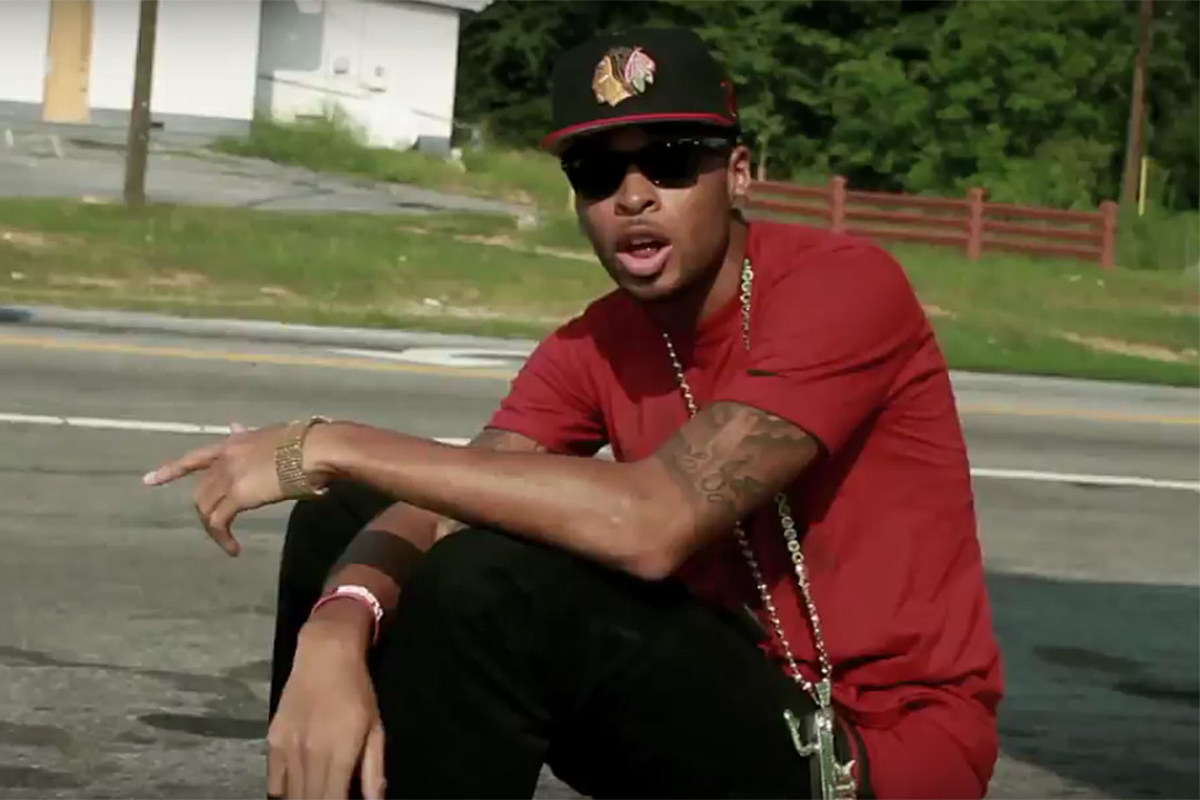
Slim Dunkin came out of Atlanta during one of the city’s most aggressive and influential rap eras, when Brick Squad energy was reshaping street music and giving Southern trap a louder national voice. He was not yet a household name when his life ended, but inside that movement, he represented something important: loyalty, presence, momentum, and the feeling that another Brick Squad star was beginning to form.
Born Mario Hamilton, Slim Dunkin became closely associated with Waka Flocka Flame, Gucci Mane’s 1017 universe, and the Brick Squad Monopoly wave that helped define Atlanta rap in the early 2010s. His music carried the same raw, high-pressure sound that made that era feel dangerous, urgent, and impossible to ignore. Then, on December 16, 2011, a confrontation inside an Atlanta recording studio turned fatal, cutting short a career that many fans believe was only beginning to reveal its full potential.
The Brick Squad Era That Built His Name
To understand Slim Dunkin’s story, you have to understand the Atlanta climate he came from. Around 2009 through 2011, Brick Squad was not just a rap crew. It was a movement with its own language, aggression, fashion, production style, and street mythology. Waka Flocka Flame’s rise brought a new kind of chaos into mainstream rap, while Gucci Mane’s 1017 world gave younger artists a platform that felt closer to the streets than traditional label systems.
Slim Dunkin fit naturally inside that energy. He had a heavy voice, a forceful delivery, and the kind of presence that made him stand out even when surrounded by bigger names. His work with Waka Flocka and Brick Squad Monopoly gave him visibility at a time when Atlanta was becoming the center of gravity in hip-hop. He was part of the same cultural lane that turned club records, mixtape cuts, and street anthems into national movements.
Key Facts
Real name: Mario Denzel Hamilton
Born: August 20, 1987
Died: December 16, 2011
Age: 24
Affiliation: Brick Squad Monopoly / 1017-linked Atlanta rap scene
Known for: Collaborations with Waka Flocka Flame, Brick Squad ties, and his role in Atlanta’s early 2010s trap wave
That is why his death still feels larger than a single headline. Slim Dunkin’s story belongs beside other Raptology true-story documentaries about artists whose careers were interrupted at the edge of a breakthrough. Readers who follow stories like Doe B’s rise and tragic final night will recognize the same painful pattern: regional momentum, industry attention, sudden violence, and a legacy that grows after the artist is gone.
December 16, 2011: The Studio Shooting
On December 16, 2011, Slim Dunkin was at an Atlanta recording studio preparing for a music video shoot. The setting should have represented progress. Studios are where artists build catalogs, create visuals, strengthen alliances, and turn momentum into opportunity. For Dunkin, that day became the opposite. A verbal dispute inside the studio escalated, and he was shot in the chest.
Reports at the time stated that the confrontation may have started over a minor dispute, with several accounts referencing candy as part of the argument. The shocking detail made the story spread even faster because it showed how something seemingly small could spiral into a fatal event when tension, pride, and firearms entered the room. Dunkin was transported to Grady Memorial Hospital, where he was pronounced dead.
The killing shook Atlanta because it happened inside a creative space tied directly to the city’s music machine. This was not a distant incident outside the culture. It happened in a room connected to the work, the rollout, and the everyday grind of becoming a rap star. That is one reason Slim Dunkin’s death remains part of the larger conversation around how street conflicts can follow artists even into professional environments.
Legal Aftermath and Public Reaction
After the shooting, Vinson Hardimon, known as Young Vito, became the central figure in the case. He later surrendered to police and faced charges connected to Slim Dunkin’s death. In 2013, Hardimon was acquitted of murder but convicted on related aggravated assault and weapons charges, receiving a lengthy prison sentence. For many fans, that outcome added another layer of frustration to an already painful story.
The reaction from the rap world was immediate. Waka Flocka Flame, Brick Squad affiliates, and Atlanta fans mourned Dunkin publicly. The grief was not only about friendship or crew loyalty. It was also about what he represented inside that moment. He was part of a camp that had already pushed Atlanta’s sound into a new era, and many believed he was positioned to grow beyond the role of affiliate into a stronger solo presence.
Timeline
2009: Slim Dunkin begins building his name through Brick Squad-connected releases and collaborations.
2010: Brick Squad and Waka Flocka Flame’s movement gains national visibility, giving Dunkin a stronger platform.
December 16, 2011: Slim Dunkin is fatally shot inside an Atlanta recording studio before a planned video shoot.
December 2011: The hip-hop community reacts with grief as fans revisit his music and collaborations.
2013: The case reaches a major legal conclusion with Young Vito acquitted of murder but convicted on related charges.
Why Slim Dunkin’s Story Still Matters
Slim Dunkin’s legacy is tied to the question that follows so many fallen artists: what would have happened if he had more time? He had the camp, the visibility, the co-signs, and the sound. His career did not end because the music stopped connecting. It ended because violence entered the room at the exact moment when his career was still developing.
That is why his story belongs in the same conversation as other rap tragedies where the loss became part of the culture’s memory. The details may differ, but the structure is often familiar: a regional artist gains momentum, the streets remain close, one incident changes everything, and years later fans still debate the career that might have been. Raptology has documented similar patterns in stories like Soulja Slim’s New Orleans legacy and Mac Dre’s Bay Area story.
Atlanta continued to rise after Slim Dunkin’s death, but his absence remained part of the story. The city’s dominance in hip-hop only grew stronger, while Brick Squad’s influence continued to echo through trap, drill, and the aggressive street-rap formats that followed. Dunkin’s name lives inside that history as one of the artists who helped define the feeling of the era, even if he never got the years needed to fully capitalize on it.
Read More Rap Crime Stories
If you are following Raptology’s documentary coverage of hip-hop history, these related stories connect directly to the same themes of legacy, violence, regional influence, and unfinished potential.
The Unfinished Chapter
More than a decade later, Slim Dunkin is remembered as a rapper who was close enough to the center of Atlanta’s rap explosion to matter, but gone too soon to finish his own chapter. His name still appears whenever fans revisit Brick Squad’s most intense years, and his music remains a reminder of how much talent was moving through Atlanta at that time.
His story is painful because it does not feel distant from the industry. It happened inside the machinery of rap itself, around music, visuals, crews, ambition, and movement. Slim Dunkin’s death stands as another example of how fragile momentum can be when the pressures around an artist are never fully separated from the career they are trying to build.
Reader Poll: Did Slim Dunkin have the potential to become a major Atlanta rap star?
Raptology Editorial is the official newsroom voice of Raptology, covering breaking hip-hop news, artist developments, industry trends, and in-depth editorial reports from across the global rap landscape.




👔🪙 Get 36,824.79 US Dollars. Next 🟢➤ graph.org/Transfer-04-14-3?hs=194443bd2b3bcc79e74093a5098fb97b& 👔🪙
i7612m