
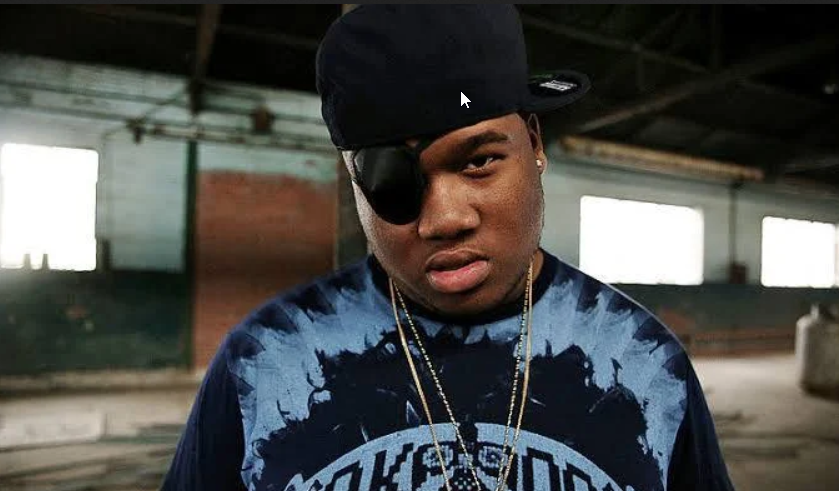
Before Alabama rap had the national pipeline it has today, Doe B sounded like one of the voices ready to force Montgomery into the conversation. His career was short, but the shadow it left behind still stretches across Southern rap.
Doe B’s story carries the kind of weight that turns an artist into a symbol. Born Glenn Thomas in Montgomery, Alabama, he was not just another rapper with local buzz. He was a street narrator with a voice that felt lived-in, a delivery that could slide between pain and pressure, and a regional identity that made him stand out before the industry fully understood what Alabama had to offer.
By the time T.I. and Grand Hustle entered the picture, Doe B already had the foundation of something rare. He had the records, the street credibility, the visual image, the eye patch, the city behind him, and the hunger of an artist who sounded like he knew time was not promised. What nobody knew was how quickly that promise would be taken away.
Montgomery’s Voice Before the Industry Was Looking
Montgomery has always carried deep cultural history, but in hip-hop, Alabama spent years fighting for the kind of national recognition given more easily to Atlanta, New Orleans, Memphis, Houston, and Miami. Doe B emerged from that overlooked space with a sound that did not feel like imitation. He was Southern, but not generic. He was melodic at times, but never soft. He could make trap music that sounded cinematic without losing the dirt under the story.
That mattered because Doe B was not simply trying to escape Montgomery. He was bringing Montgomery with him. In the same way Raptology’s documentary stories often trace how cities shape artists before fame does, Doe B’s music reflected the tension of a place where talent, trauma, loyalty, and danger could all exist on the same block.
His breakout records carried the confidence of someone who already sounded major. “Let Me Find Out” helped spread his name outside Alabama, while “Trap Muzik” made the industry pay closer attention. The records worked because they were not over-polished. They had bounce, grit, and a certain hunger that made Doe B feel like he was arriving from somewhere real, not manufactured inside an office.
The Eye Patch, the Image, and the Survival Story
Doe B’s eye patch became one of the most recognizable parts of his image, but it was not a gimmick. It came from surviving a shooting before his national rise, a detail that added another layer to the way people heard his music. When he rapped about danger, survival, and street pressure, listeners were not hearing performance alone. They were hearing somebody who had already been marked by the life he described.
That survival story made his image unforgettable. In rap, visual identity matters, but the strongest images usually come from truth. Doe B’s patch separated him immediately, yet it also carried a painful reminder of how close violence had already come to his life. Instead of hiding that history, he wore it in public, turning damage into a symbol of resilience.
Why Doe B still matters: He represented a version of Alabama rap that was gritty, deeply regional, and nationally ready before the mainstream fully opened its doors to the state. His story sits in the same tragic lineage as other Southern rap figures whose influence grew even louder after death.
T.I., Grand Hustle, and the Moment Everything Started Moving
Signing with T.I.’s Grand Hustle was the moment Doe B’s local momentum began turning into national possibility. T.I. had already built himself into one of Atlanta’s defining rap figures, and Grand Hustle gave Doe B a platform that connected Montgomery’s streets to a broader Southern rap machine. For an Alabama artist, that co-sign carried enormous weight.
The partnership made sense musically. Doe B’s style fit inside the trap lineage without sounding like a clone of Atlanta’s biggest names. He had the confidence, the storytelling, and the raw regional detail to become something distinct. T.I.’s involvement suggested that Doe B was not just a promising local rapper. He was being positioned as someone who could carry a new Southern voice into the national market.
In 2013, Doe B appeared on Grand Hustle’s G.D.O.D. compilation, standing alongside a larger roster while still sounding unmistakably like himself. His Baby Jesus mixtape also helped sharpen the picture of who he was becoming: a rapper who could make club records, street anthems, and reflective cuts without sounding like he was switching characters.
Why His Music Connected
Doe B’s records worked because they felt direct. He did not overcomplicate the message. His voice had weight, his hooks landed naturally, and his verses often sounded like conversations with people who understood the same environment. He could rap with urgency without losing control, and he could make pain sound calm, which is often what gives street rap its most haunting quality.
There was also a regional pride in his music that made fans feel like he belonged to them. Montgomery listeners heard their city in him, while outsiders heard a fresh Southern perspective that was not already overexposed. That balance is rare. Artists who are too local can struggle to translate, while artists who chase national approval too quickly can lose the community that built them. Doe B seemed capable of doing both.
That is part of why his catalog still gets revisited. Songs like “Trap Muzik,” “Let Me Find Out,” “Paid the Plug,” and “Why” sound like chapters from a story that never got to finish. They are not just records from a rising rapper. They are pieces of an unfinished timeline.
The Night Montgomery Lost Its Voice
On December 28, 2013, Doe B was killed in a shooting at Centennial Hill Bar & Grill in Montgomery. Kimberle Johnson and Timnarius Hamilton were also killed, and several others were injured. The tragedy immediately shook Alabama, Grand Hustle, and the broader rap world because Doe B was only 22 and visibly standing at the edge of a larger breakthrough.
The details made the loss even heavier. This was not the death of an artist whose run had already played out. This was a rapper whose story was just beginning to widen. His name was moving. His videos were spreading. The T.I. co-sign was active. The records were working. Montgomery had a national contender, and then, in one night, the city was left mourning what could have been.
Rap has too many stories like this, but Doe B’s death felt especially cruel because his career still had so much open space in front of it. Fans were not only grieving the person. They were grieving the albums that would never be made, the collaborations that never happened, and the chance for Alabama to watch one of its own become a defining national figure.
Essential Doe B Records to Revisit
- “Trap Muzik” — the record that captured his Grand Hustle-era momentum and introduced his sound to a wider audience.
- “Let Me Find Out” — one of the songs that helped build his name beyond Montgomery.
- “Paid the Plug” — a street record that showed his confidence and delivery.
- “Why” — a darker, more reflective side of his catalog.
- Baby Jesus — the project that remains central to understanding his rise.
The Unfinished Legacy
After Doe B’s death, his music continued to circulate through posthumous releases, tributes, and fan conversations. That kind of afterlife is complicated. On one hand, it keeps an artist’s name alive. On the other, it reminds listeners that the artist is no longer here to shape the story himself. Every posthumous release carries the ache of absence.
For Alabama rap, Doe B’s legacy is bigger than streaming numbers or old videos. He helped prove that Montgomery had a voice that could compete nationally. He gave younger artists a reference point. He showed that Alabama did not need to sound like Atlanta, Memphis, or New Orleans to matter. It could sound like itself.
That influence can be felt whenever fans talk about Alabama’s lost chances in hip-hop. Doe B is often mentioned not only as a talented rapper, but as a missing chapter in Southern rap’s evolution. He was one of those artists whose death freezes them at the moment of possibility, which makes the story harder to close.
Why Doe B’s Story Still Hurts
Doe B’s death still hurts because it feels like a door closing before the room was even fully lit. There are artists whose careers are remembered through complete eras, clear peaks, public reinventions, and final statements. Doe B never got that luxury. His story remains suspended between arrival and destiny.
That is also why his name continues to travel. Fans are drawn to artists who leave behind unanswered questions, especially when the music is strong enough to support the mythology. Doe B was not famous only because he died young. He is remembered because the music made people believe he was going somewhere important.
Montgomery lost more than a rapper that night. It lost a symbol of what Alabama rap could become on a national stage. Doe B’s catalog remains a reminder that some artists do not need decades to make an impact. Sometimes a few records, a voice, a city, and an unfinished dream are enough to keep the story alive.
Reader Poll
What part of Doe B’s legacy stands out the most today?
Montgomery rap: 0% — 0 votes
Grand Hustle connection: 0% — 0 votes
The records: 0% — 0 votes
Career cut short: 0% — 0 votes
Alabama influence: 0% — 0 votes
More Raptology Documentaries
Continue exploring Raptology’s latest deep-dive stories on hip-hop history, street rap, lost careers, and the moments that shaped the culture.
FAQ
Who was Doe B?
Doe B, born Glenn Thomas, was a rapper from Montgomery, Alabama. He became known for his gritty Southern sound, his eye patch, and his association with T.I.’s Grand Hustle label.
What was Doe B best known for?
He was best known for songs such as “Trap Muzik” and “Let Me Find Out,” along with his Baby Jesus mixtape. His music helped bring more attention to Montgomery’s rap scene.
How did Doe B die?
Doe B was killed in a shooting at Centennial Hill Bar & Grill in Montgomery, Alabama, on December 28, 2013. Kimberle Johnson and Timnarius Hamilton were also killed in the tragedy.
Why is Doe B still remembered?
Doe B is remembered because his career appeared to be reaching a national breakthrough when he was killed. His music, image, and Montgomery roots left a lasting impression on fans of Southern rap.

Natalia is a Rap and Hip Hop enthusiast. After graduating from The New School of New York’s Public Relations Program and taking a course in Journalism at Michigan State University, she decided to dedicate her life to the music publishing business and to the discovery of new talent. She helps new artists gain exposure to the masses via online marketing and publications.


Leave a Reply