
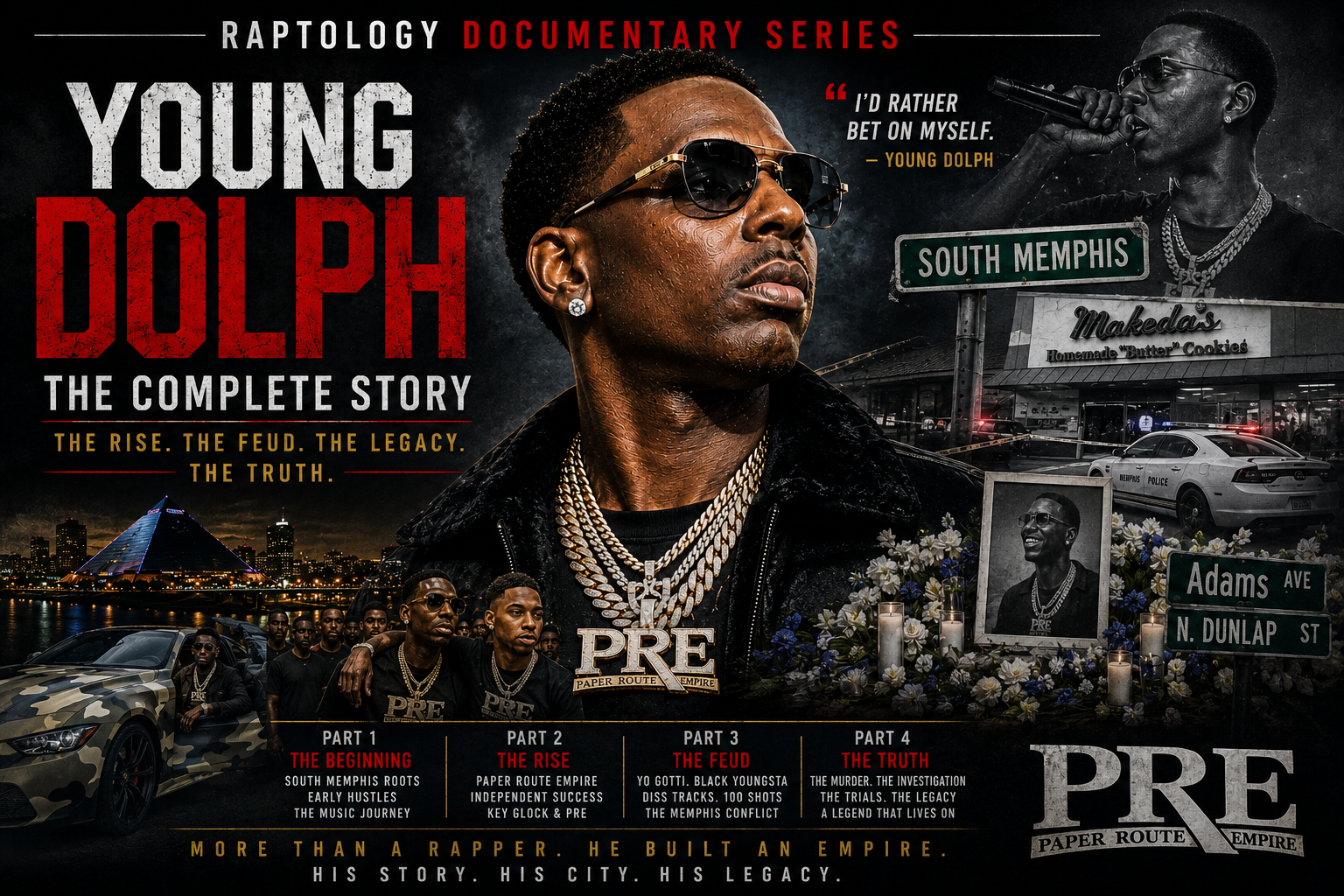

Inside This Raptology Documentary
Use this guide to move through the full story: the beginning, the rise, the feud, and the final chapter.
Young Dolph’s story was never only about rap success. It was about South Memphis, family trauma, independence, ownership, street politics, and the danger of becoming powerful without asking permission from anybody.
By the time the world lost Young Dolph on November 17, 2021, he had already built one of the most respected independent movements in modern rap. He was the face of Paper Route Empire, a Memphis entrepreneur who turned pain into leverage and leverage into a company. Fans loved the cars, the chains, the ad-libs, and the blunt confidence, but the deeper lesson was bigger than image. Dolph showed artists that ownership could be a lifestyle, not just a slogan.
His death at Makeda’s Homemade Butter Cookies in Memphis became one of the defining tragedies of 2020s hip-hop. It happened in broad daylight, in a place he publicly supported, while he was back in the city ahead of Thanksgiving charitable work. The image was unforgettable: a hometown rap hero, a local bakery, a camouflage car, police tape, and a city suddenly forced to mourn one of its most visible success stories.
Independent Artist? Get Seen By Raptology Readers
Young Dolph’s journey is a reminder that independent artists need visibility, platforms, and ownership. If you are building your own movement, submit your music to Raptology for editorial consideration.
Submit Your MusicChapter 1: The Beginning Of A Legend

Young Dolph was born Adolph Robert Thornton Jr. in Chicago, but his identity was built in Memphis. He moved to South Memphis as a child and grew up in Castalia Heights, a neighborhood that would become central to his music, interviews, and public image. He did not rap like someone borrowing street imagery. He rapped like someone describing the rooms, corners, family struggles, and survival instincts that raised him.
In interviews, Dolph spoke openly about his parents’ drug addiction and the emotional distance it created during his childhood. He often described himself as a “crack baby,” not to sensationalize trauma, but to explain the reality he came from. Addiction was not an abstract social issue in his story. It was inside the house, inside the family, and inside the memory of a child trying to understand why his parents were physically present but emotionally unavailable.
That pain became one of the emotional engines behind his music. Dolph’s records were full of money talk, luxury cars, street language, and independent flexing, but underneath the surface was a deeper story about abandonment and responsibility. He was not only bragging about wealth. He was measuring the distance between where he started and where he forced himself to go.
The Grandmother Who Built His Foundation
If Dolph’s parents represented instability in his early life, his grandmother represented order. He repeatedly credited her as the person who raised him, disciplined him, pushed him, and taught him responsibility. She was the kind of elder who did not allow excuses, even when the circumstances around him were difficult.
Her influence explains why Dolph’s image never fit neatly into one box. He was a street rapper, but he also talked constantly about common sense, family duty, financial responsibility, and taking care of people around him. He credited his grandmother with teaching him that doing good for others would bring good back to him. That belief later showed up in turkey giveaways, school visits, community support, real estate investments, and unexpected acts of generosity.
Dolph also said that as he became a teenager, he started taking on responsibilities that most kids would never be expected to carry. He helped siblings, helped parents, paid bills, and became a provider before he was old enough to fully process the weight of that role. That early pressure shaped his ambition. He was not chasing money only for status. He was chasing control, security, and the ability to never feel powerless again.
From Cutting Hair To Chasing A Real Dream
Long before the record deals, Billboard placements, and national tours, Dolph was already thinking like an entrepreneur. As a young teenager, he taught himself how to cut hair and started giving haircuts around the neighborhood. It was not glamorous, but it showed something that defined his entire career: if there was no opportunity in front of him, he would create one.
The transcript describes a moment where his older sister challenged him and his younger brother about their futures. She did not let them sit around imagining unrealistic escape routes without a plan. Her message was blunt: get real dreams. For Dolph, that conversation hit hard because it forced him to look at his life as something he had to actively build instead of something that would magically change.
From cutting hair, he moved into the street economy that surrounded him. Dolph later spoke about hustling as a teenager, but what stood out in his interviews was how often he connected street activity to math, discipline, and business logic. He wanted to know numbers. He wanted to understand profit. He wanted to calculate outcomes. That mindset later translated directly into the way he approached music.
Paper Route Campaign
Dolph’s early grind was not powered by algorithms or playlist placements. It was powered by physical CDs, street teams, club parking lots, and repetition. His debut project, Paper Route Campaign, became the foundation for the movement. His team printed thousands of CDs and handed them out so aggressively that people sometimes received the same disc multiple times.
That type of promotion sounds old-school now, but it was essential to how regional rap scenes worked before every artist could flood social media instantly. Dolph’s team understood that familiarity could become demand. Even if people ignored the CDs at first, the name kept coming back. Eventually, some listeners gave in, pressed play, and realized the music matched the campaign.
Explore More Raptology Hip-Hop History
Chapter 2: The Rise Of Paper Route Empire

By the early 2010s, Young Dolph was no longer simply another rapper trying to get noticed in Memphis. The groundwork laid through mixtape releases, street promotion, and strategic networking was paying off. His name carried weight throughout the city, and his reputation was spreading across the South. What separated Dolph from many of his peers was not only his music, but also the way he approached the business behind it.
Many artists viewed a record deal as the finish line. Dolph viewed it as one possible option among many. While other rappers chased label executives, Dolph focused on increasing his leverage. Every mixtape, every paid show, every independent release, and every loyal fan strengthened his negotiating position. Rather than rushing into contracts, he concentrated on building Paper Route Empire into a legitimate business.
Atlanta became an important piece of his growth strategy. During the late 2000s and early 2010s, Atlanta was the center of Southern hip-hop. Major artists, producers, DJs, and executives operated within the city’s ecosystem. Dolph understood that if he wanted to expand beyond Memphis, he needed relationships there.
His connections with influential figures such as DJ Scream, Drumma Boy, Gucci Mane, OJ da Juiceman, and 2 Chainz helped open doors. More importantly, they provided validation. When respected names in Atlanta began collaborating with Dolph, listeners outside of Memphis started paying attention.
Learning From Gucci Mane
One of the most important relationships in Dolph’s early career was his connection with Gucci Mane. While many fans focus on the music they created together, the business lessons may have been even more valuable. Gucci had built a reputation as one of the most prolific artists in rap history. He released music constantly, cultivated new talent, and maintained a direct connection with his audience.
Dolph admired that approach because it mirrored his own work ethic. The relationship developed naturally because Gucci respected artists whose music matched who they were in real life. That was Dolph’s advantage. His voice, image, interviews, and business moves all felt connected. There was no obvious gap between the rapper and the person.
The $22 Million Decision
Perhaps no moment better captured Young Dolph’s business philosophy than the reported $22 million record deal he said he turned down. For most artists, that amount of money would be life-changing. Many would sign immediately. Dolph looked at the situation differently.
He believed ownership mattered more than immediate cash. He often compared himself to entrepreneurs and investors rather than traditional entertainers. Instead of focusing only on what the deal offered today, he focused on what he might lose tomorrow. His reasoning was simple. If companies were willing to offer tens of millions of dollars, then the value he had created was likely worth far more than that.
Business lesson: Dolph’s core message was not anti-label. It was pro-leverage. He wanted artists to understand their value before signing away control.
The reported decision remains one of the most discussed moments of his career because it represented something rare in modern music: patience. Dolph was willing to bet on future ownership instead of accepting immediate security.
Key Glock And The PRE Expansion
As Paper Route Empire expanded, Dolph began focusing more attention on developing artists around him. The most successful of those efforts involved Key Glock. The chemistry between Dolph and Glock was obvious from the beginning. Dolph brought experience, confidence, and business insight. Glock brought youthful energy, charisma, and hunger.
Together, they created one of the strongest artist partnerships in modern Southern rap. Projects like Dum and Dummer helped elevate both artists while strengthening the PRE brand. Rather than positioning himself as the only star, Dolph actively invested in creating additional stars around him.
By the time Rich Slave arrived in 2020, Dolph had reached a level of success that few independent artists ever achieve. The album became his highest-charting project, reaching the top five of the Billboard 200. The title reflected one of the contradictions Dolph often explored. Financial success did not automatically create freedom, and wealth came with pressure, scrutiny, and limitations.
Raptology Rap Contest
Young Dolph built his career independently. The next generation of artists needs platforms too. Enter the Raptology Rap Contest and put your music in front of readers who care about new rap talent.
Enter The ContestChapter 3: The Feud And The 100 Shots

By the middle of the 2010s, Young Dolph had become one of the most recognizable artists to emerge from Memphis. His mixtapes were generating buzz throughout the South, his independent movement was growing rapidly, and Paper Route Empire was transforming from a local brand into a national one.
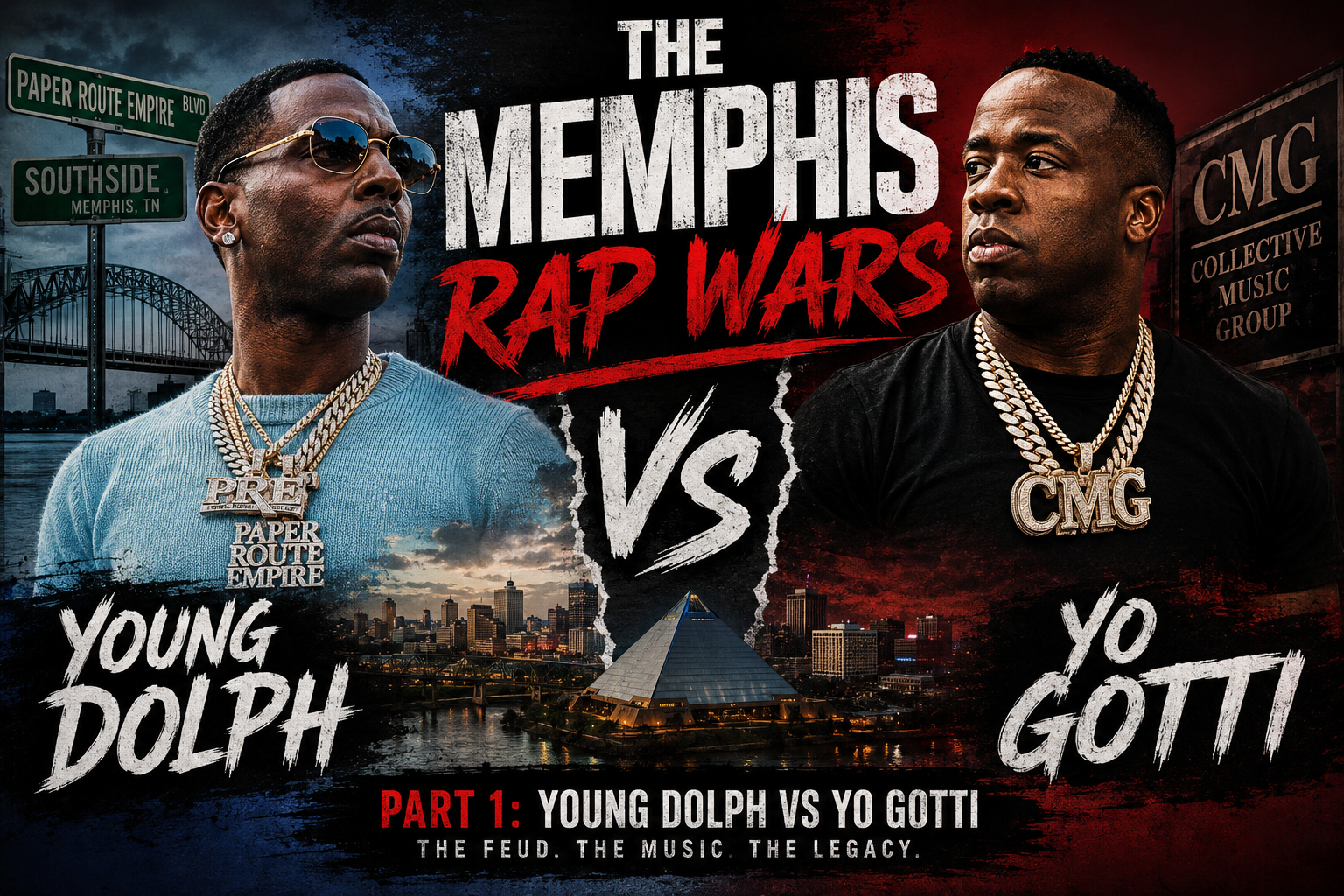
At the same time, another Memphis powerhouse already occupied the city’s highest levels of commercial success. Yo Gotti had spent years building his name, expanding Collective Music Group, and establishing himself as one of the biggest rappers in the South. For a period, the two artists appeared to coexist without major issues. Both represented Memphis. Both were successful. Both commanded loyal fan bases.
But as Dolph’s influence increased, tension became part of the public story. According to Dolph’s own account, Gotti approached him about a business situation connected to CMG. Dolph chose not to sign. For many artists, joining an established Memphis star might have seemed like the obvious move. Dolph preferred to continue building Paper Route Empire independently.
The “King Of Memphis” Debate
One of the most controversial moments arrived when Dolph released his debut studio album King of Memphis. The title immediately generated conversation throughout the city. Memphis has always been protective of its musical legacy. Artists such as Three 6 Mafia, 8Ball & MJG, Gangsta Boo, Project Pat, and Yo Gotti all contributed significantly to the city’s culture. Claiming the title of “King of Memphis” guaranteed attention.
Dolph never appeared interested in avoiding controversy. He embraced confidence as part of his public image. Fans viewed the title as a direct challenge to existing hierarchies. Supporters praised his boldness. Critics viewed it as disrespectful. Either way, the conversation intensified.
“Play Wit Yo Bitch” Changes Everything
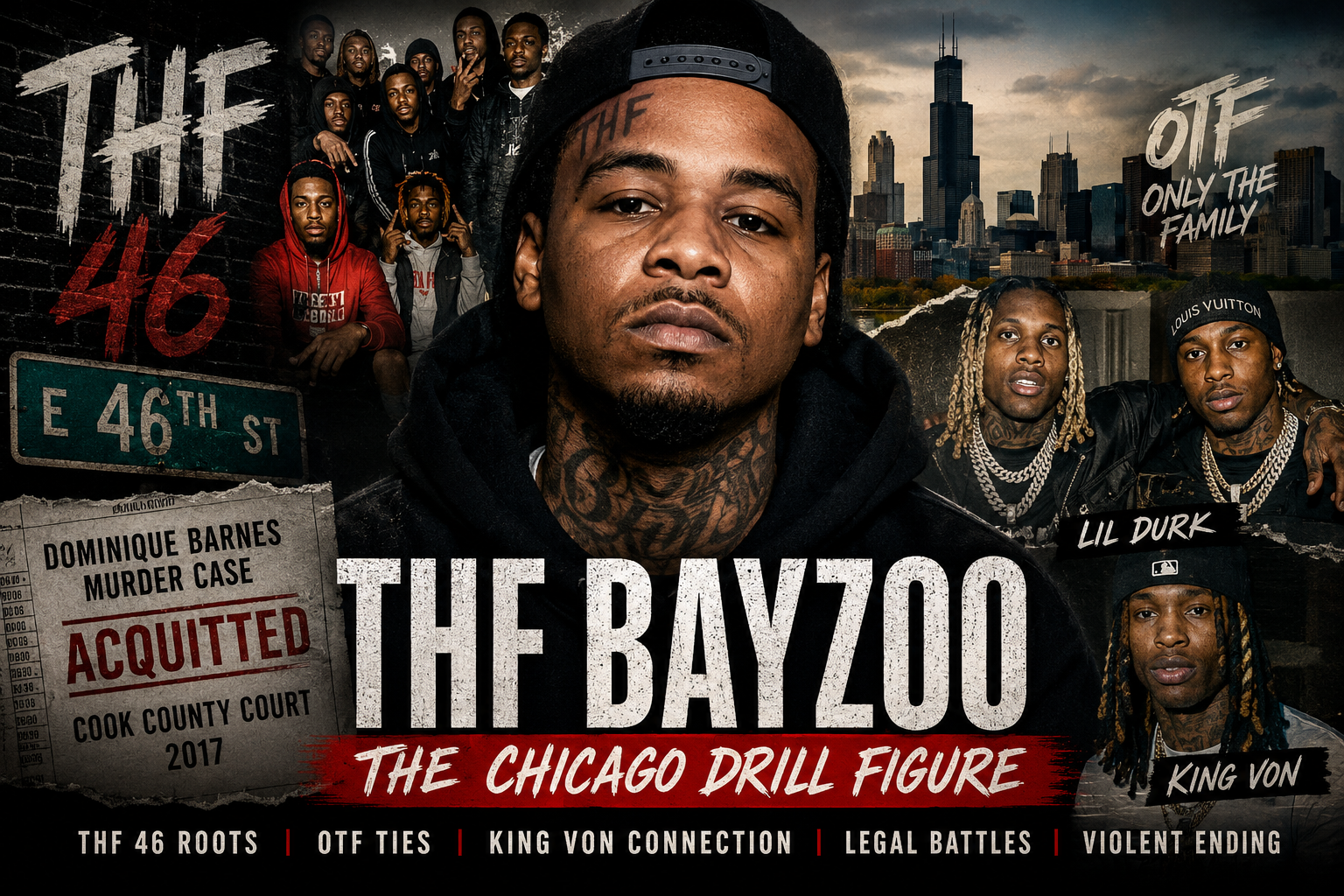
If the rivalry had remained limited to interviews and subliminal lyrics, history might remember it differently. Instead, the situation escalated dramatically in 2017 when Young Dolph released one of the most controversial songs of his career: Play Wit Yo Bitch. The record directly targeted Yo Gotti and quickly became one of the most talked-about diss tracks in Southern rap.
Dolph did not rely on coded language. He openly addressed rumors, relationships, and longstanding tensions. Hip-hop media outlets immediately covered the record. Fans took sides. Social media exploded with reactions. What had previously been viewed as an industry rivalry now appeared personal.
The Charlotte Shooting And “100 Shots”
Only weeks after the release of Play Wit Yo Bitch, one of the most shocking incidents of Young Dolph’s career occurred in Charlotte, North Carolina. During CIAA weekend in February 2017, gunfire erupted around a vehicle associated with Dolph. Reports said dozens of rounds were fired. Dolph survived, and the incident became one of the most widely discussed moments in the history of the conflict.
Rather than retreating from public view, Dolph responded the way he often responded to adversity: through music. 100 Shots transformed a life-threatening situation into a defiant anthem. The track referenced surviving the shooting and quickly became a fan favorite. For many listeners, the song represented resilience. Dolph framed survival as victory and used humor, confidence, and storytelling to flip the narrative.
The accompanying album, Bulletproof, continued that theme. Dolph portrayed himself as someone who had survived obstacles, betrayals, and violence while continuing to move forward. The album’s tracklist itself played like a message, turning a near-death experience into branding, narrative, and momentum.
Later in 2017, tragedy nearly struck again when Dolph was shot in Los Angeles. He survived that incident too, which added to a public mythology around him. Fans increasingly viewed Dolph as untouchable, but that belief was dangerous. Surviving violence can make an artist look invincible to the public, but it does not make the threats disappear.
Raptology Context
Dolph’s feud-era music was not just entertainment. It shaped how fans understood the conflict and turned real danger into part of his public mythology.
Why It Still Matters
The 100 Shots era became a case study in how rap narratives, street reputation, internet coverage, and real-world violence can overlap.
One of the challenges in discussing this period today is separating confirmed facts from internet mythology. As the conflict became larger than life, countless theories emerged online. Fans connected dots, interpreted lyrics, analyzed interviews, and created narratives that often extended beyond verified information.
What remains clear is that the rivalry became one of the defining stories in Memphis rap during the 2010s. The combination of diss tracks, public statements, legal developments, shootings, and social media activity ensured constant attention. Yet even as headlines focused on controversy, Dolph continued building his business.
More Raptology Deep Dives
Chapter 4: The Final Chapter

By November 2021, Young Dolph appeared to be entering one of the strongest periods of his life. Paper Route Empire was thriving. Key Glock’s profile continued rising. His business ventures were expanding, and his influence stretched beyond music.
Unlike many artists who completely disconnected from their hometown after achieving success, Dolph remained deeply tied to Memphis. He regularly returned to the city, invested in local businesses, organized community giveaways, and maintained relationships throughout the neighborhoods that raised him. That connection was on display during the week of his death.
Dolph had traveled back to Memphis to participate in charitable activities ahead of Thanksgiving. He planned to distribute turkeys to local families, continuing a tradition that reflected the values his grandmother instilled in him years earlier. Only days before his death, he visited the West Cancer Center near Memphis to thank healthcare workers and encourage patients and families affected by cancer.
November 17, 2021
Shortly before noon on November 17, 2021, Young Dolph stopped at Makeda’s Homemade Butter Cookies, a well-known Memphis bakery that he had publicly supported. According to investigators and public reports, two armed men arrived and opened fire through the storefront. The attack happened in broad daylight. Emergency responders arrived, but Dolph was pronounced dead at the scene.
The news spread through Memphis almost instantly. Before official confirmations appeared, crowds had already begun gathering near the scene. Many recognized the camouflage-wrapped Corvette parked outside. Others learned of the shooting through social media livestreams, text messages, and local reports. Within hours, the story became national news. For Memphis, it felt deeply personal.
Confirmed case status: Justin Johnson was convicted in 2024 and sentenced to life in prison. Hernandez Govan was acquitted in 2025. Cornelius Smith Jr. pleaded guilty to second-degree murder in 2026 and received a 20-year sentence.
The Investigation And The Courtroom
In the days following the murder, investigators began piecing together what happened through surveillance footage, vehicle evidence, witness accounts, and forensic analysis. As often happens in high-profile rap cases, social media quickly filled with theories. Fans, bloggers, and commentators proposed countless explanations for the murder. Many of those theories proved inaccurate or unsupported.
Law enforcement focused on evidence rather than online speculation, gradually identifying individuals connected to the crime. Justin Johnson, known as Straight Drop, became one of the most recognizable suspects after authorities placed him on Tennessee’s Most Wanted list. Cornelius Smith was also charged in connection with the case, and later testimony placed him at the center of the shooting.
The case also became tied publicly to allegations involving Anthony “Big Jook” Mims, the brother of Yo Gotti, after testimony claimed a bounty had been offered. Big Jook was killed in 2024 and was not charged in Young Dolph’s case. Hernandez Govan, accused by prosecutors of helping organize the killing, was later acquitted by a Memphis jury. That outcome showed why it is important to separate courtroom allegations from proven legal findings.
Separating Fact From Internet Rumors
One of the most difficult aspects of covering Young Dolph’s death is distinguishing confirmed facts from online speculation. Almost immediately after the shooting, social media filled with accusations, conspiracy theories, and rumors involving numerous individuals throughout the Memphis rap scene. Many claims generated millions of views despite lacking courtroom proof.
The reality is powerful enough without exaggeration. Dolph was a nationally known independent rapper and label owner who was killed while visiting a local bakery in his hometown. His death sparked grief across hip-hop, led to years of court proceedings, and forced Memphis to confront the collision between rap fame, street politics, and unresolved violence.
Young Dolph Timeline
The Legacy Of Independence
Long after headlines about rivalries and investigations fade, Young Dolph’s legacy will likely be defined by independence. Few artists reached his level of success while maintaining the degree of ownership he fought to preserve. He repeatedly turned down opportunities that would have provided immediate financial rewards because he believed ownership offered greater long-term value.
That philosophy influenced an entire generation of artists. Today, discussions about masters, publishing rights, equity, branding, and entrepreneurship are common throughout hip-hop. Dolph was advocating many of those ideas before they became mainstream talking points. His career demonstrated that artists could build powerful businesses without following traditional industry rules.
Following Dolph’s death, Paper Route Empire faced its greatest challenge. The label had lost its founder, visionary, and primary star. Yet the movement continued. Artists associated with PRE, particularly Key Glock, carried the banner forward while honoring Dolph’s memory. The label remained active, proving that the foundation Dolph built was larger than one individual.
Build Your Own Independent Movement
Young Dolph’s story inspired thousands of artists to bet on themselves. If you are building your own brand, submit your music to Raptology and get your work in front of dedicated hip-hop readers.
Submit Your MusicFrequently Asked Questions
Who was Young Dolph?
Young Dolph was a Memphis-raised rapper, entrepreneur, and founder of Paper Route Empire. He became known for independent success, business ownership, and a deeply loyal fan base.
Where was Young Dolph killed?
Young Dolph was killed at Makeda’s Homemade Butter Cookies in Memphis on November 17, 2021, while visiting a local business he had supported publicly.
Why is “100 Shots” important?
“100 Shots” became one of Dolph’s signature records because it turned a near-death shooting incident into a defiant anthem about survival.
What is Paper Route Empire?
Paper Route Empire is the independent label and movement Dolph built. It became central to his legacy and continued after his death.
Reader Poll: What Is Young Dolph’s Greatest Legacy?
Think You Have What It Takes?
Young Dolph spent years building his name independently before the world paid attention. The next breakout artist could be reading this article right now.
Enter The Raptology Rap ContestContinue Exploring Raptology
Raptology Editorial is the official newsroom voice of Raptology, covering breaking hip-hop news, artist developments, industry trends, and in-depth editorial reports from across the global rap landscape.

Leave a Reply