
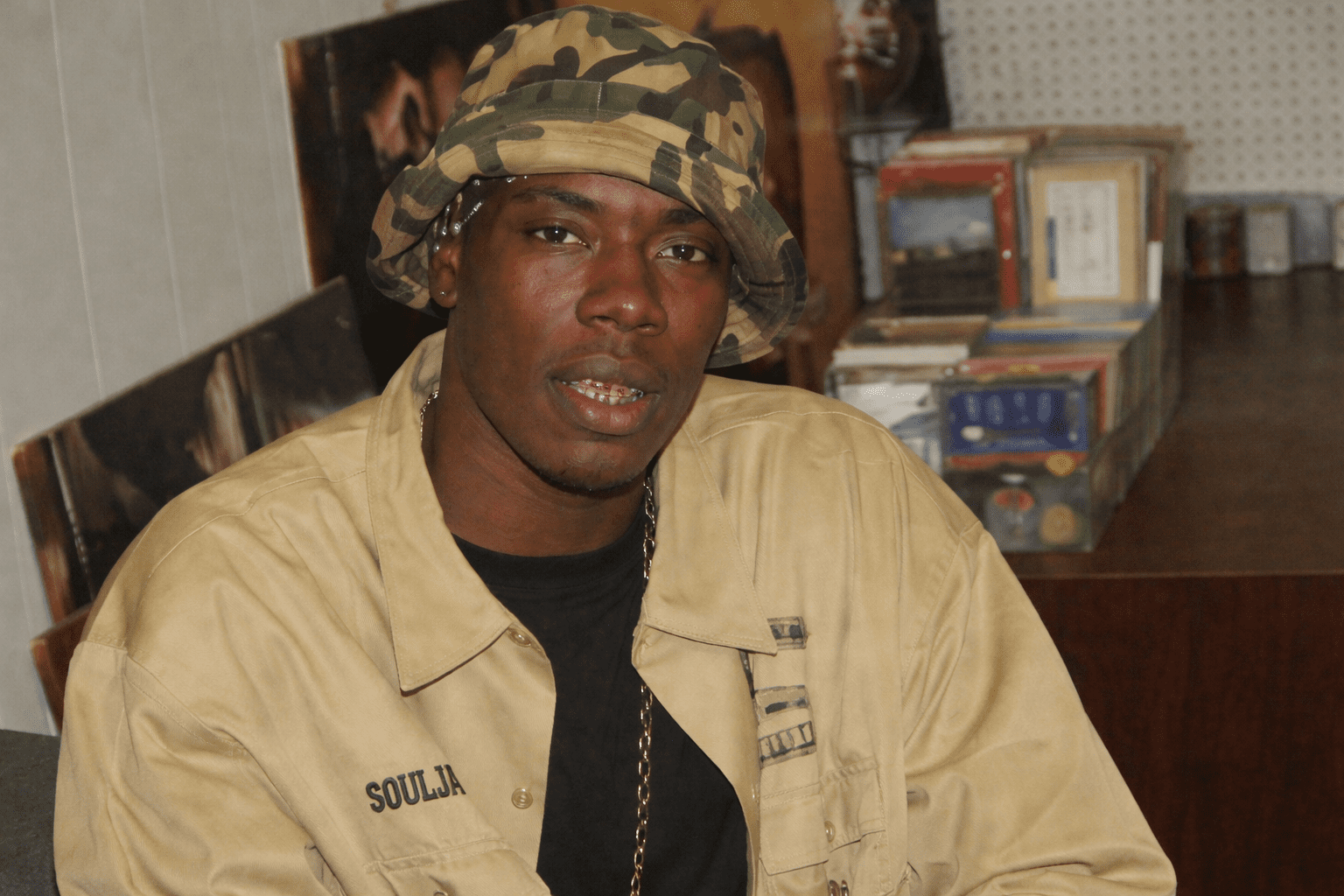
Soulja Slim remains one of those rappers whose name never left the culture, even after his life did. In New Orleans, he was more than a local star. He was a street narrator, a Magnolia Projects voice, a No Limit soldier, and the kind of rapper whose music sounded too close to real life to be treated like fiction. His death in 2003 froze his story before the national mainstream fully caught up. Then “Slow Motion” became a posthumous No. 1 hit, and the legend grew even bigger. That contradiction is what makes Soulja Slim such a powerful documentary subject: a hometown giant, a murder mystery that still lingers, and a style that helped blueprint a whole generation of Southern street rap.
Before the national spotlight, Soulja Slim already sounded like he belonged to the streets that raised him
Soulja Slim’s music never sounded like it was trying to translate itself for outsiders first. That is one of the main reasons it lasted. He came out of New Orleans with a style that felt deeply local in its texture and completely universal in its pressure. His records were not built around neat commercial polish. They were built around survival, environment, and the kind of blunt narration that makes a rapper sound less like a performer and more like a witness to his own life.
That matters because New Orleans rap has always had multiple layers. There is the bounce energy people associate with the city. There is the larger Cash Money and No Limit mythology. And then there is the darker street storytelling that runs underneath both of those worlds. Soulja Slim belonged to that darker register. Even when his records had hooks and momentum, they still felt heavy. His voice carried a kind of pain and calm at the same time, as if he already understood that the life in the songs could not simply be escaped by recording it.
He first built his name locally as Magnolia Slim, and that early phase matters to the larger documentary story because it shows how deeply rooted he was before the bigger labels amplified him. He was not invented by a national machine. He was already a New Orleans figure, already carrying local gravity, already speaking in a voice that made the city’s street reality feel immediate. By the time the rest of rap started paying closer attention, Soulja Slim did not need to reinvent himself. He only needed a wider speaker system.
His rise mattered because he represented a harder side of New Orleans rap than the mainstream usually saw
When people tell the story of New Orleans rap, the biggest mainstream names often dominate the conversation. But Soulja Slim’s place in that history is crucial because he represented a grittier and more fatalistic side of the city’s voice. He was not the flashiest New Orleans rapper, and that is exactly why he still feels so important. He made records that carried the rough atmosphere of the city before it became simplified into easy national branding. He sounded like New Orleans without cleaning it up.
That made him influential in a very specific way. Soulja Slim’s records did not need to go fully pop to feel powerful. The appeal came from the realism, the drawl, the threat, and the emotional weariness underneath the bars. That formula would later echo across generations of Southern rappers who understood that street music could hit harder when it sounded lived in instead of over-performed. In that sense, Soulja Slim was not just part of New Orleans rap history. He was part of the DNA of later street rap across the South.
It also helped that he arrived during an era when the city’s sound was expanding nationally. That timing gave his music a wider historical importance. He stood close enough to the era of mainstream explosion to shape it, but his style stayed grounded enough to remain distinct from the slicker crossover formulas around him. That balance is part of why his legend kept growing after his death. He represents not just a talented rapper who got cut down too early, but an entire version of New Orleans rap that people still return to when they want something rawer, darker, and more truthful.
Explore more documentary-style rap storytelling across Raptology’s growing archive.
The No Limit era gave Soulja Slim a larger platform, but it never diluted the darkness in his music
When Soulja Slim entered the No Limit world, the move made sense historically. No Limit was one of the biggest engines in Southern rap, but it was also broad enough to hold different kinds of artists. Slim fit because he brought authenticity, danger, and local respect into a machine that understood how to turn regional energy into national momentum. His 1998 album Give It 2 ‘Em Raw became the clearest statement of that period: a project that still feels like one of the hardest and most grounded releases in the larger No Limit orbit.
What made Soulja Slim stand out even within that ecosystem was that he did not sound swallowed by the label. Some artists disappear into a major movement and start sounding interchangeable. Slim never did. His voice remained his own. The perspective stayed local. The records still carried that same dark New Orleans weather inside them. Even under a bigger banner, he did not lose the sense that he was rapping from a real place with real consequences.
That independence of tone is one reason his catalog still ages well. The No Limit association gave him historical reach, but his identity was always larger than one logo. He came out of that era looking less like a supporting figure in somebody else’s empire and more like one of the label’s most convincing embodiments of Southern street realism. That distinction matters now because it helps explain why his influence lasted beyond the life of the label’s peak and beyond his own lifetime.
Soulja Slim’s deeper legacy is that he helped blueprint a whole lane of Southern street rap
To understand why Soulja Slim’s name still carries so much weight, you have to look beyond chart performance and focus on influence. His style helped establish a template that later rappers kept returning to: worn-down realism, local language, hard detail, emotional detachment mixed with pain, and the sense that the artist’s environment was not just content but the whole framework of the music. That lane became one of Southern rap’s most durable forms.
He also represented something increasingly rare in rap mythology: a street legend whose influence grew not because the industry pushed a clean narrative around him, but because the records themselves continued to feel honest. New listeners did not have to rely only on stories about him. They could hear the force in the music. They could hear why someone like Soulja Slim would matter to later generations of New Orleans, Baton Rouge, and broader Southern rappers trying to make street records feel emotionally real instead of theatrically tough.
Then there is the irony of “Slow Motion.” The song became a No. 1 hit after his death, giving him the kind of mainstream chart breakthrough that often arrives too late to be enjoyed by the artist who earned it. That posthumous success expanded the legend because it made listeners confront the gap between what Soulja Slim had already meant regionally and what the wider country only understood after he was gone. In that sense, “Slow Motion” did not create his legacy. It revealed how much of it the mainstream had missed.
His 2003 killing froze the story and left behind a mystery that still shadows the legacy
Soulja Slim was killed in New Orleans in November 2003, shot outside his mother’s home in Gentilly. The timing made the loss feel even heavier because his career was still active and his influence was still growing. His death instantly transformed him from a respected living rapper into a figure of permanent speculation, grief, and unfinished possibility. Once that happens in rap, the music and the mystery become inseparable.
Part of what keeps the story alive is that his killing never stopped feeling culturally unresolved. Even when there were arrests and public developments around the case, the larger feeling around Soulja Slim’s death remained one of unfinished explanation. In the world of rap documentaries, that matters. Unsolved or emotionally unresolved killings do more than close a biography. They change the way every earlier chapter gets read. Listeners go back through the records searching for warning signs, prophecy, sadness, or details that suddenly feel heavier than they did before.
That is exactly what happened with Soulja Slim. His death did not shrink the legend. It enlarged it. It turned him into one of those artists whose story always carries a question mark behind the name. What would New Orleans rap have looked like if he had lived longer? How much larger would his national profile have become? How many later artists were really following a path he helped mark out first? Those questions are part of why his name still circulates with so much emotion.
5 key songs that explain why Soulja Slim still feels larger than his catalog size
One of the clearest windows into Soulja Slim’s worldview: suspicious, street-rooted, and emotionally cold in a way that made the records feel authentic instead of polished.
A defining song for understanding his No Limit-era presence and why he felt like such a natural street narrator.
The posthumous crossover that introduced him to a wider mainstream and permanently tied his legacy to one of New Orleans rap’s biggest national moments.
A reminder that Soulja Slim’s late-period work still carried urgency and that his story had not finished unfolding when his life was cut short.
The broader late Soulja Slim sound that showed he was building something more independent, personal, and potentially bigger than one previous label chapter.
A quick FAQ for search readers landing on the story
Because he represented one of the city’s rawest and most believable street voices, and his music helped define a darker side of New Orleans rap that influenced many later Southern artists.
Yes. His No Limit run remains one of the key chapters of his career and helped bring his voice to a wider national audience.
Because it became a posthumous No. 1 hit, dramatically widening public awareness of Soulja Slim after his death and turning a regional legend into a national one.
Because it combines New Orleans rap history, real street mythology, an unresolved murder story, and a deep influence on the sound of later Southern street rap.
The reason Soulja Slim still matters is that his story never really closed
Some rap legacies become neat over time. Soulja Slim’s never did. That is part of why the story keeps returning. He represents a version of Southern rap that still feels unfiltered and emotionally dangerous, the kind of music that sounds like it came with a cost. His death in 2003 ensured that the public would always remember him as unfinished, but the records ensured that unfinished would never mean forgotten.
That is also why the phrase “blueprint for a generation” fits. Soulja Slim did not just influence later rappers through local legend. He influenced them through sound, through emotional posture, through realism, and through the sense that a Southern rapper could be deeply regional without losing national significance. A lot of artists who came later benefited from doors he helped push open, whether they said his name directly or not.
So the story lasts because all the elements keep feeding one another: New Orleans street legend, murder mystery, and a blueprint for a generation. That is not just a dramatic title. It is the exact structure of the legacy. Soulja Slim remains one of those artists whose life was cut short before the full mainstream arc arrived, yet whose influence kept expanding anyway. In rap history, that combination almost always becomes immortal.

Hulda Hicks was born in Brooklyn, NY in the late ’70s, at the time when Hip-Hop music was just emerging as an art form. Her entire life was influenced by the culture, having grown up in the epicenter of the creative movement.
As a trained musician and vocalist, Hulda got exposed to the industry in her twenties and has worked on projects with iconic figures such as the Chiffons, the Last Poets, and Montell Jordan, to name a few. Her passion for music extended past the stage on to the page when she began to write ad copy and articles as a freelancer for several underground publications.
A written review from “Jubilee Huldafire” is as authentic as it gets, hailing from one creative mind that has a unique voice, on paper and in person.









Leave a Reply