
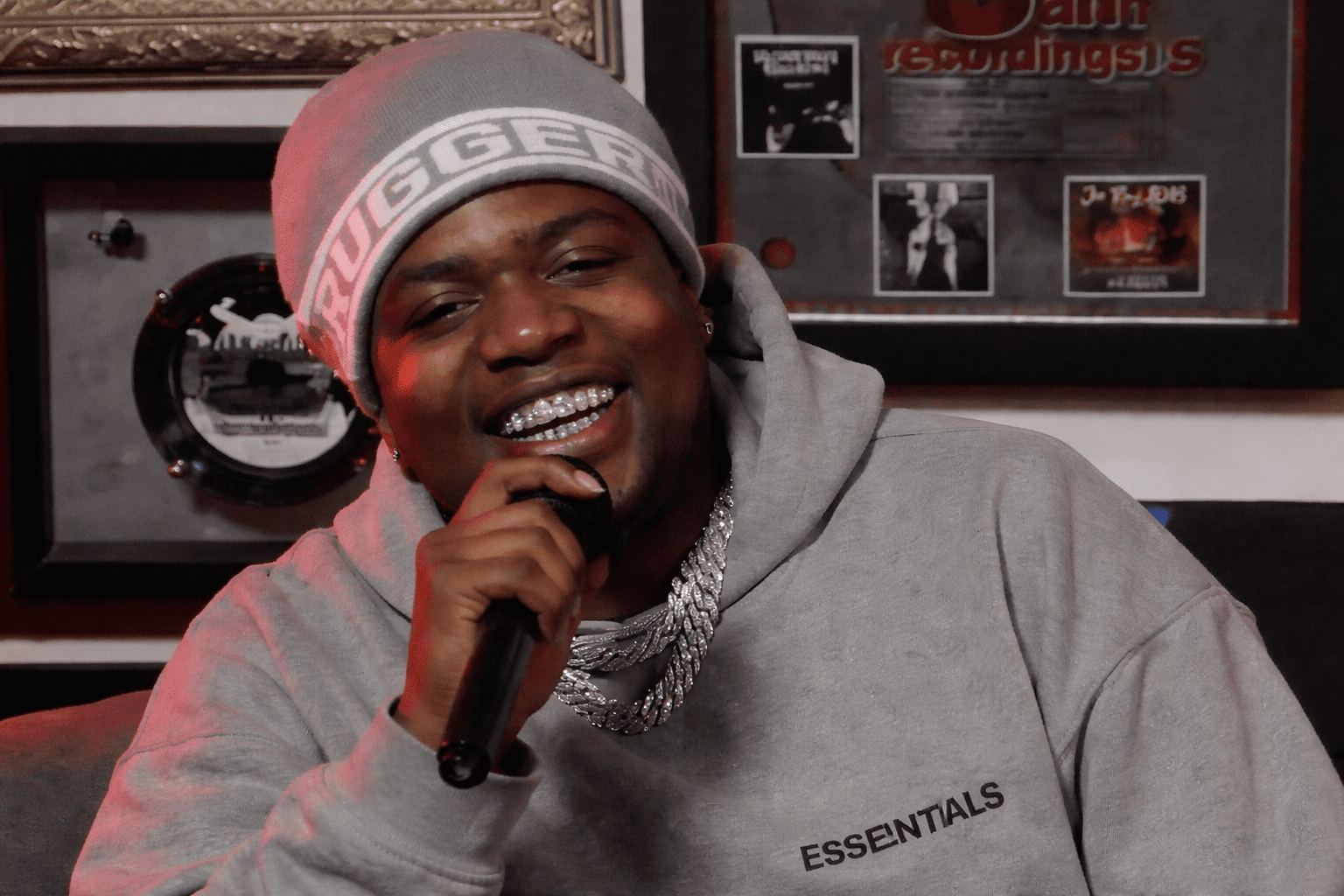
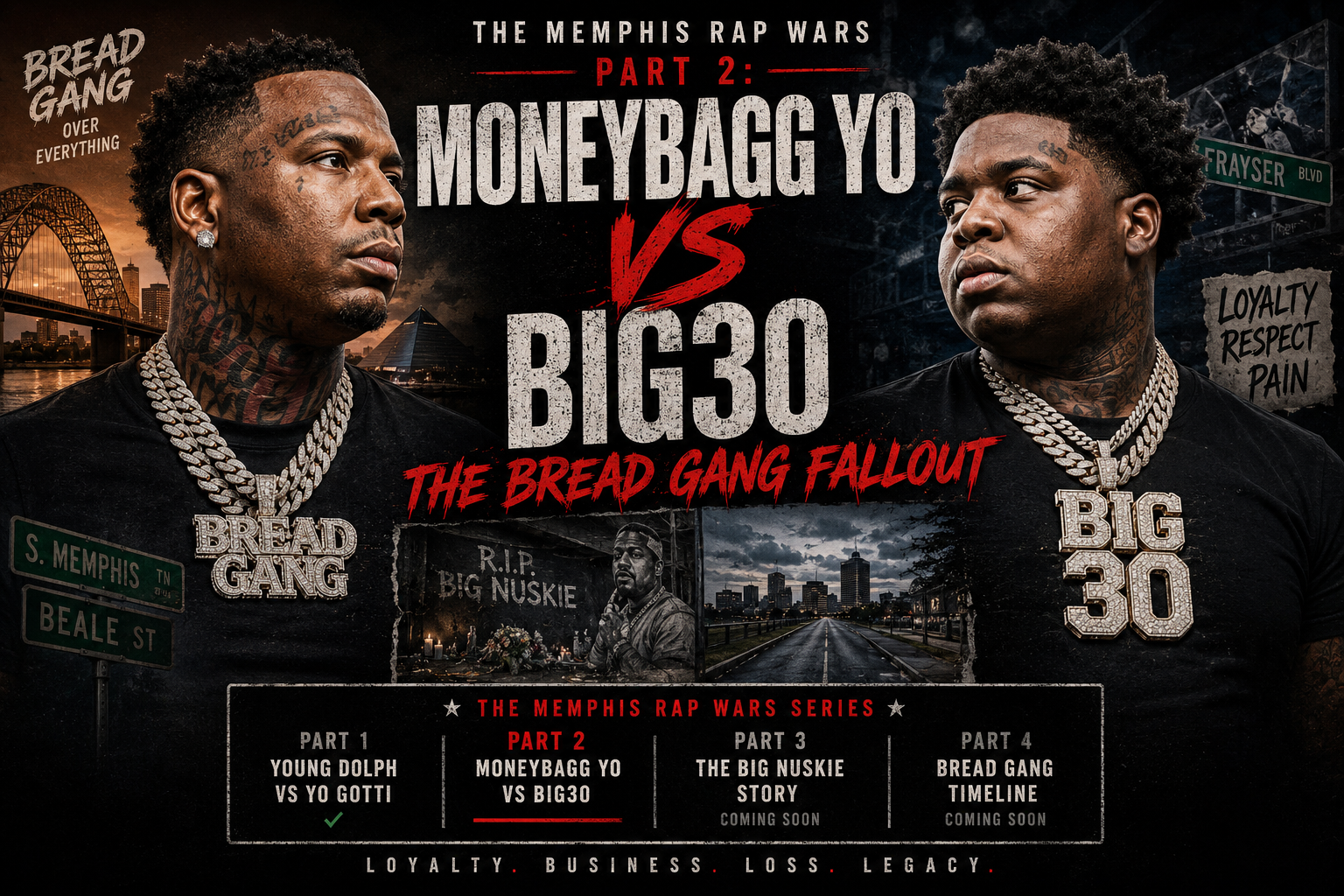
Big30 rose out of Memphis with the kind of heavy-voiced street presence that felt built for a certain era of Southern rap: blunt records, high-pressure loyalties, neighborhood credibility, and the sense that every song was still connected to real-life consequences. For a while, that energy worked in his favor. He became one of the most recognizable names around Pooh Shiesty’s orbit, part of the wider 1017 conversation, and a rapper whose momentum felt tied to Memphis’ hard-edged modern wave. But in 2026, the story changed. A federal case tied to a January Dallas studio incident pushed his name back into headlines under much darker terms, forcing a new question around his career: was Big30 still rising, or had pressure and proximity finally rewritten the narrative?
Big30’s appeal started with pressure, presence, and the way Memphis rap was changing
Big30 did not emerge as the type of rapper people treated like a crossover experiment first. His appeal came from force. He sounded like somebody whose records were built from local codes, real affiliations, and a kind of bluntness that does not ask for permission. That matters because Memphis rap has long rewarded artists who can make intensity sound natural rather than theatrical. Big30’s voice fit that environment. He did not need a lot of decorative technique to be memorable. The weight of his delivery did much of the work for him.
That style arrived during a moment when Memphis was producing some of the most attention-grabbing street rap in the country. The city’s newer generation had the advantage of internet-era speed, but it also carried the older Memphis traits that still mattered: darkness, confrontation, raw talk, and records that felt like extensions of the street rather than polished distance from it. Big30’s rise made sense inside that context. He was not trying to sound detached from the life that informed the music. He was making the closeness part of the point.
That closeness can be a gift early in a career. It makes the artist feel believable. It gives records a pulse. It helps fans decide quickly whether someone feels authentic or manufactured. But it can also become a trap. The same traits that make a rapper compelling at the beginning can later become the things that keep pulling the story away from music alone. Big30’s career has increasingly sat inside that tension.
The Memphis rise was powered by affiliation, chemistry, and a city-wide momentum
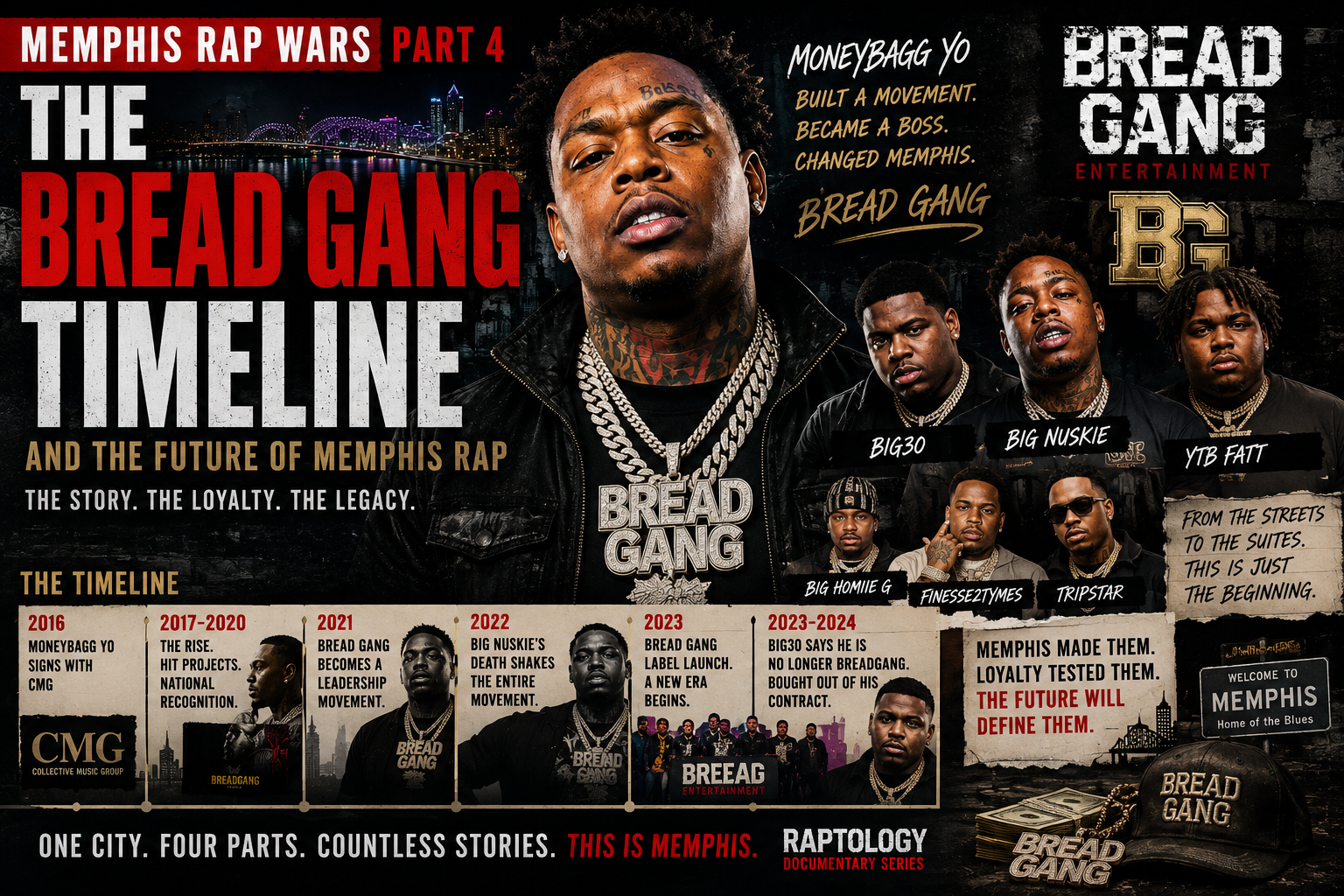
Big30’s broader visibility grew fast because he came up in one of the most discussed rap ecosystems of the early 2020s. Memphis had become a city where regional loyalty, street narratives, and viral distribution could meet in a way that moved artists quickly. Once Big30 started appearing in the same orbit as Pooh Shiesty and other rising Southern names, listeners had an easy entry point into his music. Even before a full documentary treatment, people could already hear the outline of a story: another hard-edged Memphis figure coming up through loyalty, pressure, and proximity to bigger momentum.
That kind of rise matters because it is rarely only about one hit or one song. It is about context. Big30 benefited from being understood as part of a larger movement, but that also meant his individual narrative was often tied to whoever stood nearest to him in the public imagination. That is sometimes an advantage at the start. Affiliation can create speed. Chemistry can make an artist’s identity feel larger faster. But the trade-off is that the same association that helps launch the story can later complicate it.
As Big30’s name circulated more widely, his persona solidified around a few themes that made him easy to identify in a crowded field: forceful delivery, unpolished menace, loyalty-coded music, and the sense that his records were rooted in a real social map rather than pure rap theatrics. Fans looking for street-heavy Southern music could understand the appeal immediately. The question was whether that appeal could scale into a longer, more durable career without the surrounding pressure becoming the story itself.
Explore more documentary-style hip-hop coverage across Raptology’s growing archive.
1017 loyalty made the image stronger, but it also raised the stakes
In rap, affiliation is never only musical. It is cultural, political, emotional, and symbolic all at once. Big30’s name became part of the wider 1017 conversation because of his proximity to Pooh Shiesty and that broader lane of Southern street rap power. That helped sharpen the image. It gave the story an identifiable camp, an audience, and a larger framework people already understood. Loyalty became part of the brand, and in street-facing rap, that matters almost as much as technical skill.
But loyalty also raises the cost of every next chapter. Once an artist’s image is deeply tied to allegiance and real-world connection, every public problem hits harder because it no longer looks like an isolated incident. It looks like a reflection of the entire ecosystem around the artist. That is one reason Big30’s recent headlines landed so heavily. They did not arrive in a vacuum. They arrived in a narrative already shaped by association, Memphis pressure, and the public expectation that the music and the life were still moving too close together.
For artists in this position, growth gets complicated fast. The industry often wants the credibility of the street image without the consequences that come with it. Fans want authenticity but also expect the artist to survive the pressure long enough to build something lasting. Big30’s story lives inside that contradiction. His image gained strength from loyalty, but loyalty also made the later legal narrative feel like an extension of a long-building tension rather than a random interruption.
The deeper Big30 story is about what happens when the pressure never really leaves the music
What makes Big30 an interesting documentary subject is not simply that he had momentum and then faced legal trouble. Plenty of rappers fit that outline. The more interesting layer is how clearly his music, image, and public arc were shaped by pressure from the beginning. He did not build his identity around escape. He built it around surviving inside the temperature. That gave the records force, but it also made it harder for the public to separate the performer from the circumstances surrounding him.
That problem is larger than one artist. Modern street rap often thrives on closeness to reality, yet the same closeness can turn into narrative collapse when the off-record world intrudes too directly. By the time Big30’s name re-entered major headlines in 2026, the musical story and the legal story were already fighting for the same space. And once that happens, the audience starts re-reading everything. The songs sound different. The loyalty image looks heavier. The old momentum begins to feel unstable in retrospect.
That does not erase what made Big30 matter. If anything, it explains why the story drew attention so quickly. People already understood him as a rapper whose music carried the weight of real stakes. The problem is that once a federal case enters the picture, the same realism that once helped build the artist’s appeal can suddenly make the entire story feel more dangerous, more tragic, and harder to control.
The 2026 federal case changed the story because it pushed the narrative beyond rumor and into a much bigger arena
In April 2026, federal prosecutors in Texas accused Pooh Shiesty and eight others of robbery and kidnapping tied to a January 10 recording studio incident in Dallas involving music industry professionals connected to 1017 Records. According to AP’s report on the criminal complaint and attached affidavit, Big30 was among the defendants, and prosecutors allege he was in the recording room with Pooh Shiesty and Pooh Shiesty’s father during the confrontation. AP also reported that the affidavit alleges Big30 blocked the studio door with his body to prevent the victims from leaving. Those are allegations, not convictions, but they dramatically changed the public frame around his career. ([apnews.com](https://apnews.com/article/gucci-mane-kidnapping-dallas-98f446575a54e918f7e60e0615a94ca3))
That shift matters because federal cases alter the tone of rap narratives. They carry a different kind of public seriousness than rumor, local arrest chatter, or online speculation. Once the story moved into that arena, the coverage stopped sounding like a standard rap controversy and started reading like a major turning point. Big30 was no longer appearing in headlines mainly as a rising Memphis rapper with hard records and notable affiliations. He was being discussed as part of a federal complaint tied to a violent alleged studio takeover involving a business dispute over 1017 Records. ([apnews.com](https://apnews.com/article/gucci-mane-kidnapping-dallas-98f446575a54e918f7e60e0615a94ca3))
That is why the case changed the story. It did not simply add another legal headline. It reframed the entire arc. What once looked like a rising street-rap narrative suddenly had a hard stop inserted into it. The question became less about what Big30’s next musical move would be and more about whether the public would now remember him primarily through the pressure of this case. In rap, that kind of shift can happen fast, and once it does, the artist’s catalog and image are both forced to live under a new shadow.
5 key songs that explain why Big30’s story hit as hard as it did
One of the clearest examples of Big30’s blunt delivery and the kind of tone that made him stand out quickly in a crowded field.
A key record for understanding the chemistry and shared pressure of the Memphis orbit that helped raise his profile.
A reminder that his appeal was not just local affiliation, but a delivery style that could carry records on sheer force.
The more reflective side of Big30, showing that the pressure in his music could sound personal and human as well as confrontational.
A direct snapshot of the persona that defined the rise: no-frills, high-stakes, and built around intimidation rather than crossover polish.
A quick FAQ for search readers landing on the story
Because he was named as a defendant in the April 2026 federal robbery and kidnapping case tied to a January Dallas studio incident involving 1017 Records, according to AP’s report on the criminal complaint and affidavit.
No conviction is described here. The current story is about allegations in a federal case, not a final verdict.
Because Big30’s public image grew partly through proximity to Pooh Shiesty and the wider 1017-associated Southern rap conversation, which made loyalty and affiliation part of the narrative.
Because it combines Memphis rap momentum, loyalty politics, street-image pressure, and a major legal turning point that changed how the public now reads the entire story.
What happens next will decide whether Big30’s story is remembered as interrupted momentum or something darker and more final
The hardest part of the Big30 story is that it now sits at an unstable intersection. The music still exists. The rise still happened. The Memphis momentum was real. But federal pressure changes how the public stores a rapper in memory. Instead of remembering the artist only through the sound, listeners begin filing the story under a legal headline. That is a difficult shift for any career to survive, especially when the artist’s image was already built on how close the music felt to real-life stakes.
That is also what makes the story compelling in documentary form. It is not merely another rise-and-fall outline. It is a study in how modern street rap can turn affiliation into momentum, momentum into pressure, and pressure into a point where the music can no longer fully control the narrative. Big30 became visible because his records sounded like the temperature was real. The federal case changed the story because it forced the public to ask whether that same temperature had finally consumed the arc itself.
Whether his career can move past that depends on what comes next in both the courtroom and the culture. But for now, the title fits: 1017 loyalty, Memphis pressure, and the federal case that changed the story. It is not just a dramatic headline. It is the exact fault line where Big30’s rise stopped looking like a straight climb and started feeling like a warning about how narrow the line can be between street credibility and narrative collapse.

Jose Zamora is a writer and creator from Boston, MA. He has been a music nerd since middle school when he started his record collection. His passion for Hip-hop began when he discovered legends like Nas and Gang Starr and became obsessed with up-and-coming acts like Kendrick Lamar and A$AP Mob.
He is a recently graduated, up-coming journalist, passionate about music and culture. He is always keeping an eye out for the next big thing and is eager to put their talent in the spotlight for others to enjoy. He believes firmly that “Good art deserves to be talked about.”



Leave a Reply