
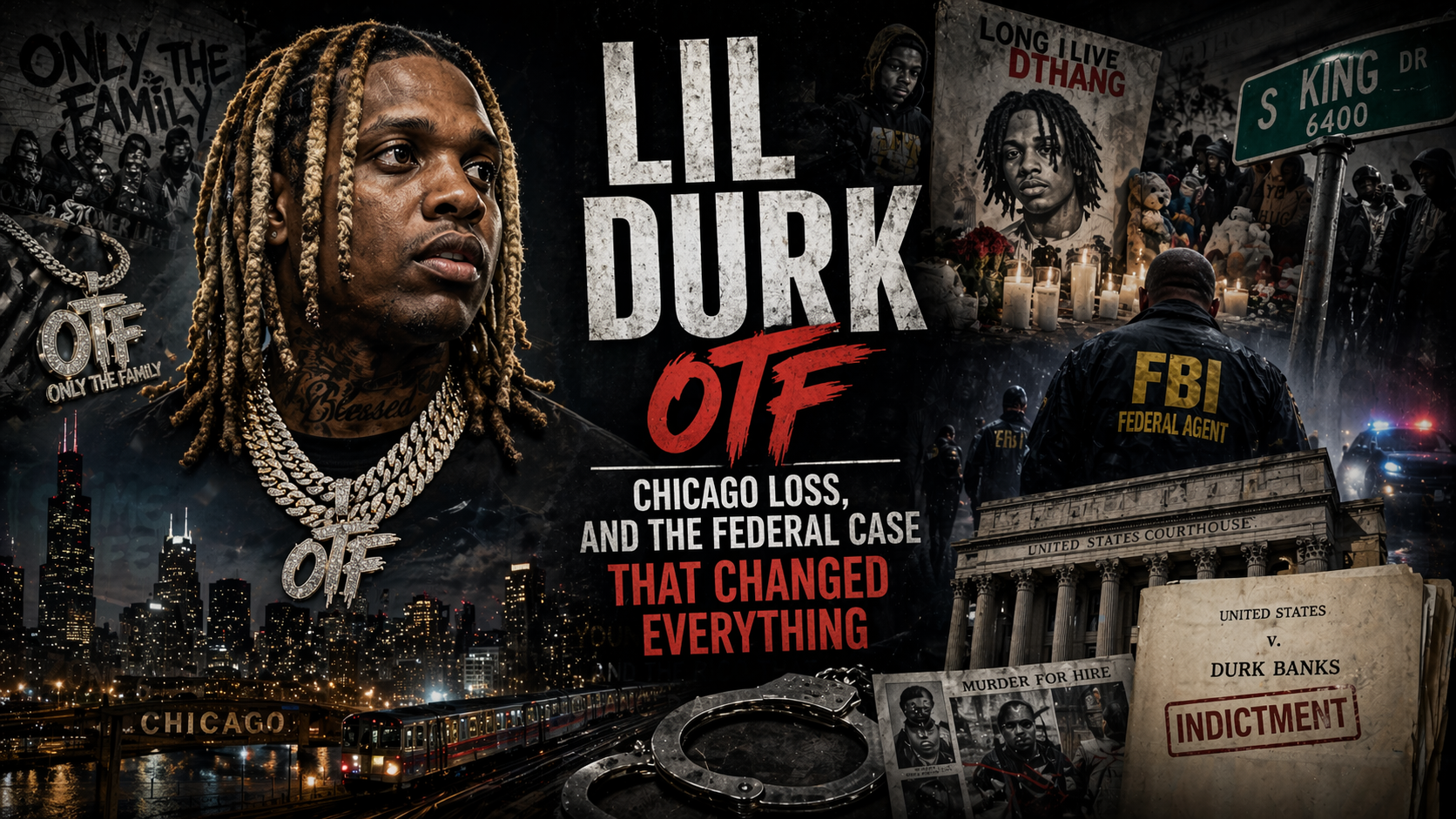
Lil Durk became one of the most important voices of modern rap by doing something very few artists survive long enough to do: turning real grief into a long career. From the earliest days of Chicago drill, through the rise of Only The Family (OTF), to mainstream superstardom and now a federal murder-for-hire case that threatens to redefine his legacy, Durk’s story has never been cleanly separated from the streets that made him. Every album feels connected to funerals, loyalty, survival, and the question of whether success can ever fully remove someone from the environment that built them.
For years, the public saw him as the survivor — the artist who outlasted tragedy, buried too many friends, and still made it to the top. Then federal prosecutors entered the story, and the narrative shifted. Suddenly, the final chapter looked less like victory and more like reckoning. That is what makes Lil Durk one of the strongest documentary subjects in rap today: Chicago pain, OTF mythology, King Von’s shadow, and a legal case that could change everything. :contentReference[oaicite:0]{index=0}
Before the awards and arena tours, Durk was a voice from one of Chicago’s hardest eras
Lil Durk emerged during the first explosive wave of Chicago drill, when artists like Chief Keef, King Von, and others were turning local street conflict into a national music movement. Drill did not feel like polished entertainment. It felt like direct reporting from neighborhoods already under national attention for violence, police pressure, and youth loss.
Durk stood out because he brought something emotionally different. He still carried the aggression and local realism, but he also brought melody, reflection, and visible grief. His music sounded less like someone glorifying the chaos and more like someone trying to survive it. That emotional honesty gave him something many drill artists never found: longevity.
Unlike artists trapped inside one viral moment, Durk kept evolving. He learned how to turn pain into records that could work both in the streets and on a national level. That balance became the foundation of everything that followed.
Chicago loss shaped the entire emotional core of the Lil Durk story
You cannot explain Lil Durk without explaining grief. Death was never background detail — it became the architecture of the career. Friends, collaborators, family members, and major figures from the Chicago drill world kept disappearing. Every funeral changed the music.
That is why listeners connected so deeply. Fans were not simply following songs. They were following survival. Every release felt connected to real life, real loss, and public mourning. When Durk rapped about pain, it did not sound performative. It sounded like documentation.
The death of King Von in 2020 changed everything emotionally. Von was not just another artist around OTF. He represented the next chapter of the movement — a major star whose success felt directly tied to Durk’s larger vision. Losing him created both personal devastation and business instability. It also intensified the idea that Durk’s career existed inside a permanent shadow where success and funerals arrived too close together.
Related Raptology reading: Tay-K: Viral Fame, Murder Conviction, and the Story Behind “The Race”
Explore more documentary-style hip-hop stories across Raptology’s growing archive.
OTF became bigger than a label because it represented loyalty, grief, and Chicago mythology
Only The Family was never just a label. OTF worked because it felt like identity. It represented loyalty, protection, shared grief, and the belief that success had to be built with the people who survived the same environment.
That mythology gave Durk unusual power. He was not simply releasing music. He became the emotional center of an entire community story. Fans followed OTF like an ongoing documentary, where every new artist and every tragedy felt connected to the same larger narrative.
That is also why legal headlines hit so much harder. Once an artist’s image becomes tied to real-world loyalty and consequence, every federal accusation becomes bigger than paperwork. It starts looking like judgment on the mythology itself.
The mainstream rise made Durk look like the rare drill artist who actually escaped
For a while, Lil Durk’s story looked like the rare successful ending. He moved from Chicago drill into national superstardom without losing the emotional identity that made his music resonate. Radio hits arrived, collaborations expanded, and arena tours followed.
He became one of the few artists from the original drill era who could stand at the top of mainstream rap without sounding disconnected from where he came from. Songs like “All My Life” made him look like an artist entering the final legacy phase — someone who had survived enough to finally control the story instead of being controlled by it.
That is why the federal case felt so dramatic. It interrupted what looked like narrative closure. The public had already started placing Durk in the category of survivor rather than cautionary tale.
Related Raptology reading: Browse more Raptology Documentary stories here
The federal case changed everything because it reframed survival as suspicion
Federal prosecutors connected Lil Durk to a murder-for-hire case tied to an alleged retaliatory plot linked to the aftermath of King Von’s death and the larger tension involving Quando Rondo. These are allegations, not convictions, but the effect on public perception was immediate.
The force of the case came from how much history it pulled together. It was not just a legal filing. It connected OTF mythology, King Von’s death, Chicago loyalty politics, and years of fan speculation into one prosecutorial narrative.
This made the story feel larger than paperwork. People were not simply reading charges. They were re-reading years of music, interviews, funerals, and loyalty codes through a different lens. Was Durk the survivor who escaped, or was the same loyalty that built the empire also the force that pulled him back toward destruction?
External reporting: Associated Press coverage on federal proceedings
What happens next will decide whether Lil Durk is remembered as a survivor or a warning
Both versions of Lil Durk feel believable. He is the artist who outlasted one of rap’s deadliest environments, turned pain into legacy music, and built one of the most loyal fanbases in hip-hop. He is also now the subject of a federal narrative that threatens to turn that same loyalty into evidence of something criminal.
More Raptology Documentaries
Continue exploring Raptology’s latest deep-dive stories on hip-hop history, street rap, lost careers, and the moments that shaped the culture.
That is why this story belongs in documentary form. It is not only about one case file and not only about one successful rapper. It is about how trauma, loyalty, and mythology can build an empire — and how those same forces can later threaten to destroy it.
Whether history remembers him as the survivor who made it out or as another example of how difficult it is to truly escape the environment depends on what happens next. That uncertainty is exactly why the story keeps people reading.

Jose Zamora is a writer and creator from Boston, MA. He has been a music nerd since middle school when he started his record collection. His passion for Hip-hop began when he discovered legends like Nas and Gang Starr and became obsessed with up-and-coming acts like Kendrick Lamar and A$AP Mob.
He is a recently graduated, up-coming journalist, passionate about music and culture. He is always keeping an eye out for the next big thing and is eager to put their talent in the spotlight for others to enjoy. He believes firmly that “Good art deserves to be talked about.”




Leave a Reply