
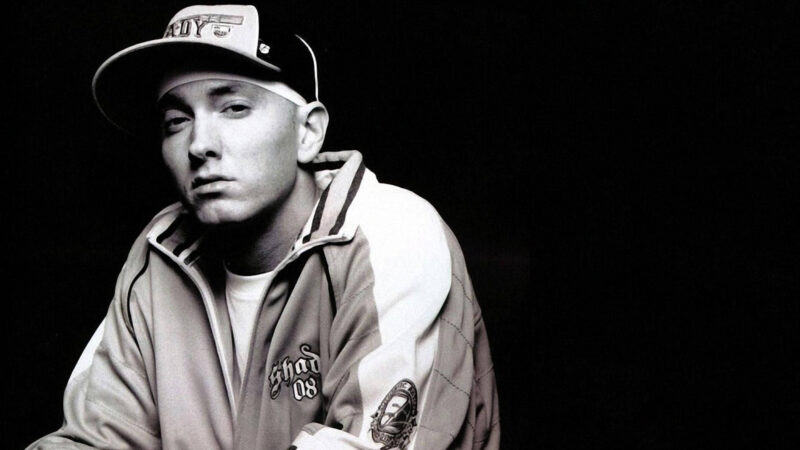
Eminem is not just one of the most successful rappers of all time. He is one of the most technically gifted, culturally disruptive, and globally recognized artists hip-hop has ever produced.
Born Marshall Bruce Mathers III on October 17, 1972, Eminem rose from Detroit’s battle rap scene into worldwide superstardom with a career that has included diamond-certified albums, Grammy wins, Oscar recognition, record-breaking sales, controversy, lyrical debates, major rap feuds, Shady Records, the film 8 Mile, and one of the most loyal fan bases in music history. This Raptology Rap Hall of Fame profile is built as a living Eminem hub, covering his biography, albums, songs, career timeline, business empire, battles, social media, streaming presence, and long-term impact on hip-hop culture.
Why Eminem belongs in the Raptology Rap Hall of Fame: He brought elite battle rap lyricism into the center of mainstream music, became one of the best-selling rappers in history, helped turn Detroit into a central point in global rap conversation, built Shady Records into a major platform, and proved that technical skill, storytelling, shock value, vulnerability, and commercial power could exist inside one career.
Who Is Eminem?
Eminem is an American rapper, songwriter, record producer, actor, and record executive who became one of the most important and controversial artists in hip-hop history. Before he became a global superstar, he built his reputation through Detroit’s underground rap scene, where battle rap, freestyle ability, aggression, humor, and wordplay mattered deeply. That background shaped his style and gave him the sharp technical foundation that later separated him from many mainstream peers.
His breakthrough came at the end of the 1990s, when The Slim Shady LP introduced a wild, sarcastic, violent, cartoonish, and deeply skilled alter ego to the world. Eminem was immediately impossible to ignore. Some listeners heard genius. Some heard danger. Some heard comedy. Some heard social collapse. That tension became part of his power. Eminem did not enter hip-hop quietly. He arrived as a cultural shockwave.
Official Eminem Links
For readers who want to follow Eminem directly, his official website is Eminem.com. His verified Spotify artist page is Eminem on Spotify, his official YouTube channel is EminemMusic on YouTube, his Instagram is @eminem, and his X account is @Eminem.
Eminem’s official online world connects fans to music, merch, announcements, Shady-related releases, anniversary capsules, and special projects connected to his catalog and Detroit identity.
Listen to Eminem on Spotify
Eminem’s official Spotify artist page
The Slim Shady LP
The Marshall Mathers LP
The Eminem Show
The Death of Slim Shady
Early Life: Missouri, Detroit, and the Roots of a Rap Survivor
Eminem was born in St. Joseph, Missouri, but his story is tied most strongly to Detroit, Michigan. His childhood was marked by instability, poverty, family tension, bullying, and constant movement. Those experiences became the emotional engine behind much of his writing. Long before global fame, Eminem’s music was rooted in anger, shame, humor, trauma, defiance, and survival.
Detroit gave Eminem the battleground where he sharpened his voice. In the underground rap scene, he had to prove himself in rooms where skill was tested immediately. Being a white rapper in a Black art form added another layer of scrutiny. Eminem could not rely on novelty alone. He had to be dangerous with words, fast with responses, and sharp enough to survive direct competition.

The Battle Rap Years and Infinite
Before the world knew Slim Shady, Eminem was a Detroit underground rapper trying to be heard. His early work included Infinite, released in 1996, a project that showed promise but did not break him commercially. At that stage, he was still searching for the voice that would make him impossible to ignore.
The turning point came when Eminem leaned further into rage, humor, exaggeration, and character work. The Slim Shady persona gave him a way to say the unsayable, mock the world, attack himself, and turn pain into violent satire. That alter ego would become one of the most recognizable characters in rap history.
Career Timeline
| Year | Moment | Why It Matters |
|---|---|---|
| 1996 | Infinite | Eminem releases his early independent debut and begins building his identity as a serious rapper. |
| 1997 | The Slim Shady EP | The darker Slim Shady persona takes shape and leads to industry attention. |
| 1999 | The Slim Shady LP | His major-label breakthrough turns him into one of rap’s most controversial new stars. |
| 2000 | The Marshall Mathers LP | Eminem becomes a global phenomenon and releases one of the most debated rap albums ever. |
| 2002 | The Eminem Show and 8 Mile | He reaches peak cultural dominance through music and film. |
| 2004 | Encore | The album extends his commercial run while showing signs of personal and creative strain. |
| 2009 | Relapse | Eminem returns after a long break with horrorcore imagery and dense technical rapping. |
| 2010 | Recovery | He pivots into a more emotional, motivational, stadium-sized sound. |
| 2013 | The Marshall Mathers LP 2 | Eminem revisits his legacy while proving he still has major commercial reach. |
| 2018 | Kamikaze | He responds aggressively to critics and returns to a combative rap posture. |
| 2020 | Music to Be Murdered By | Eminem continues his technical display in the streaming era. |
| 2024 | The Death of Slim Shady | He directly revisits and confronts the Slim Shady persona that made him famous. |
The Slim Shady LP: The Breakout That Changed Everything
The Slim Shady LP, released in 1999, turned Eminem from underground name into a national controversy. With Dr. Dre’s support and Aftermath’s machine behind him, Eminem entered the mainstream with a sound that was funny, violent, surreal, technically sharp, and deeply uncomfortable. Songs like “My Name Is,” “Guilty Conscience,” and “Role Model” introduced a rapper who treated shock value like theater.
The album mattered because it made Eminem a star without softening his edges. He did not arrive as a clean pop crossover. He arrived as a problem. Parents worried about him. Critics argued over him. Fans quoted him obsessively. Rap listeners debated whether he was a gimmick or a monster lyricist. That debate only made him bigger.
The Marshall Mathers LP: Fame, Rage, and a Cultural Explosion
The Marshall Mathers LP, released in 2000, pushed Eminem from rap superstar to global cultural flashpoint. The album was darker, angrier, more personal, and more confrontational than his previous work. It attacked fame, critics, family conflict, censorship, celebrity culture, fan obsession, and his own public image.
“Stan” became one of the most important storytelling records in rap history. The song turned obsessive fandom into a tragic narrative and eventually helped popularize the word “stan” as a term for extreme fan behavior. That alone gives Eminem a unique linguistic legacy far beyond music charts.
The Eminem Show: Peak Cultural Dominance
The Eminem Show, released in 2002, may be the clearest example of Eminem at full power. The album arrived when he was no longer just a shocking new rapper. He was one of the biggest entertainers in the world. Songs like “Without Me,” “Cleanin’ Out My Closet,” “Sing for the Moment,” “Superman,” and “Till I Collapse” showed a broader emotional and musical range.
This was also the era when Eminem’s public identity became inseparable from American culture wars. He was attacking politicians, pop stars, critics, and himself while millions of fans saw him as a voice for anger, alienation, and rebellion. For many listeners, The Eminem Show is the album where he fully balanced commercial dominance with personal writing and technical skill.
8 Mile and Lose Yourself
8 Mile helped turn Eminem’s real-life mythology into cinema. The film was not a direct autobiography, but it captured themes central to his rise: Detroit, poverty, pressure, battle rap, self-doubt, hunger, and the need to seize one moment before it disappears. His performance gave mainstream audiences another way to understand him beyond controversy.
“Lose Yourself” became one of the biggest songs of his career and one of the most recognizable motivational rap records ever made. Its success showed that Eminem could create music that was technically sharp, emotionally direct, cinematic, and commercially massive at the same time.
Watch Eminem Videos
Eminem – Lose Yourself
Eminem – Stan featuring Dido
Eminem – Without Me
Eminem – Not Afraid
Eminem Albums and Projects
Eminem’s discography is one of the most commercially successful and heavily debated catalogs in rap. It includes underground beginnings, major-label classics, comeback records, technical showcases, compilation projects, and albums that split fans and critics. For SEO and reader usefulness, the table below focuses on the projects most fans search for when researching Eminem’s catalog.
| Year | Project | Type | Key Songs and Notes |
|---|---|---|---|
| 1996 | Infinite | Studio Album | Early independent debut from Eminem’s pre-mainstream era. |
| 1997 | The Slim Shady EP | EP | The project that helped define the Slim Shady persona. |
| 1999 | The Slim Shady LP | Studio Album | “My Name Is,” “Guilty Conscience,” “Role Model.” |
| 2000 | The Marshall Mathers LP | Studio Album | “Stan,” “The Real Slim Shady,” “The Way I Am.” |
| 2002 | The Eminem Show | Studio Album | “Without Me,” “Cleanin’ Out My Closet,” “Sing for the Moment,” “Till I Collapse.” |
| 2002 | 8 Mile Soundtrack | Soundtrack | “Lose Yourself” becomes one of the most famous rap soundtrack songs ever. |
| 2004 | Encore | Studio Album | “Mockingbird,” “Like Toy Soldiers,” “Just Lose It.” |
| 2005 | Curtain Call: The Hits | Compilation | Collected major hits from his first superstar run. |
| 2009 | Relapse | Studio Album | “Beautiful,” “Crack a Bottle,” “We Made You.” |
| 2010 | Recovery | Studio Album | “Not Afraid,” “Love the Way You Lie,” “No Love.” |
| 2013 | The Marshall Mathers LP 2 | Studio Album | “Rap God,” “Berzerk,” “The Monster.” |
| 2017 | Revival | Studio Album | A polarizing album that led to major critical debate. |
| 2018 | Kamikaze | Studio Album | “The Ringer,” “Lucky You,” “Fall,” “Killshot” era. |
| 2020 | Music to Be Murdered By | Studio Album | “Godzilla,” “Darkness,” “You Gon’ Learn.” |
| 2024 | The Death of Slim Shady | Studio Album | A concept-driven return to the Slim Shady character and its legacy. |
Most Important Eminem Songs
Eminem has a catalog filled with technical displays, emotional confessions, diss records, story songs, pop crossovers, and stadium anthems. “My Name Is” introduced Slim Shady to the mainstream. “Stan” became one of rap’s greatest storytelling records. “The Real Slim Shady” turned his media chaos into a pop culture event. “Lose Yourself” became an anthem for pressure and ambition. “Without Me” showed his comedic control of celebrity culture. “Mockingbird” revealed his family pain. “Not Afraid” marked a recovery-era rebirth. “Rap God” became a technical flex for a new generation of listeners.
| Song | Era | Why It Matters |
|---|---|---|
| “My Name Is” | The Slim Shady LP | The breakout single that introduced Slim Shady to the mainstream. |
| “Stan” | The Marshall Mathers LP | A landmark storytelling record that became part of everyday music language. |
| “The Real Slim Shady” | The Marshall Mathers LP | A pop culture explosion that captured Eminem’s chaos, humor, and media dominance. |
| “The Way I Am” | The Marshall Mathers LP | A raw statement about pressure, fame, and public expectations. |
| “Lose Yourself” | 8 Mile | One of the most iconic motivational rap songs ever made. |
| “Without Me” | The Eminem Show | A satirical anthem that showed Eminem’s control over pop culture controversy. |
| “Mockingbird” | Encore | One of Eminem’s most personal family-centered records. |
| “Not Afraid” | Recovery | A comeback anthem connected to sobriety, survival, and reinvention. |
| “Love the Way You Lie” | Recovery | A massive pop-rap collaboration with Rihanna that expanded his global reach. |
| “Rap God” | The Marshall Mathers LP 2 | A technical showcase that reinforced Eminem’s reputation for speed, wordplay, and precision. |
Commercial Dominance and Sales Legacy
Eminem’s commercial story is one of the clearest reasons he belongs in any Rap Hall of Fame conversation. He became one of the best-selling rappers in music history while maintaining a style that was often aggressive, controversial, and technically dense. That combination is rare. Many artists become more polished as they become bigger. Eminem became bigger while continuing to provoke listeners and challenge critics.
His peak run from The Slim Shady LP through The Eminem Show made him a global superstar at a level few rappers had reached before him. He was not only selling records. He was dominating MTV, award shows, magazine covers, radio, film, and public debate. In the early 2000s, Eminem was not just a rap star. He was one of the most visible entertainers in the world.
Grammy History, Oscar Recognition, and Awards Conversation
Eminem’s awards history is a major part of his legacy. He won Grammy recognition across multiple eras, and “Lose Yourself” became historically important because of its connection to the Academy Awards. That moment helped place rap in spaces that had often ignored or misunderstood the genre.
Still, Eminem’s legacy cannot be measured by trophies alone. His career sits at the intersection of underground battle rap credibility, mainstream dominance, critical argument, controversy, and fan devotion. Awards confirmed part of his impact, but the larger evidence is how deeply his music entered global culture.
Eminem Net Worth and Business Empire
Eminem’s exact net worth changes depending on the source and year, so any public figure should be treated as an estimate rather than a confirmed personal financial statement. His wealth has been driven by album sales, streaming, publishing, touring, merchandise, film, licensing, Shady Records, and long-term catalog value.
His business world includes Shady Records, merchandise, publishing power, and decades of music catalog strength. Shady Records also matters because it allowed Eminem to help shape the careers of other artists, most notably 50 Cent, whose own rise became one of the biggest success stories connected to Eminem’s executive influence.
Shady Records, 50 Cent, and Label Power
Shady Records helped extend Eminem’s impact beyond his own albums. With Paul Rosenberg, Eminem built a platform that became tied to major rap releases, artists, and moments. The label’s most famous success story is 50 Cent, whose partnership with Eminem and Dr. Dre helped fuel one of the biggest debut album eras in hip-hop history.
This label legacy is important because Hall of Fame status is not only about personal catalog. It is also about the influence an artist has on the careers, infrastructure, and business of hip-hop. Eminem did not only make hit records. He helped create opportunities for artists who became major figures in their own right.
Feuds, Battles, and Controversies
Eminem’s career has always included conflict. His battle rap roots made confrontation part of his artistic DNA, and his mainstream years turned those conflicts into public events. He has sparred with pop stars, critics, politicians, radio personalities, rappers, and institutions. Sometimes the attacks were comedic. Sometimes they were personal. Sometimes they were technical displays meant to prove he could still destroy an opponent on record.
His feud with Benzino and The Source became one of the most important conflicts of his early superstar years. Later, his tension with Machine Gun Kelly produced “Killshot,” a diss record that showed Eminem could still turn a battle into a major streaming and conversation moment. These feuds matter because they connect Eminem back to rap’s competitive core.
Why Eminem Is So Debated
Eminem’s greatness is widely recognized, but it is still debated because his career touches sensitive questions about race, authenticity, shock value, technical skill, and commercial access. Supporters point to his rhyme schemes, storytelling, emotional honesty, sales, influence, and battle record. Critics question parts of his catalog, his controversial lyrics, his later album choices, and how his identity shaped his mainstream reach.
That debate is exactly why Eminem matters. Artists who change the culture rarely sit in a comfortable middle ground. Eminem forced hip-hop, pop culture, and mainstream America to argue about language, anger, whiteness, class, censorship, humor, pain, and what rap could sound like at the highest commercial level.
Influence on Modern Rap
Eminem’s influence can be heard in technical rappers, battle rappers, fast rappers, horrorcore-influenced artists, confessional writers, and global fans who discovered hip-hop through his music. He inspired countless listeners to study rhyme patterns, internal rhymes, breath control, syllable placement, punchlines, and narrative structure.
He also influenced the idea of rap as emotional release. Behind the shock value, some of Eminem’s most important songs are about poverty, addiction, family breakdown, shame, fatherhood, self-hatred, recovery, and survival. That combination of technical ability and personal exposure made him one of the most influential writers in modern rap.
Social Media and Cultural Reach
Eminem’s modern social media presence is more controlled than many younger artists, but that restraint is part of his brand. He does not need constant posting to create impact. A new Eminem announcement, album teaser, diss record, or surprise release can still become a major news story because the audience understands how rare and deliberate his moves often feel.
In the streaming era, Eminem remains powerful because his catalog continues to attract new listeners. Younger fans discover him through YouTube, Spotify, TikTok clips, reaction channels, lyric breakdowns, battle rap discussions, and classic album debates. His music keeps circulating because it rewards replay, analysis, and argument.
Eminem’s Place in Rap History
Eminem’s place in rap history is secure because he changed what a mainstream rapper could look like, sound like, sell like, and survive. He entered hip-hop as an outsider in many ways, but he became impossible to deny because of skill. His technical ability, storytelling, humor, anger, and willingness to make himself look unstable, wounded, cruel, funny, and vulnerable all at once made him one of rap’s most complex figures.
He is also one of the few rappers whose career became a global cultural event far beyond music. His songs became arguments. His videos became television moments. His lyrics became court-of-public-opinion evidence. His movie became part of hip-hop cinema. His alter ego became one of rap’s most famous characters. His fans became one of the most devoted communities in music.
Why Eminem Is Raptology Rap Hall of Fame Pillar Content
For Raptology, Eminem is not just an artist profile. He is a pillar topic because his career connects to nearly every major hip-hop theme: battle rap, lyrical skill, Detroit, Dr. Dre’s Aftermath era, Shady Records, 50 Cent’s rise, censorship debates, pop crossover, Grammy recognition, hip-hop cinema, addiction and recovery, diss tracks, fan culture, and the changing definition of rap greatness.
This page should be treated as a living hub. Every future Eminem news story, documentary piece, album update, business story, anniversary article, Shady Records feature, or feud-related article on Raptology should link back to this page. At the same time, this page should link out to those newer Eminem stories, creating a strong internal SEO cluster around one of the highest-search artists in the world.
Read Next on Raptology:
- Rap Hall of Fame
- 50 Cent Rap Hall of Fame
- Raptology Documentaries
- Featured Stories
- More Eminem Coverage on Raptology
FAQ About Eminem
What is Eminem’s real name?
Eminem’s real name is Marshall Bruce Mathers III. His stage name comes from the initials M and M, which became Eminem.
Where is Eminem from?
Eminem was born in St. Joseph, Missouri, but he is strongly associated with Detroit, Michigan. Detroit shaped his battle rap roots, public identity, and long-term legacy.
What was Eminem’s breakout album?
Eminem’s breakout major-label album was The Slim Shady LP, released in 1999. The project introduced Slim Shady to the mainstream and turned him into one of the most controversial new stars in music.
What is Eminem’s best album?
Many fans and critics point to The Marshall Mathers LP or The Eminem Show as Eminem’s best album. Others argue for The Slim Shady LP, depending on whether they value raw shock value, personal writing, technical skill, or peak commercial dominance.
What are Eminem’s biggest songs?
Some of Eminem’s biggest songs include “My Name Is,” “Stan,” “The Real Slim Shady,” “The Way I Am,” “Lose Yourself,” “Without Me,” “Mockingbird,” “Not Afraid,” “Love the Way You Lie,” and “Rap God.”
Is Eminem one of the greatest rappers of all time?
Eminem is widely included in greatest-rapper debates because of his lyricism, battle rap roots, commercial dominance, storytelling, influence, and longevity. The debate usually centers on how much weight should be given to technical skill, catalog consistency, cultural impact, and commercial reach.
Why is Eminem controversial?
Eminem is controversial because his career has included shock lyrics, violent satire, personal attacks, public feuds, censorship debates, and arguments about race and authenticity in hip-hop. His controversy is part of why his legacy remains so heavily discussed.