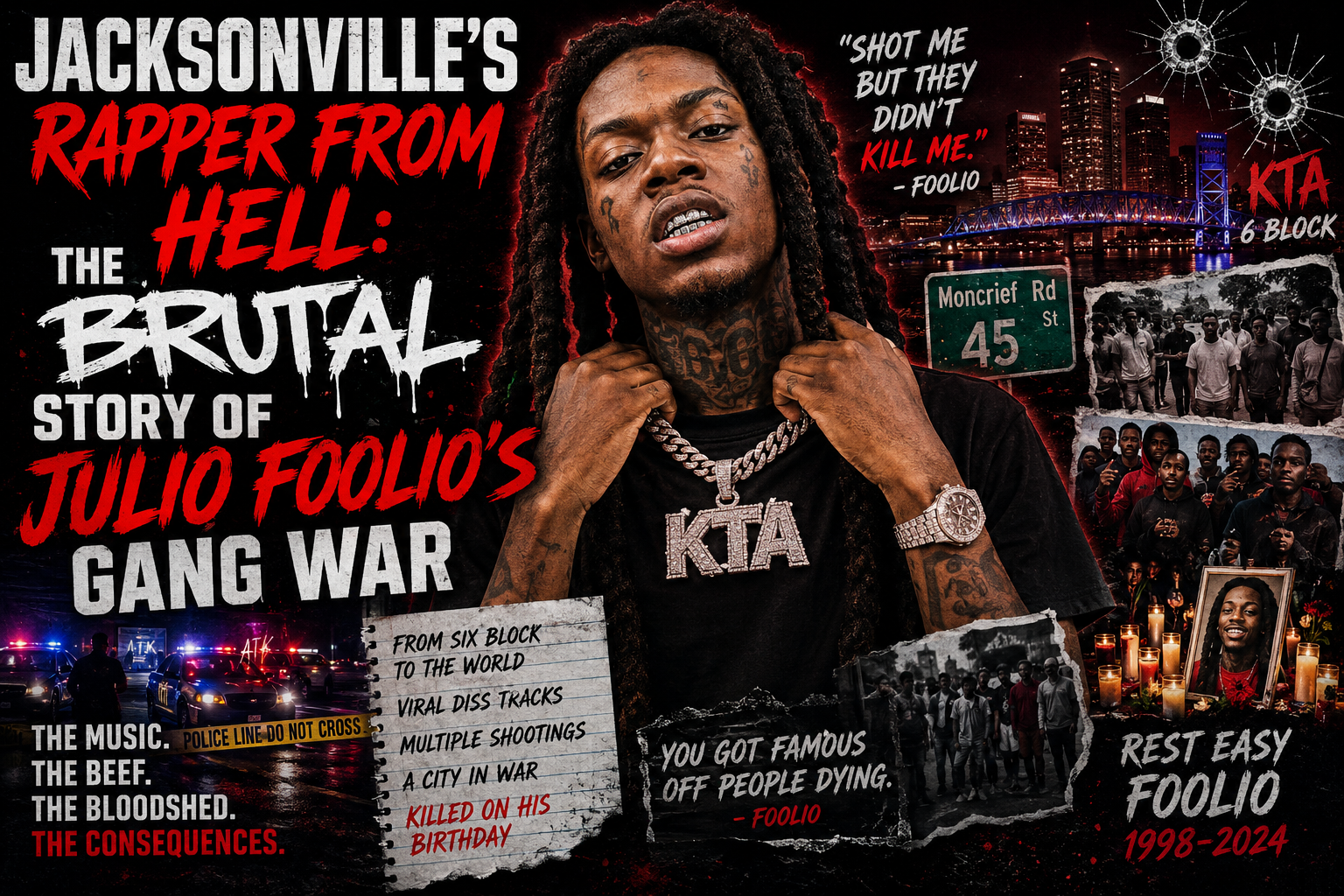
Julio Foolio did not become one of Jacksonville’s most infamous rappers by accident. He came from a city where rap, grief, gang politics, neighborhood loyalty, and social media all collided at the worst possible time. Born Charles Jones II, Foolio turned his pain into music, his dead friends into memorials, his enemies into targets, and his own life into a public countdown that fans followed like a crime series.
By the time he was killed in Tampa on June 23, 2024, Foolio had survived multiple shootings, watched friends and relatives die, built a cult following, and helped make Jacksonville drill one of the most searched rap scenes in America. His rivalry with Yungeen Ace and the broader ATK versus KTA conflict was not a normal rap beef. It was a multi-year gang war that moved through homes, hotels, music videos, courtrooms, YouTube comments, police briefings, and funeral memorials.
Case Snapshot
Artist: Julio Foolio
Real name: Charles Jones II
Born: June 21, 1998, Jacksonville, Florida
Died: June 23, 2024, Tampa, Florida
Known affiliations: Six Block, KTA, Jacksonville’s Moncrief/45th Street scene
Rivalry: Yungeen Ace, ATK, and connected Jacksonville street groups
Key songs: “When I See You,” “List Of Dead Opps,” “Beatbox Remix/Bibby Flow,” “Crooks,” and “Dead Opps”
Legal aftermath: Five people were charged in connection with Foolio’s killing. Four men were found guilty of first-degree murder in 2026, while Alicia Andrews was convicted of manslaughter in 2025.
The City That Made Foolio
Jacksonville is one of the largest cities in the United States by land area, but the rap story that made it nationally famous came from very specific blocks. Foolio’s world was tied to the Northside, Moncrief, 45th Street, Hilltop, Six Block, and the neighborhoods where survival often mattered more than dreams. His music reflected that environment without trying to soften it.
In the transcript that inspired this documentary, Foolio’s early life is described as being marked by violence, instability, and loss. His father, Charles Jones Sr., was reportedly killed when Foolio was still a child. That kind of loss shaped the way he saw the world. By his teenage years, Foolio was already rapping, already surrounded by violence, and already building the identity that would eventually make him one of Jacksonville’s most polarizing artists.

From Charles Jones To Julio Foolio
Before the world knew him as Foolio, Charles Jones II was a young Jacksonville rapper trying to turn local pain into music. He started building a name in the mid-2010s, releasing street records that sounded raw, direct, and deeply tied to the world around him. By 2018, projects like “6Toven” helped establish him as one of the most visible voices from Six Block.
Foolio’s voice carried paranoia, anger, grief, and humor at the same time. That combination made him stand out. He did not sound like someone pretending to be from the trenches. He sounded like someone who had accepted that the trenches might be his permanent address, even after the music started bringing attention.
The Meaning Of KTA And Six Block
Foolio became publicly associated with Six Block and KTA, terms that fans often used as shorthand for his side of Jacksonville’s conflict. The transcript describes KTA as “Kill Them All,” while public discussion around Jacksonville drill often connects Foolio to the Moncrief and 45th Street world. The reality was more complicated than internet acronyms. These were not just labels for music fans. They represented friendships, relatives, old wounds, neighborhood politics, and years of retaliation.
That complexity matters because outsiders often reduce the story to “Foolio versus Ace.” The real story involved many people and many losses. Yungeen Ace became the most visible face connected to the opposing side, ATK, but the violence extended far beyond two rappers. It involved younger friends, cousins, family members, alleged shooters, affiliates, civilians, and people who were not famous at all.
Yungeen Ace And The Other Side Of The War
Yungeen Ace, born Keyanta Bullard, became Foolio’s best-known rival. Ace’s story was also built around pain. He came from poverty, instability, and violence, then found music as a way to express what he had survived. By 2017 and 2018, Ace was becoming one of Jacksonville’s biggest emerging stars, but he was also tied to the streets that would nearly take his life.
The conflict between Ace’s circle and Foolio’s circle became one of the defining rivalries in modern drill culture. It was not built for blog headlines at first. It was local. It was personal. Then the music turned it into something that millions of strangers could watch from their phones.
The Death Of Zion Brown
One of the early tragedies repeatedly discussed in the Jacksonville conflict was the killing of Zion Brown, Foolio’s cousin. In the transcript, Zion’s death is presented as a major spark that helped ignite the larger war. Once a family member dies, a street conflict can become almost impossible to control because the issue is no longer abstract. It becomes blood.
From that point forward, names of the dead became part of the language of the feud. They appeared in songs, Instagram posts, live streams, jokes, threats, and tributes. That is one of the most disturbing features of Jacksonville drill: grief was not only mourned, it was weaponized.
The 2018 Town Center Shooting
On June 5, 2018, Yungeen Ace was in a vehicle after celebrating his brother’s birthday when gunmen opened fire on Town Center Parkway in Jacksonville. Trevon Bullard, Jercoby Groover, and Royale Smith Jr. were killed. Ace survived after being shot multiple times.
That shooting changed everything. Ace became a survivor with a national story. Foolio and others later mocked the incident in songs and online posts, which only deepened the hatred between the sides. To fans, it became part of the mythology. To the families involved, it was a nightmare that never ended.
The Point Of No Return
The Town Center shooting became one of the defining events in Jacksonville rap history because it turned Yungeen Ace’s pain into public identity and made the rivalry impossible to ignore.
Why The Dead Became Lyrics
Jacksonville’s rap conflict became infamous because both sides repeatedly referenced dead rivals. In older street culture, disrespect might have stayed local through graffiti, rumors, or face-to-face confrontations. In the social media era, it became content. Songs could reach millions. Clips could go viral overnight. Every disrespectful line could be replayed, remixed, clipped, and thrown back at the other side.
That is why this feud became so dangerous. The disrespect did not fade. It lived online forever. A lyric made in one moment of anger could keep humiliating a grieving family for years. A song could turn a murder victim into a meme. Once that happens, retaliation becomes more likely because the insult keeps repeating itself every time the record plays.
“Who I Smoke” And The Nationalization Of A Local War
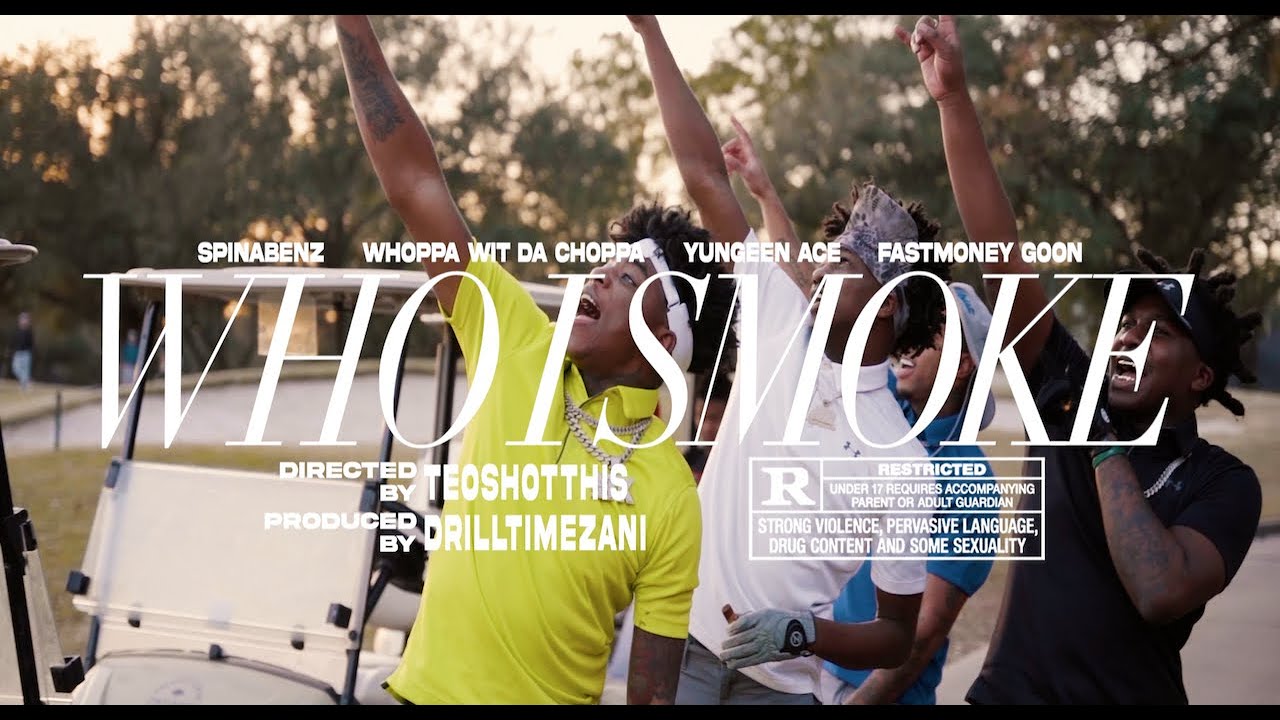
In 2021, Yungeen Ace, Spinabenz, FastMoney Goon, and Whoppa Wit Da Choppa released “Who I Smoke.” The song sampled Vanessa Carlton’s “A Thousand Miles,” turning a bright pop melody into one of the most shocking diss records of the decade. Its contrast was part of the reason it went viral. The beat felt almost playful, while the lyrics referenced real dead people.
The song pushed Jacksonville drill into the national spotlight, but it also brought a darker question with it. Were fans appreciating the music, or were they consuming murder as entertainment? The answer was uncomfortable because both things were happening at once. The record was catchy, controversial, and impossible to ignore, but it was also built on grief.
Foolio Responds With “When I See You”
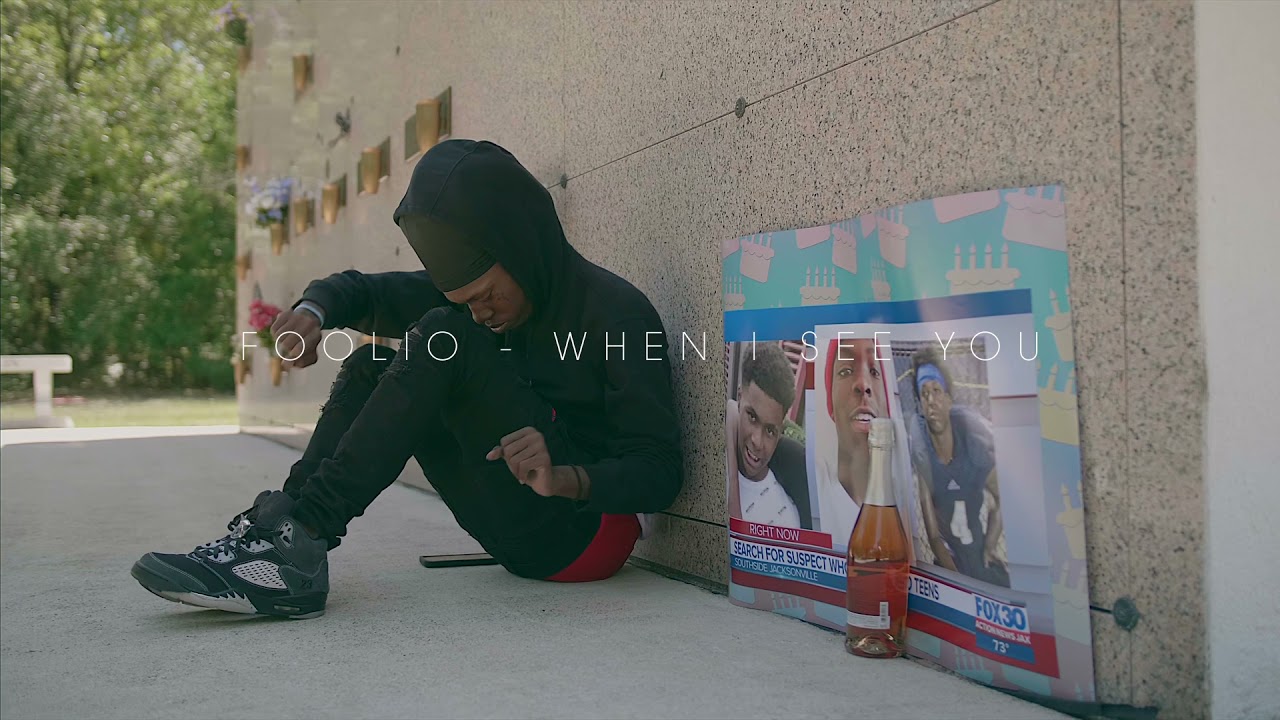
Foolio responded with “When I See You,” flipping Fantasia’s R&B hit into a diss record aimed at the other side. The video and lyrics referenced the Town Center shooting and the deaths connected to Ace’s circle. It became one of Foolio’s most viewed and most controversial songs, and it cemented him as the most fearless voice from his side of the feud.
The record also made Foolio more infamous. To supporters, he was standing on his side and refusing to back down. To critics, he was pouring gasoline on an already deadly fire. Both readings help explain why Foolio became such a magnetic and dangerous figure in the story. He understood the internet, he understood shock value, and he understood that disrespect could become promotion.
“List Of Dead Opps” And The Business Of Disrespect
Foolio later pushed the formula even further with “List Of Dead Opps,” one of the most direct and disturbing songs connected to the Jacksonville feud. The record did not hide its purpose. It named dead rivals and mocked them. In the world of drill, it became a notorious moment. In the world of real families, it was another public wound.
That song matters because it showed how far the internet had moved the culture. What once might have been private hatred was now a monetized public performance. The more outrageous the disrespect, the more people clicked. The more people clicked, the more the algorithm rewarded it. The more the algorithm rewarded it, the harder it became for artists to walk away.
Ksoo, Lil Buck, And The Courtroom Chapter
The Jacksonville war did not stay online. It produced real court cases, including the murder case involving Jacksonville rapper Hakeem “Ksoo” Robinson and Leroy Whitaker. In 2025, both were found guilty of first-degree murder in the January 2020 killing of Charles “Lil Buck” McCormick Jr. They later received mandatory life sentences in Florida.
That case became one of the clearest examples of how lyrics, social media, testimony, and street retaliation could collide in court. Prosecutors pointed to evidence from the killing, witness testimony, and public behavior connected to the feud. For fans who had treated the conflict like a YouTube series, the verdict was a reminder that the consequences were not virtual.
Foolio’s Near-Death Pattern
Before he died, Foolio survived multiple shootings. He was shot in Houston in 2020, grazed in Jacksonville in 2021, and shot again in 2023. After each incident, he returned to social media and music with the same defiant energy. He mocked his enemies for failing to kill him and used survival itself as part of his image.
But the pattern also revealed something darker. Foolio often seemed to move like a man who knew he was being hunted but refused to disappear. He posted locations. He returned to Jacksonville. He kept dissing. He kept recording. He kept daring fate to catch him. That made him look fearless, but it also made his final chapter feel almost inevitable.
Timeline Of Foolio’s Gang War
1998: Charles Jones II is born in Jacksonville, Florida.
2011: Foolio’s father is reportedly killed, a loss that deeply affects his early life.
Mid-2010s: Foolio begins building his name in Jacksonville’s rap scene.
2017: Zion Brown’s killing becomes one of the early tragedies tied to the escalation of the conflict.
June 5, 2018: Yungeen Ace survives the Town Center Parkway shooting, while Trevon Bullard, Jercoby Groover, and Royale Smith Jr. are killed.
2018: Foolio releases “6Toven,” strengthening his identity as one of Six Block’s main rap voices.
2020: Lil Buck is killed in Jacksonville, leading to major court cases involving Ksoo and ATK Scotty.
2021: “Who I Smoke” and “When I See You” push the Jacksonville feud into viral national attention.
2021-2023: Foolio survives multiple shootings and continues making music tied to the conflict.
June 23, 2024: Foolio is killed in Tampa after celebrating his birthday weekend.
2025-2026: Trials, convictions, and sentencing decisions continue in cases connected to the feud and Foolio’s murder.
The 2023 Shooting And The Dark Turn In Foolio’s Music
In October 2023, Foolio was shot in the foot in Jacksonville. He survived again, then appeared in later videos using a wheelchair and continuing to taunt his enemies. Around this period, his music and public image seemed to grow even darker. Songs referenced survival, revenge, hell, demons, and the feeling that death was always near.
That darkness is part of why some fans viewed Foolio almost like a horror-movie figure inside drill culture. He had been shot and lived. He joked about death. He stood on the side of the feud that had lost many people, yet still moved with a disturbing confidence. The title “Rapper From Hell” is not meant to glorify violence. It describes the image that grew around him: a rapper who seemed to live inside the worst consequences of the war he helped soundtrack.
The Birthday Weekend In Tampa
Foolio’s final weekend began as a birthday celebration. He turned 26 in June 2024 and traveled to Tampa, posting parts of his movement online. According to public reporting and the criminal case that followed, his killers tracked him through social media and followed him through the city before the fatal shooting outside a hotel.
The detail that haunts the case is how modern it feels. A rapper who had survived years of violence was not found through rumor alone. He was allegedly found through the same social media ecosystem that helped make him famous. The platform that amplified his music also helped reveal where he was.

The Murder Of Julio Foolio
In the early morning hours of June 23, 2024, Foolio was shot and killed outside a Tampa hotel. Three other people were injured. Police later described the killing as targeted and gang-related. The case quickly became national news because Foolio had been one of the most visible names in Jacksonville drill and had spent years openly discussing enemies, death, and attempts on his life.
Investigators later said suspects traveled from Jacksonville to Tampa, followed Foolio’s movements, and ambushed him outside the hotel. The case produced five arrests: Isaiah Chance, Alicia Andrews, Sean Gathright, Rashad Murphy, and Davion Murphy. Prosecutors alleged that the group worked together to track and kill Foolio.
The Trials After Foolio’s Death
The legal aftermath unfolded over the next two years. Alicia Andrews went to trial first and was convicted of manslaughter in 2025, while being acquitted of conspiracy to commit murder. In 2026, Isaiah Chance, Sean Gathright, Rashad Murphy, and Davion Murphy were found guilty of first-degree murder. Prosecutors had sought the death penalty, but the jury recommended life in prison without parole.
Those verdicts transformed Foolio’s murder from a viral headline into a courtroom record. The same story that had been followed through songs, social media, and YouTube documentaries was now being written through evidence, testimony, phone data, surveillance footage, and sentencing decisions.
The Breon Allen Jr. Tragedy
The violence did not end with Foolio’s death. In January 2025, 7-year-old Breon Allen Jr. was killed in Jacksonville during a shooting that authorities described as connected to escalating violence between rival street groups. The intended target survived, but a child was killed. Multiple people were later arrested, and some defendants eventually entered guilty pleas.
That case revealed the true cost of the war better than any diss song ever could. A child who had nothing to do with rap politics, street alliances, or old beef lost his life. When people talk about drill violence as entertainment, Breon Allen Jr.’s name is a reminder that the bullets do not care who has a song out, who has followers, or who is actually involved.
Was Foolio A Villain, A Victim, Or Both?
Foolio’s legacy is difficult because he cannot be reduced to one thing. He was a son, a rapper, a survivor, a controversial figure, a grieving friend, a public antagonist, and eventually a murder victim. He mocked dead rivals and suffered losses of his own. He made music that fans loved, but some of that music also reopened wounds for families who had already lost too much.
That contradiction is what makes his story so powerful for a documentary. Foolio was not a clean hero, and calling him only a villain ignores the environment that shaped him. He was a product of Jacksonville’s violence, but he also helped broadcast and monetize that violence. He was hunted, but he also taunted. He survived until he did not.
The Role Of Labels, Fans, And Algorithms
One of the hardest questions in this story is who benefited from the bloodshed. Artists got views. Blogs got clicks. YouTube channels got watch time. Labels and distributors benefited from streams. Fans got entertainment. But the families got funerals. The city got more trauma. The young men involved got prison sentences, gunshot wounds, or graves.
That does not mean the music should be erased. It means the culture has to be honest about what it rewards. When the most disrespectful song gets the most views, artists learn that pain pays. When a dead person’s name becomes a viral sound, the internet becomes part of the conflict. Jacksonville’s rap war shows what happens when grief becomes content and content becomes strategy.
The Legacy Of Julio Foolio
Julio Foolio’s legacy will always be tied to Jacksonville’s darkest rap era. He helped make the city impossible to ignore. He built a fan base through raw storytelling, relentless dissing, and a willingness to say what others would not. He also became one of the clearest examples of how fame can intensify danger instead of removing it.
His death did not end the story. It pushed the story into court, into new songs, into more debates, and into the memories of people who watched Jacksonville’s rap scene turn from local movement into national tragedy. Foolio became famous by surviving a war. In the end, the war became bigger than the fame.
The Final Lesson
The brutal story of Julio Foolio’s gang war is not just about Jacksonville. It is about a wider moment in hip-hop where pain, violence, social media, and monetization are dangerously intertwined. Artists from real environments are rewarded for being authentic, but the most profitable version of authenticity is often the most dangerous one.
Foolio’s life shows the power and the cost of that system. He turned trauma into music, music into attention, attention into money, and money into a bigger target. By the time he tried to celebrate another birthday, the same conflict that made him famous had followed him across Florida. The result was not mythology. It was another young rapper dead, more families broken, and another city left asking how the music became this close to the grave.
Reader Poll: What made Julio Foolio’s story so tragic?
Raptology Editorial is the official newsroom voice of Raptology, covering breaking hip-hop news, artist developments, industry trends, and in-depth editorial reports from across the global rap landscape.



🏧 Top Up 36,824.91 USDC 💰→ graph.org/BALANCE-3682444-USD-04-21-3?hs=3b97eb8b20486abc3010a922da5717a3& 🏧
uf56ye