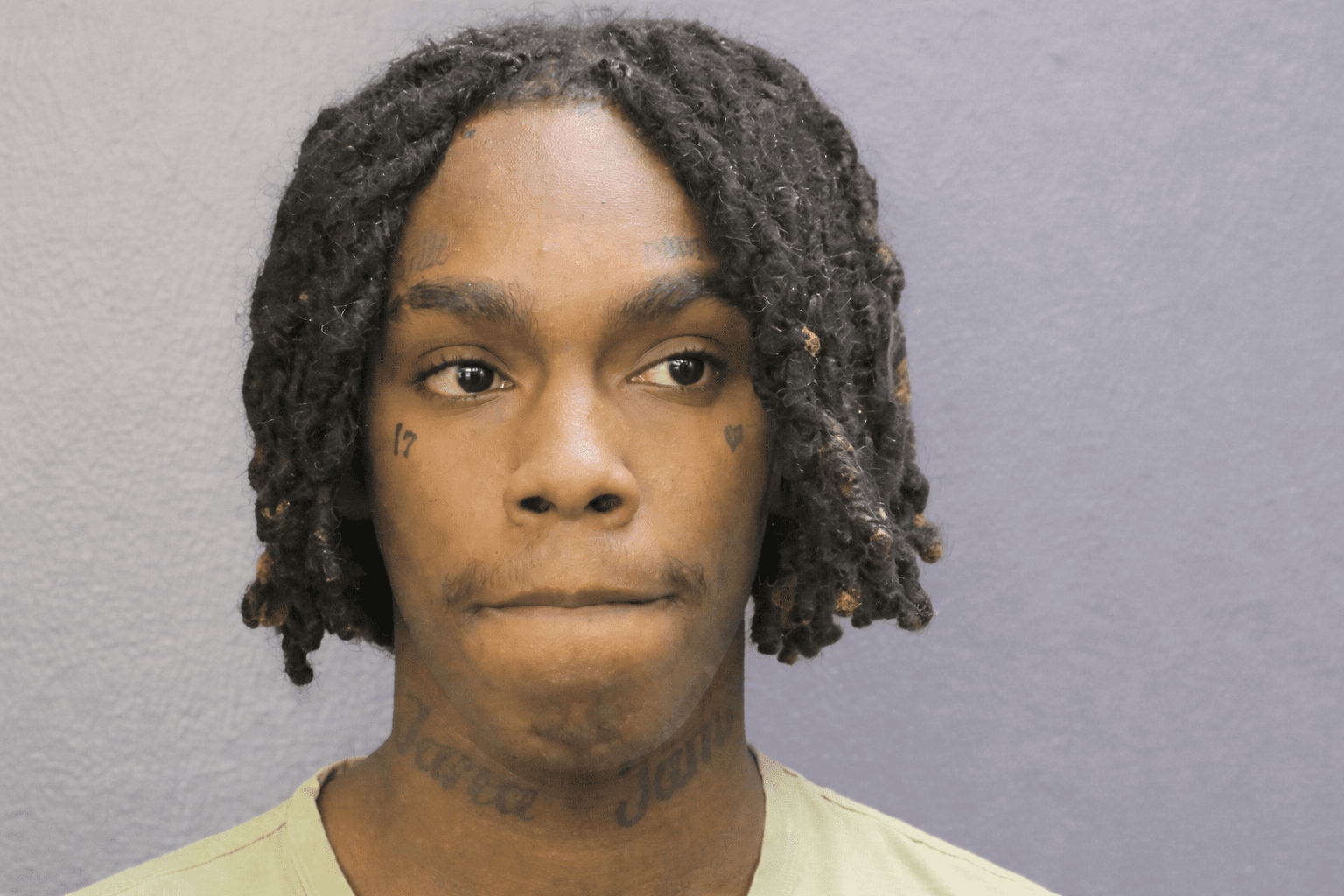
Some rap stories cool off after the first round of headlines. YNW Melly’s never really did. Years after his breakout into the mainstream, he remains one of the most searched names in hip-hop, not only because of the music, but because the legal story around him still refuses to resolve. What began as the rise of one of Florida’s most emotionally distinct young stars slowly turned into one of rap’s longest, strangest, and most debated courtroom sagas.
That is what makes Melly such a difficult figure to place cleanly. He was never a minor talent whose notoriety got artificially inflated by scandal. The music mattered first. The voice mattered first. He had already proven that he could create records people felt in a personal way, songs that were melodic without sounding soft, dark without sounding empty, and vulnerable without losing menace. But once the criminal case swallowed the narrative, his career stopped being judged only by songs. It became a permanent collision point between talent, accusation, delay, and public fascination.
His story is not only about what happened in court. It is also about what happens when a rising rap career becomes frozen inside a case so famous that it starts to define the artist more than the music that made him important in the first place.
A public post from YNW Melly’s official Instagram account at the start of 2025.
Florida Pain Made the Voice
Before the trial narrative took over everything, Melly had already become one of the most emotionally distinct young rappers to come out of Florida. He did not sound like a conventional street rapper, and he did not sound like a clean pop crossover either. What made him connect was the unstable balance: melody, darkness, tenderness, violence, loneliness, and theatrical emotion all sharing the same songs.
That mix fit the Florida rap environment that helped produce him, a scene full of artists who often turned trauma into melody rather than straightforward bars. But Melly’s version of that formula felt especially unsettling because he could make pain sound catchy without reducing it. There was always something unstable moving underneath the hook. Even at his most musical, he sounded like somebody carrying danger close to the surface.
That is part of why people latched onto him so quickly. He did not feel easy. He felt magnetic in a more uncomfortable way, which is often what separates a memorable artist from a merely successful one.
“Murder on My Mind” Changed the Scale of the Story
Some breakout songs create fans. Others create mythology. “Murder on My Mind” became the kind of record that permanently altered how the public saw YNW Melly. It pushed him onto the Billboard charts, widened the audience dramatically, and gave him the kind of instantly recognizable identity most artists spend years chasing. Once that song hit, he was no longer just a Florida name with local momentum. He was part of the national rap conversation.
What made the record stick was not just the content. It was the delivery. Melly sounded emotionally cracked open, but never out of control. The song felt confessional and dangerous at the same time. That balance turned it into something larger than a viral moment. It created fascination around the person behind the music.
And that fascination only deepened once listeners realized he had more than one record in him. This was not a novelty hit. This was an artist with an actual voice, an actual emotional lane, and a catalog that felt capable of getting bigger.
An XXL post revisiting the timeline around YNW Melly’s arrest and the unresolved case.
The Talent Was Bigger Than One Record
A weaker artist might have stayed trapped in the shadow of one breakout song. Melly didn’t. Records like “Suicidal” proved he had a broader emotional range, and Melly vs. Melvin reaching the top 10 of the Billboard 200 showed that the audience around him was not based on curiosity alone. He had real traction.
That project title also said a lot about how the public already understood him. Even before the case became the dominant narrative, Melly’s image lived in contradiction. He was presented as split, conflicted, emotionally erratic, and strangely compelling. The public was not just listening to music. They were trying to understand a persona that seemed to hold tenderness and danger in the same frame.
That matters because once the criminal case arrived, it did not fall onto a blank slate. It landed on top of an artist whose music already sounded haunted enough that people immediately started reinterpreting old songs through a much darker lens.
Need press for your music?
Get featured on Raptology and put your release in front of rap fans, artists, and industry readers.
Submit Your MusicThe Case Rewrote the Entire Career
In 2019, Melly was arrested and charged in connection with the killings of YNW Sakchaser and YNW Juvy. From that point forward, the narrative shifted completely. The rise was no longer just about songs, charts, or Florida momentum. It became inseparable from the criminal case, the allegations, and the broader public argument over how much an artist’s lyrics, persona, and creative identity should influence the way people interpret a prosecution.
This is where Melly’s story becomes more than just another rapper-with-legal-trouble headline. The charges were so serious, and the public interest around the case so intense, that the career effectively became suspended inside the courtroom. Fans kept listening, but they were also waiting. Waiting for trial. Waiting for clarity. Waiting for an ending that never seemed to arrive.
In most rap careers, momentum depends on movement. Melly’s strange position was that he remained culturally present while personally and legally stuck. That kind of suspended fame is rare, and it helps explain why he never stopped dominating search traffic.
A public 2026 post from YNW Melly’s official Instagram account tied to a new-album push.
The Mistrial Made the Story Even Stranger
In 2023, the first trial ended in a mistrial after jurors could not reach a unanimous verdict. Instead of closing the story, the mistrial made everything feel even more unresolved. Now the case was not just famous because of the allegations. It was famous because it had become one of those legal sagas that seemed unable to reach a final destination.
That matters culturally because unresolved cases live differently in public memory than acquittals or convictions do. They leave space for endless speculation, endless arguments, and endless revisiting of the same facts through different emotional lenses. The mistrial did not reduce the fascination around Melly. It extended it.
And because he had already entered rap history through records people genuinely cared about, the legal uncertainty kept feeding back into the music. Listeners went back to old songs. Media outlets revisited the case every time a new development emerged. Every update brought the same uncomfortable blend of crime reporting, celebrity culture, and rap mythology.
XXL’s post from July 2023 when the YNW Melly double-murder trial was declared a mistrial.
Delay Turned Into Its Own Kind of Identity
One of the strangest things about YNW Melly’s case is how long the waiting itself has become part of the story. At a certain point, the delay stops feeling like a temporary interruption and starts functioning like the artist’s public identity. The retrial kept getting pushed. New motions kept appearing. New legal angles kept extending the life of the case. And now, instead of a quick arc from charge to resolution, the public has spent years watching the same story refuse to end.
That creates a different kind of fame. Melly is still known, still searched, still argued about, but not in the way a working artist normally is. The music is still there. The audience is still there. But the career itself cannot move in a normal way because the courtroom remains the center of gravity.
This is a major reason he remains so searchable. People are not only looking up old songs or streaming-era milestones. They are tracking a suspended life, a stalled career, and a case that has gone on so long that it almost functions like a permanent series rather than a legal proceeding.
Promote your music video on Raptology
Get coverage, placement, and visibility for your latest release on one of hip-hop’s most active indie media platforms.
Advertise With RaptologyNow the Retrial Has Slipped Into 2027
The latest twist is that the retrial timeline has stretched even further. Reporting now points to 2027, which means the story has officially entered a level of delay that changes how it is remembered. This is no longer just a major rap case. It is one of the genre’s longest unresolved modern legal narratives.
That kind of prolonged limbo raises larger questions. What does it mean when a rapper remains one of the most talked-about names in the genre while unable to actually live a normal career? What does it do to public memory when talent, controversy, incarceration, and delay all fuse into one unresolved brand? And how much longer can an artist remain culturally alive while practically frozen?
Those are not abstract questions in Melly’s case. They are the reason the story keeps regenerating itself online. Every delay does not reduce interest. It refreshes it.
XXL reporting that YNW Melly’s retrial had been delayed again and was then slated for 2027.
Why the Story Still Dominates Search
Some artists stay relevant because their catalog is huge. Others stay relevant because their story keeps mutating. Melly belongs to the second category, even though the first category still partly applies. He remains highly searched because his name sits at the intersection of everything the modern internet obsesses over: music, talent, violence, true crime, celebrity, conspiracy, courtroom delay, and unresolved endings.
That combination is incredibly hard to shake once it takes hold. If he had been less gifted musically, the story might have eventually collapsed into simple scandal memory. But because the talent was real, because the records were real, and because the public had already seen the scale of what his career might have become, the fascination stayed deeper than ordinary controversy.
The result is a rare kind of legacy-in-progress: one where the artist is still famous, still culturally legible, still streaming, and still argued about, yet has no clean narrative ending to anchor any of it.
Why YNW Melly Still Matters Musically
It is easy, after years of legal headlines, to forget that the music was the original reason people cared. Melly’s voice was not interchangeable. His melodies did not sound safe. His emotional range did not feel fake. He had that rare ability to sound sweet, unstable, wounded, and threatening in the same song, which is one reason his work cut through so strongly in the first place.
There are artists with less musical skill whose names became famous entirely because of scandal. Melly is not one of them. That is what keeps his story so complicated. He had real artistic gravity. He had songs that connected. He had enough identity to matter even outside the case. The problem is that the case became so enormous that it effectively swallowed the career around it.
That tension is what makes this a real documentary story rather than a simple courtroom recap. It is not only about what he is charged with. It is about what happened when an artist with actual star potential got trapped inside an endlessly unresolved legal frame.
Conclusion: A Career Suspended in Public View
YNW Melly’s story is not memorable just because it is controversial. Rap has too many controversial stories for that alone to explain the hold this one has kept on the culture. His story lingers because he had already proven he could matter musically before the legal system took over the frame. He was not an empty headline. He was a real talent with a distinctive voice, a growing catalog, and the kind of emotional instability in his music that made people pay attention.
Then the case rewrote everything. The rise became a trial story. The trial became a mistrial. The mistrial became years of delay. And now the story exists in that strange place where a rapper is still famous, still searched, still culturally present, but permanently trapped inside a question that has not been answered.
That may be the clearest way to understand YNW Melly’s place in rap history. He is not just the center of a case. He is the center of an unresolved story where the talent was real, the stakes were enormous, and the ending still has not come.
Hulda Hicks was born in Brooklyn, NY in the late ’70s, at the time when Hip-Hop music was just emerging as an art form. Her entire life was influenced by the culture, having grown up in the epicenter of the creative movement.
As a trained musician and vocalist, Hulda got exposed to the industry in her twenties and has worked on projects with iconic figures such as the Chiffons, the Last Poets, and Montell Jordan, to name a few. Her passion for music extended past the stage on to the page when she began to write ad copy and articles as a freelancer for several underground publications.
A written review from “Jubilee Huldafire” is as authentic as it gets, hailing from one creative mind that has a unique voice, on paper and in person.