

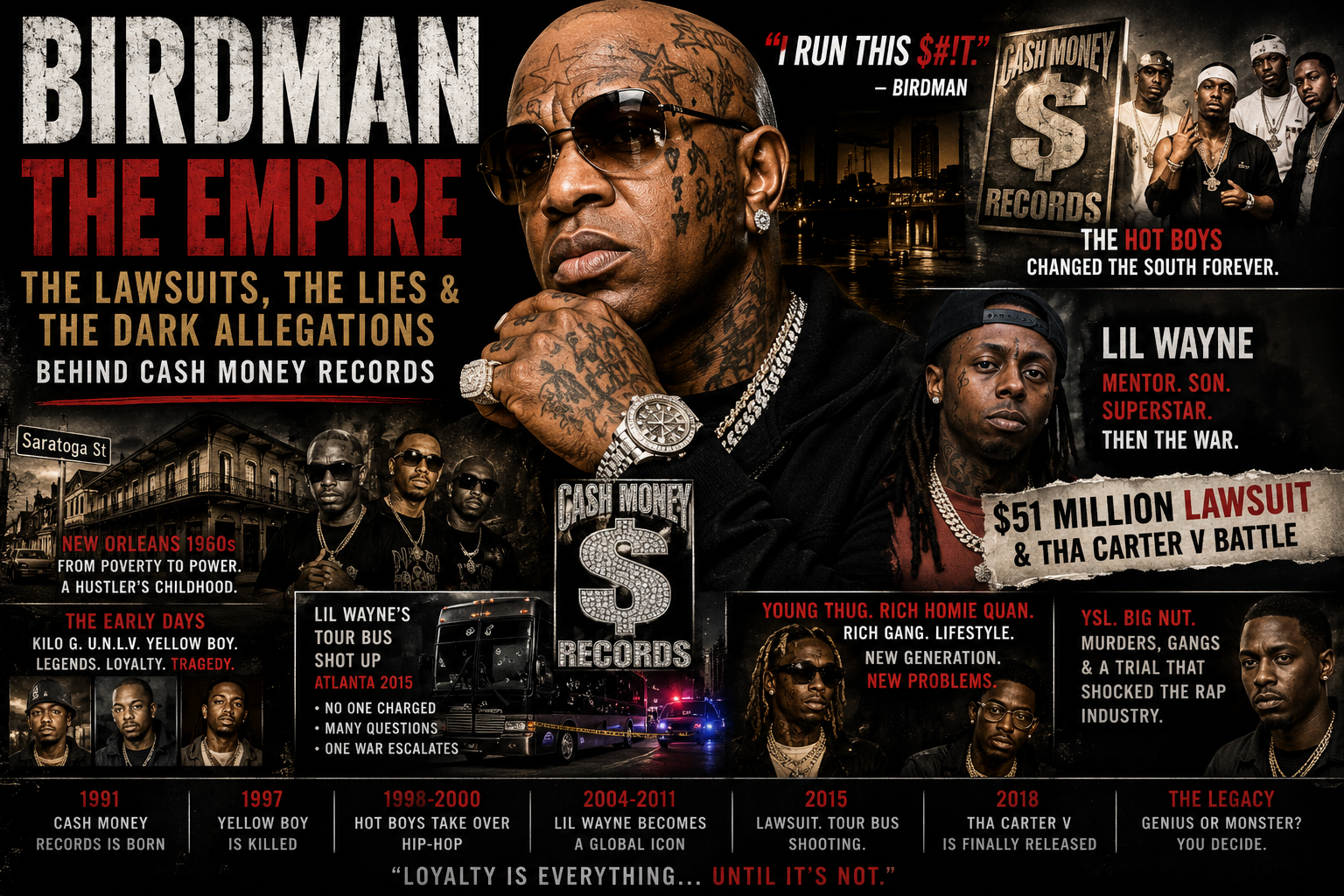
Cash Money Records did not enter hip-hop quietly. It came out of New Orleans with diamonds, street pressure, bounce rhythms, Southern pride, and a business model that made the rest of the rap industry look slow. Before the South fully took over rap, before streaming changed artist development, and before Drake and Nicki Minaj became global superstars, Cash Money had already built one of the most fascinating empires in music.
At its peak, Cash Money was not just a record label. It was a symbol of ownership, independence, family loyalty, and impossible wealth. Birdman and Ronald “Slim” Williams turned a New Orleans street label into a national machine, helped push Juvenile, B.G., Turk, Mannie Fresh, Lil Wayne, Drake, and Nicki Minaj into the center of rap history, and proved that Southern labels could control the boardroom as much as the booth.
But the same empire that once looked untouchable eventually became defined by lawsuits, delayed albums, public disputes, fractured relationships, and questions about money. Cash Money did not disappear, but its aura changed. The label that once felt like the future of rap became a case study in what happens when family, business, loyalty, contracts, and superstardom all collide under one roof.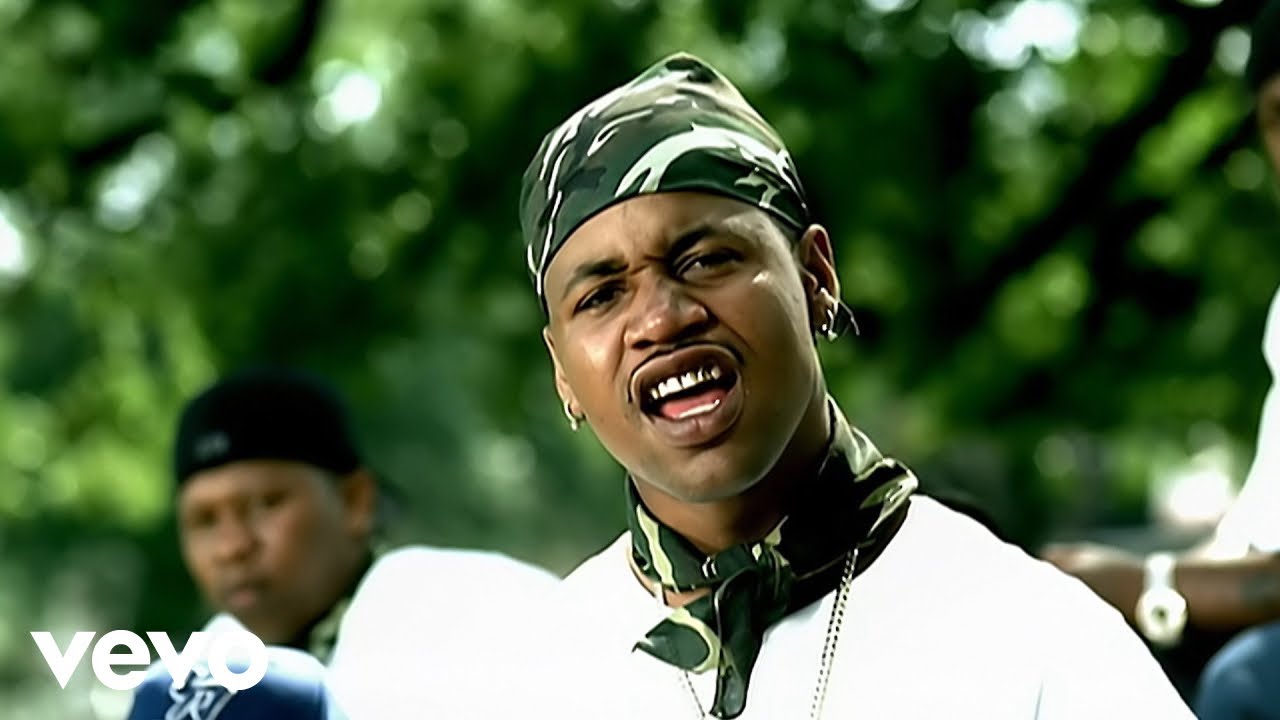
Juvenile’s “Back That Thang Up” helped push Cash Money Records from regional dominance into national hip-hop history.
The New Orleans Blueprint That Changed Rap Business
Cash Money’s story begins with Bryan “Birdman” Williams and Ronald “Slim” Williams, two brothers who understood something that many major labels underestimated in the 1990s: regional rap scenes had their own economies, their own stars, their own language, and their own fan bases. New Orleans was not waiting for New York or Los Angeles to approve its sound. The city already had bounce music, block culture, street legends, and a generation of young artists ready to turn local energy into national power.
The early Cash Money formula was simple, but powerful. The label built from the ground up, using local demand, street-level promotion, visible wealth, and a roster that felt like a family. Before the internet made every artist accessible, Cash Money understood physical presence. The cars, jewelry, album covers, hand signs, videos, and repeated branding made the label feel bigger than music.
What separated Cash Money from many independent rap labels was not just sound. It was leverage. By the late 1990s, major labels were hungry for Southern rap, but Cash Money had already proven it could sell records without surrendering its identity. That gave the Williams brothers a rare negotiating position. When Cash Money signed its major distribution deal with Universal, the industry took notice because the terms reportedly allowed the label to retain unusual control and a large share of profits.
Cash Money did not just sell records. It sold the idea that a Southern rap label could own its masters, control its image, and force the major-label system to come to New Orleans.
That deal became part of hip-hop business mythology. For independent artists, Cash Money represented a dream: build your own movement, make the majors chase you, and keep enough control to turn music into generational wealth. For fans, it looked like the label had cracked a code. For rivals, it proved that the South was not a side story anymore.
Juvenile, Mannie Fresh And The First Cash Money Explosion
Cash Money’s national breakthrough was tied to a perfect collision of talent and timing. Juvenile had the voice, charisma, and street presence to carry New Orleans into mainstream rap. Mannie Fresh had the production style that made Cash Money instantly recognizable. His beats were bright, bouncy, aggressive, strange, and unforgettable. Together, they gave the label a sound that could not be mistaken for anything else.
“400 Degreez” became the album that announced Cash Money to the world. It was local but universal, street but catchy, raw but commercially explosive. “Back That Thang Up” became more than a hit song. It became a cultural ritual, one of those records that could restart a party decades after its release. It also introduced a teenage Lil Wayne to a wider audience, placing him inside a song that would become part of hip-hop’s permanent memory.
The Hot Boys added another layer to the mythology. Juvenile, B.G., Turk, and Lil Wayne gave Cash Money a group identity, a young and dangerous collective that felt like the New Orleans answer to rap crews from every other region. They were not polished in the traditional pop sense, but that was the point. They sounded like a city breaking through the speakers without asking permission.
Lil Wayne Becomes The Heir To The Empire
When the first Cash Money era started to splinter, Lil Wayne became the bridge between the label’s original run and its second life. He was younger than the rest of the Hot Boys, but he grew in public. Fans watched him evolve from the kid on the records into one of the most technically gifted, prolific, and influential rappers of his generation.
Wayne’s rise changed Cash Money’s future. He was not just another artist on the roster. He became the label’s franchise player, the figure who could carry Cash Money after Juvenile and others moved away from the core. By the mid-2000s, Wayne’s mixtape run had turned him into a cult hero, and “Tha Carter” series pushed him into mainstream rap dominance.
That era also changed how fans understood artist development. Wayne did not become great overnight. He recorded constantly, flooded the streets with mixtapes, jumped on everyone’s songs, sharpened his punchlines in public, and turned work ethic into mythology. For years, he made Cash Money feel alive even when the label’s original group energy had faded.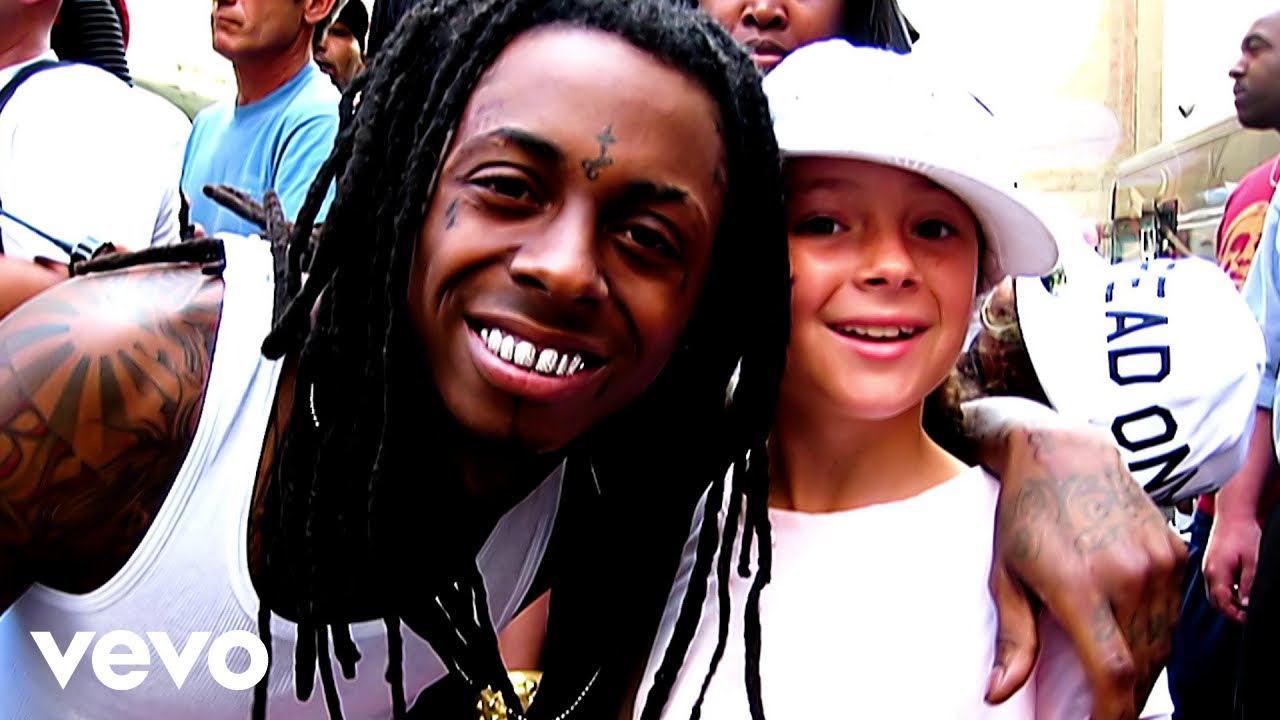
Lil Wayne became Cash Money’s most important long-term artist, carrying the label from its Hot Boys foundation into a new superstar era.
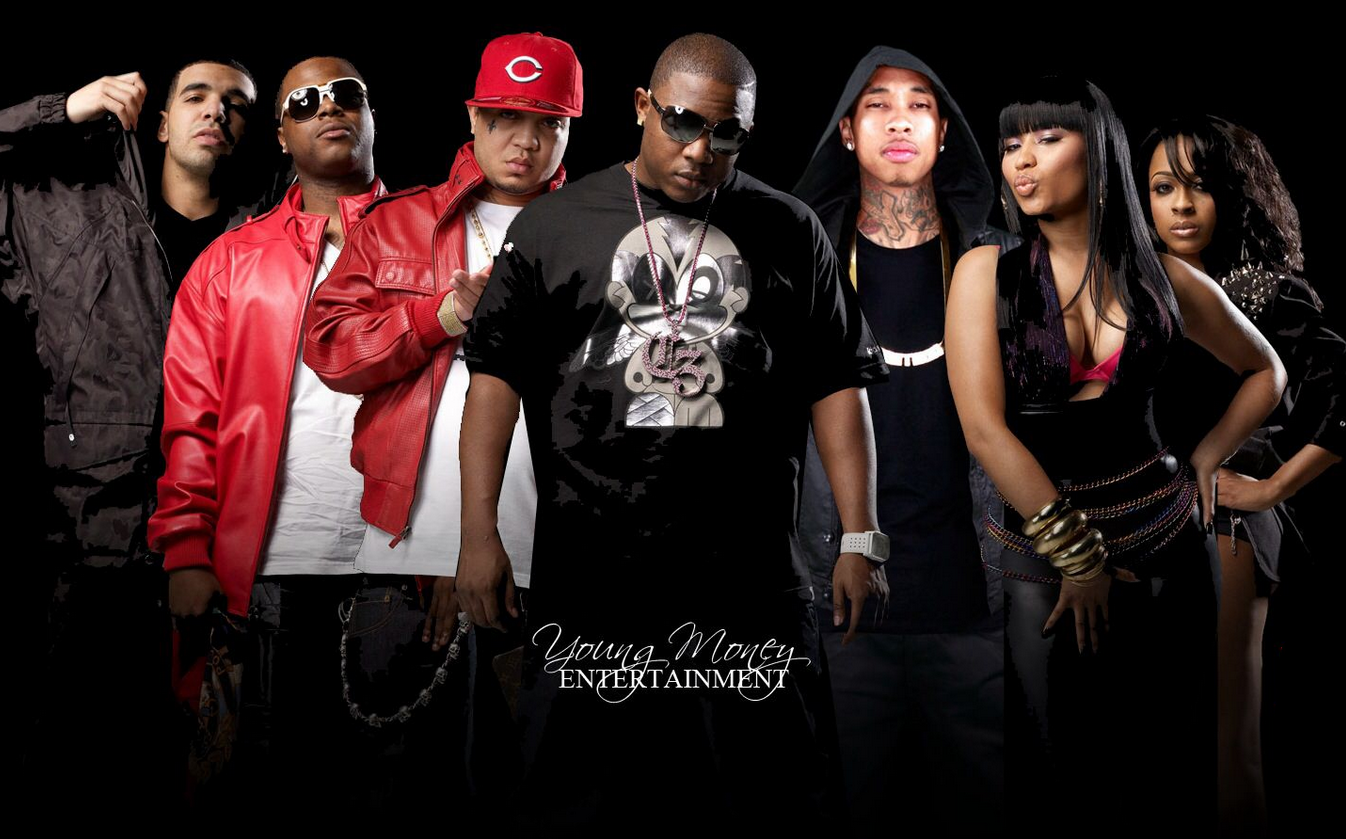
Young Money Extends The Dynasty
Cash Money’s greatest second act came through Young Money. Wayne did something that most superstar rappers fail to do: he identified artists who could become bigger than the moment around him. Drake and Nicki Minaj were not just successful signees. They became two of the defining artists of the 2010s, each changing the sound, image, and commercial scale of rap.
Drake gave Young Money and Cash Money a new kind of superstar. He blurred rap and R&B, built a fan base that crossed gender and genre lines, and eventually became one of the most commercially dominant artists in modern music. Nicki Minaj gave the label a global female rap icon whose style, voice, animation, fashion, and fan culture shifted the entire landscape for women in hip-hop.
For a moment, Cash Money looked stronger than ever. Birdman had the original New Orleans legacy, Wayne had become the superstar heir, and Young Money had produced Drake and Nicki. Few rap labels in history had ever connected three different waves so effectively. The empire had gone from bounce-era New Orleans to mixtape-era Wayne to streaming-era global pop-rap dominance.
Drake’s rise helped extend the Cash Money and Young Money dynasty into a new commercial era.
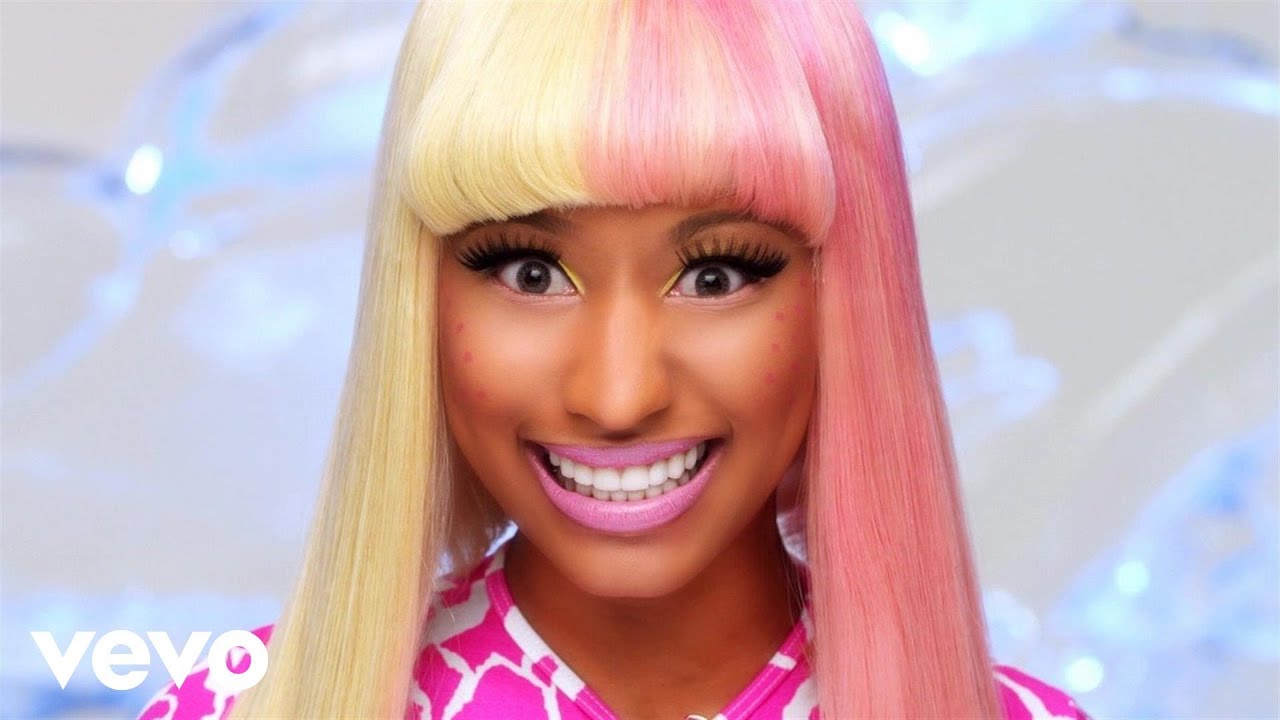
Nicki Minaj’s global rise gave Young Money and Cash Money one of the biggest female rap stars of all time.
The Money Questions That Would Not Go Away
Cash Money’s success always came with whispers about contracts, royalties, publishing, advances, and unpaid money. In hip-hop, those questions are not unusual. Many labels have faced disputes with artists. But Cash Money’s conflicts became part of the label’s public identity because they involved so many important names and lasted across different eras.
Former artists and collaborators raised concerns over money. Producers questioned payments. Legal disputes accumulated. Fans began to see a pattern where the label’s business genius and business controversy seemed inseparable. The same structure that made Cash Money powerful also made it a target of scrutiny. The label had negotiated like an independent powerhouse, but its artists increasingly asked whether the wealth at the top was reaching everyone who helped build the machine.
For a long time, Wayne’s loyalty appeared to hold the center together. He referred to Birdman as a father figure, and their relationship became one of the most visible bonds in rap. They hugged in videos, appeared together in interviews, made music together, and presented Cash Money as a family. That is why the eventual fallout felt bigger than a contract dispute. It looked like a family breakup happening in public.
Tha Carter V Delay And The Breaking Point
The Cash Money dynasty changed forever when Lil Wayne publicly said “Tha Carter V” was being delayed and that he wanted off the label. For fans, the shock was not only that Wayne was frustrated. It was that Wayne, the artist most associated with Cash Money loyalty, had reached a point where he was willing to challenge the label publicly.
The legal battle that followed became one of the most important label disputes in modern rap. Wayne’s claims involved money, control, and the delayed release of one of the most anticipated albums of his career. The fight dragged on for years, creating uncertainty around Wayne’s music and around the status of Young Money’s biggest stars.
The emotional weight of the dispute mattered as much as the paperwork. Wayne was not simply an artist who signed a bad deal as a young adult. He had grown up inside Cash Money. He had given the label decades of music, hits, credibility, and discovery. When he said he wanted freedom, fans read it as the collapse of the father-son story that Cash Money had sold for years.
Cash Money Timeline:
Early 1990s: Birdman and Slim build Cash Money Records out of New Orleans, focusing on local artists and street-level promotion.
1998: Cash Money signs a major Universal distribution deal and begins its national breakthrough.
1998-1999: Juvenile’s “400 Degreez” and the Hot Boys push the label into mainstream rap conversation.
2004-2008: Lil Wayne becomes the label’s central superstar through “Tha Carter” era and his legendary mixtape run.
2009-2011: Drake and Nicki Minaj turn Young Money into a global force under the Cash Money umbrella.
2014-2018: Wayne’s dispute with Cash Money and the delay of “Tha Carter V” reshape the label’s public image.
Why Drake And Nicki Made The Dispute Even Bigger
The Wayne and Cash Money dispute became even more complicated because of Drake and Nicki Minaj. By the time Wayne’s conflict became public, Drake and Nicki were not just rising artists. They were two of the biggest stars in the world. Their success made Young Money incredibly valuable, and it made any question about control, royalties, and label structure feel much larger.
Drake eventually became so commercially massive that he no longer seemed like a traditional label artist. He was a brand, a streaming giant, a touring machine, and a cultural center of gravity. Nicki, meanwhile, built a fan army and a pop-rap presence that made her one of the most influential female rappers in history. Their careers proved Wayne’s eye for talent, but they also showed how complicated the Cash Money and Young Money structure had become.
In a simpler world, Wayne discovering Drake and Nicki would have strengthened his position forever. In the real world of music contracts, imprint deals, distribution rights, advances, and royalty accounting, it made everything more complex. Cash Money’s greatest victory also became part of the dispute that exposed the cracks in the empire.
The Empire Did Not Collapse Overnight
It would be too simple to say Cash Money fell off because of one lawsuit or one delayed album. The truth is more complicated. The label changed because the entire music business changed. The ringtone era ended. Mixtape blogs lost power. Streaming reshaped revenue. Artist independence became more realistic. Social media gave artists direct access to fans. The old label-as-family model became harder to maintain when artists could build their own ecosystems.
Cash Money was built in a world where physical albums, radio runs, street teams, video rotation, and major-label distribution could define a career. By the time Drake and Nicki were global stars, the industry had shifted toward streaming, brand partnerships, social platforms, and direct fan engagement. Labels could still matter, but the artist was becoming the platform.
That shift made Cash Money’s old power structure feel less invisible. Fans became more educated about deals. Artists became more vocal about ownership. Social media turned private disputes into public debates. Every delay, lawsuit, interview, reunion rumor, and Instagram post became part of the story.
Birdman’s Complicated Legacy
Birdman remains one of the most complicated figures in hip-hop history. On one hand, he helped build one of the greatest rap labels ever. He understood branding, leverage, wealth presentation, artist development, and the psychology of success. Without Birdman and Slim, the careers of multiple rap icons may have unfolded very differently.
On the other hand, Birdman’s public image is permanently tied to questions about money and artist relationships. That tension is why Cash Money remains so fascinating. Birdman is not remembered only as a mogul or only as a villain in artist disputes. He is remembered as both, depending on who is telling the story.
His genius was real. The controversies were real. The empire was real. The fallout was real. That combination is exactly why Cash Money still generates debate decades after its peak.
Cash Money’s story is not just about who got rich. It is about who controlled the machine, who felt protected by it, and who eventually felt trapped inside it.
What Cash Money Means To Hip-Hop Now
Today, Cash Money’s influence is everywhere. Its sound helped normalize Southern dominance. Its business model inspired independent labels to negotiate harder. Its visual language shaped rap luxury. Its roster produced some of the most important artists in the genre. Its disputes became warning signs for younger artists learning the difference between fame and ownership.
The label’s legacy cannot be erased by controversy because the music remains too important. Juvenile’s records still move crowds. Wayne’s influence is embedded in multiple generations of rappers. Drake and Nicki became global pillars. Mannie Fresh’s production remains one of the most recognizable sounds in Southern rap history.
But Cash Money’s story also works as a cautionary tale. It shows that loyalty without transparency can break. Family language cannot replace clean accounting. A powerful brand cannot protect a label from internal mistrust forever. The artists who build an empire eventually want to know what they own, what they are owed, and whether the people who called them family treated them like partners.
The Dynasty That Changed And Survived
Cash Money Records did not vanish. It survived, adapted, and remains part of hip-hop’s larger business story. But the version of Cash Money that once felt untouchable is gone. The Hot Boys era is history. Wayne’s relationship with the label changed forever. Drake and Nicki grew into institutions of their own. The industry moved into an era where artists discuss masters, royalties, and independence more openly than ever.
That may be Cash Money’s final lesson. The label helped teach hip-hop how to dream bigger, negotiate harder, and think like owners. Then its own internal conflicts taught the next generation why ownership, paperwork, and transparency matter just as much as hits.
Cash Money was a dynasty, a family, a machine, a dream, and a warning. It gave rap some of its biggest records and some of its most uncomfortable business lessons. That is why the story still matters. Not because the empire disappeared, but because it changed the rules, then became proof that even the strongest empires can crack from the inside.
Source Notes: This Raptology documentary is based on publicly reported music history, including coverage from Billboard, Pitchfork, Vibe, XXL, Variety, public YouTube artist channels, and historical reporting on Cash Money Records, Young Money, Lil Wayne’s legal dispute, and the label’s Universal-era rise.
Billboard: Lil Wayne and Cash Money lawsuit coverage
Pitchfork: Lil Wayne settlement reporting
Vibe: Birdman and Lil Wayne feud timeline
Read More On Raptology:
Explore more Raptology documentaries
Visit the Raptology Rap Hall of Fame
Reader Poll
What was the biggest turning point in Cash Money Records history? The Universal deal Juvenile and the Hot Boys breaking through Lil Wayne becoming the main superstar Drake and Nicki Minaj joining Young Money The Tha Carter V dispute Vote Now
Raptology Editorial is the official newsroom voice of Raptology, covering breaking hip-hop news, artist developments, industry trends, and in-depth editorial reports from across the global rap landscape.



💴 TRX Compensation Released Claim Reward 🔥🔥🔥 telegra.ph/COMPENSATION-05-12-9?hs=a57b09adf3fa84f28cec23477ee53af8& 💴
2nj6cu