
Inside This Raptology Documentary
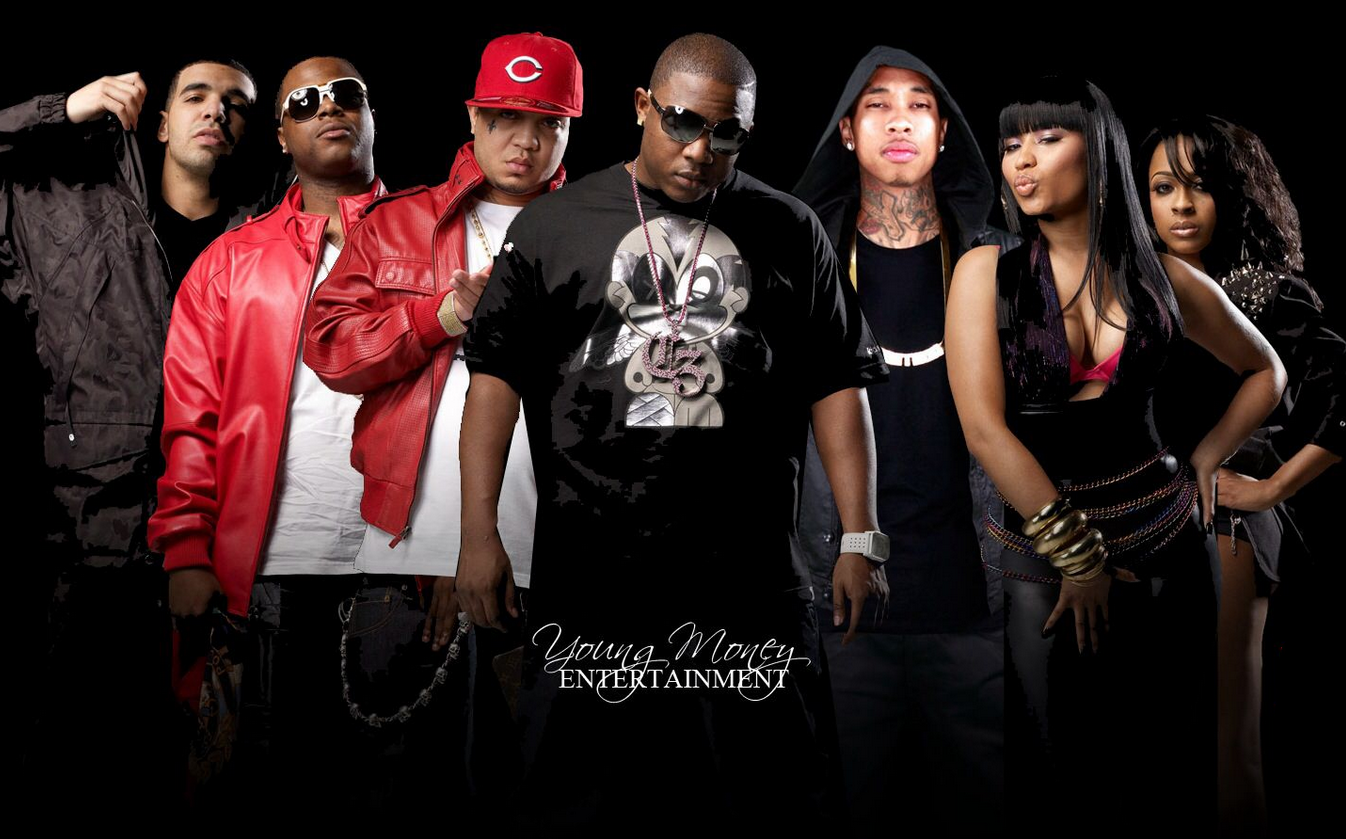
This feature traces Young Money from Lil Wayne’s Cash Money foundation to the rise of Drake, Nicki Minaj, and Tyga, then into the lawsuits and business problems that changed the label forever.
Young Money did not simply introduce a new label. It changed the sound, business, and celebrity structure of hip-hop in the 2010s. Lil Wayne built a crew that gave the world Drake and Nicki Minaj, helped push Tyga into mainstream rotation, and turned YMCMB into one of the most recognizable acronyms in rap. But behind the success was a much darker question: what happens when a label creates superstars faster than it can build a real system around them?
At its peak, Young Money looked unstoppable. Wayne was the best rapper alive to a generation of fans, Drake was turning mixtape buzz into global superstardom, Nicki Minaj was becoming the most important female rapper of her era, and Tyga was scoring major club records. The label felt like a dynasty. For a few years, it looked like every important rap conversation ran through Young Money or Cash Money.
But the public version of the story was only half of it. The same machine that created stars also left other artists waiting, frustrated, and sometimes invisible. Behind the music videos and radio hits were contract disputes, delayed albums, unpaid royalty claims, resentment inside the roster, and a legal war between Lil Wayne and the Cash Money system that raised him.
Independent Artist? Get Seen By Raptology Readers
The Young Money story is a reminder that talent alone is not enough. Artists need visibility, leverage, and the right platform. Submit your music to Raptology for editorial consideration and artist promotion opportunities.
Submit Your MusicChapter 1: The Foundation Under Young Money

To understand Young Money, you have to understand Cash Money. Before Young Money became a superstar factory, Cash Money Records had already built one of the most important independent-to-major label stories in hip-hop. Founded by Bryan “Birdman” Williams and Ronald “Slim” Williams, Cash Money turned New Orleans street rap into a national force with Juvenile, B.G., Turk, Mannie Fresh, the Hot Boys, and Lil Wayne.
The label’s business legend was built on leverage. Cash Money’s distribution arrangement with Universal became famous because it allowed the company to keep a large share of profits compared with traditional major-label structures. For an independent Southern rap label in the late 1990s, that type of deal represented power. It also meant that the responsibility for paying artists fairly sat heavily on the label’s internal structure.
That is where the story gets complicated. By the early 2000s, several important Cash Money figures had left amid money disputes or complaints about contracts. Juvenile, B.G., Turk, and Mannie Fresh all became part of a larger pattern of artists questioning what they were owed. Cash Money was a triumph in terms of cultural impact, but it also carried a reputation for business conflict.
Lil Wayne was the last superstar standing from the original Cash Money generation. He had been signed young, developed inside the system, and eventually became the label’s most valuable artist. By 2005, while many former Cash Money artists had moved on, Wayne was entering the phase that would make him one of the biggest rappers alive.
Lil Wayne Becomes The Center Of The Universe
Wayne’s rise in the mid-2000s was different from a standard superstar run. He was everywhere. Mixtapes, features, freestyles, albums, radio singles, blog-era leaks, and guest verses all helped create the feeling that nobody could outrap him. By the time Tha Carter III arrived in 2008, Wayne had turned years of momentum into one of the last first-week million-selling rap albums.
Young Money was created in 2005 while Wayne’s star was still climbing. It was positioned under the Cash Money umbrella, which meant the new label carried both Wayne’s creative energy and Cash Money’s business structure. The idea seemed powerful on paper. Wayne would have his own imprint, discover artists, and build a new generation around him.
But there was a problem from the beginning. Wayne was an artist first. He was not naturally built like a traditional label executive, and several artists later suggested that Young Money originally felt less like a corporate label and more like a crew. That distinction matters because a crew can create excitement, but a label must release albums, manage budgets, clear samples, pay royalties, and build careers over time.
The early Young Money roster included names like Curren$y, Mack Maine, Gudda Gudda, Boo, Jae Millz, Shanell, T-Streets, Cory Gunz, Lil Twist, and Lil Chuckee. Some were lyrical. Some were charismatic. Some were young enough to be seen as future investments. But most of them would never receive the type of full-label rollout that artists expect when they sign with one of the biggest rappers in the world.
Curren$y And The First Warning Sign
Curren$y was one of the earliest artists associated with Young Money, but his time there was short. In hindsight, his departure foreshadowed one of the label’s central issues. He was talented, independent-minded, and already had a clear identity, but Young Money was not yet a fully functioning artist-development machine.
Curren$y later explained that Wayne’s priority at the time was becoming the best rapper alive. That was not an insult. It was simply the reality of the moment. Wayne was in the middle of one of the hottest runs in rap history, and building another artist’s career required a different type of focus.
That early tension would follow the label for years. Young Money could place artists next to Lil Wayne, which was a massive look, but proximity to greatness does not automatically create a career. Without consistent marketing, release plans, and long-term identity-building, many artists remained known mostly as “Young Money artists” rather than as stars in their own right.
Related Raptology Pages
Chapter 2: The YMCMB Explosion

The first Young Money artist to generate serious mainstream movement was not Drake or Nicki Minaj. It was Tyga. By the time he connected with Wayne around the 2008 VMA era, Tyga already had visibility and a hit with “Coconut Juice.” His early success gave him a different starting point from many other Young Money members because he was not arriving with zero public awareness.
Tyga’s first major Young Money album, Careless World: Rise of the Last King, arrived in 2012 and produced major records like “Rack City” and “Faded.” For a moment, Tyga looked like one of the label’s safest bets beyond Wayne, Drake, and Nicki. He had club records, a recognizable look, and the ability to make radio-friendly songs.
But Tyga’s story also showed how fragile the Young Money system could become. His later conflicts with the label centered on delayed music and money he claimed he was owed. Publicly, he would complain that his album was being held hostage, and years later he alleged that Cash Money and Young Money owed him millions in unpaid royalties.
Drake And Nicki Change The Label Forever
Drake and Nicki Minaj changed everything. Before them, Young Money was largely understood as Lil Wayne’s crew. After them, it became a global machine. Drake brought a new blend of rap, melody, emotional writing, and pop ambition. Nicki brought theatricality, technical skill, personality, fashion, alter egos, and the ability to dominate both rap verses and mainstream stages.
Wayne discovered Nicki through the come-up DVD era and quickly recognized her potential. Drake’s path ran through MySpace, Jas Prince, and a moment where Wayne had to be convinced that the actor from Degrassi could actually rap and sing at a high level. Once the connection was made, the chemistry between Drake, Nicki, Wayne, and the Young Money brand became undeniable.
The 2009 Young Money compilation We Are Young Money became the public arrival of the movement. “Every Girl” introduced the crew to radio audiences, while “BedRock” became a massive crossover record. The video looked like a new rap house being introduced to the world: Wayne as the boss, Drake as the smooth newcomer, Nicki as the breakout star, Tyga as the young hitmaker, and the rest of the roster filling out the family picture.
From there, Drake and Nicki went on feature runs that felt historic in real time. Drake’s So Far Gone momentum turned into Thank Me Later, then into a decade-plus run as one of the biggest artists in the world. Nicki’s feature run placed her next to Kanye West, Ludacris, Trey Songz, and other major stars before Pink Friday confirmed that she was not just a guest-verse phenomenon. She was a franchise.
Wayne went to prison in 2010, but Young Money did not disappear. In fact, Drake and Nicki helped keep the label alive while Wayne was away. That period proved Wayne’s vision worked at the highest level. He had created stars who could carry the brand without him standing in front of every song.
The Best-Case Scenario And The Problem It Created
Drake and Nicki becoming superstars should have been the best possible outcome for Young Money. In many ways, it was. Wayne’s label had produced two generational artists, something most labels never accomplish even once. Add Tyga’s hitmaking and Wayne’s own dominance, and Young Money had a roster that looked unbeatable.
But the success created a structural problem. Once Drake and Nicki became bigger than the crew, the center of gravity shifted. The label was no longer a balanced collective. It was Wayne, Drake, Nicki, Tyga, and a long list of artists who were still waiting for their moment.
That imbalance became increasingly obvious. The biggest stars went on their own tours, built their own worlds, and became brands larger than Young Money itself. The lesser-known artists were still attached to the label name, but they were not receiving the same oxygen. In a crew built around visibility, being invisible was deadly.
Raptology Rap Contest
Young Money proved that one platform can change an artist’s life, but only if the artist is ready to stand out. Enter the Raptology Rap Contest and put your music in front of readers who actually care about new rap talent.
Enter The ContestChapter 3: The Artists Left In The Shadow

Young Money’s greatest strength became its biggest weakness. Standing next to Lil Wayne gave artists instant credibility, but it also made it harder to define themselves. When the boss is one of the best rappers alive, average talent disappears quickly. Even talented artists can struggle if the audience only sees them as background characters in someone else’s movie.
Jae Millz, Gudda Gudda, Shanell, T-Streets, Cory Gunz, Lil Chuckee, and Lil Twist all had moments where fans recognized them, but most never received the full album push that could establish them independently. They appeared on group songs, mixtapes, features, and Wayne-related projects, but a permanent identity outside the Young Money umbrella proved difficult.
Cory Gunz is one of the most interesting examples. His appearance on “6 Foot 7 Foot” showed that he could rap at an elite level. He had technical ability, speed, and wordplay, but the industry around him had changed. Skill alone was no longer enough. Artists needed branding, hit records, personality, social media presence, and consistent rollout support.
Lil Twist, Lil Chuckee, And The Search For The Next Wayne
Lil Twist and Lil Chuckee represented another Young Money experiment. They were young, energetic, and marketed as part of the next generation. Wayne had been discovered as a child, so the idea of mentoring younger rappers made sense. If Cash Money could develop Wayne, maybe Young Money could develop its own teenage stars.
But copying the circumstances of Wayne’s rise was nearly impossible. Wayne was a rare case: a child rapper who survived the industry, matured in public, sharpened his craft, and eventually became the dominant rapper of his era. That path is difficult to repeat, especially when the younger artists are competing against social media, shifting fan tastes, and the impossible shadow of Wayne himself.
Lil Chuckee eventually left without a major Young Money album. Lil Twist remained associated with the label for years, but he became more famous to many fans for his friendship with Justin Bieber than for his music. That kind of celebrity proximity can bring attention, but it can also swallow an artist’s identity.
Jealousy, Distance, And The Crew That Stopped Moving Like A Crew
The transcript describes frustration from artists who felt that Drake and Nicki could have done more to bring the rest of Young Money with them. That feeling is understandable from a crew perspective. If everyone came up under Wayne, and Wayne’s platform helped make Drake and Nicki hot, some artists expected Drake and Nicki to return the favor by putting more Young Money members on their albums, tours, and stages.
From a business perspective, the situation was more complicated. Drake and Nicki were becoming global stars with their own brands, teams, audiences, and commercial pressures. They were not just Young Money members anymore. They were industries by themselves. Once that happened, the idea of a united crew became harder to maintain.
Tyga’s 2014 comments about not getting along with Drake and Nicki showed how fractured things had become. He described the group as people who were forced together, not necessarily friends with natural chemistry. That statement cut against the public image of Young Money as a family. It suggested that the label’s unity was more complicated behind the scenes.
More Raptology Artist Resources
Chapter 4: The Lawsuits And The Fall

By the end of 2014, the cracks were impossible to ignore. Tyga was publicly complaining that his album was being held back. Wayne was frustrated that Tha Carter V, one of the most anticipated rap albums in the world, was not being released. If the biggest artist and founder of Young Money could not get his own album out smoothly, the situation for lower-priority artists looked even worse.
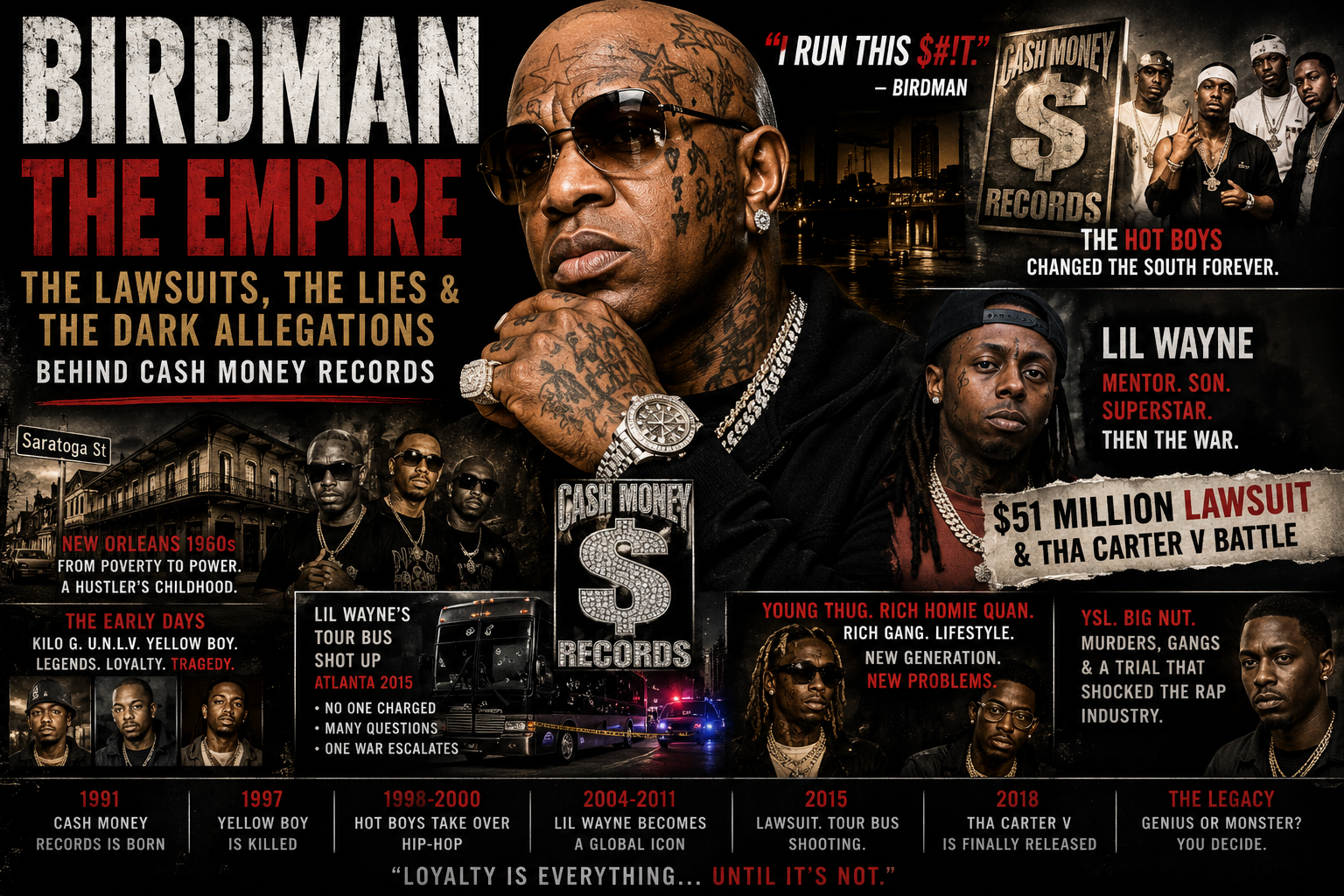
Wayne’s dispute with Cash Money became one of the most important label conflicts in modern rap. He sued Cash Money for $51 million, alleging that money was owed and that the label had violated obligations tied to his music and Young Money. The lawsuit was not just about one album. It touched the larger issue of who controlled the profits and rights connected to Young Money’s biggest stars.
That legal fight changed the way fans looked at the YMCMB era. For years, Birdman and Wayne had presented themselves as father and son, a rap-business bond that seemed bigger than paperwork. But when the money got complicated, the family image cracked in public.
Raptology context: Wayne’s lawsuit centered on unpaid money and control issues connected to Cash Money, Tha Carter V, and Young Money recordings. The dispute was eventually settled in 2018, clearing the way for Tha Carter V to finally be released.
Young Thug, Birdman, And The New Favorite Theory
As Wayne battled Cash Money, Birdman’s relationship with Young Thug added another layer of tension. Thug was one of the most exciting new artists in rap, and he clearly came from Wayne’s musical bloodline in terms of vocal experimentation, melody, unpredictability, and style. To some fans, Thug looked like the creative successor Wayne had always wanted to develop inside Young Money.
But timing matters. Wayne was fighting for his freedom from Cash Money while Birdman was publicly embracing a younger artist who sounded heavily influenced by him. That visual was difficult for fans to ignore. It created the impression that Cash Money was moving on while Wayne was still trapped in a business conflict.
The tour bus shooting allegations and courtroom claims surrounding that era made the situation even darker, though the broader point is clear without sensationalism. The Wayne-Birdman relationship had gone from loyalty to litigation, and the emotional damage affected the entire Young Money story.
What Happened To The Label?
Young Money did not disappear overnight. It continued to exist, and Wayne eventually became more independent from the old Cash Money structure. But the label’s cultural moment had passed. Drake had become his own empire. Nicki had become her own empire. Tyga had left and later reinvented himself. Many of the original roster members either moved on, stayed quiet, or remained attached without becoming mainstream stars.
The label’s downfall was not that it failed to create stars. It created stars too well. The issue was that the biggest stars outgrew the collective, while the rest of the roster never received enough infrastructure to catch up. Young Money became legendary because of the artists it launched, but uneven because of the artists it left behind.
In that way, Young Money is one of the most important case studies in rap history. It proves that a co-sign can open the door, but it cannot walk an artist through every room. It proves that talent needs timing, marketing, identity, and release strategy. It also proves that bad business can damage even the most powerful cultural movements.
Young Money Timeline
The Legacy Of Young Money
Young Money’s legacy is complicated because it is both a triumph and a warning. On one hand, Lil Wayne built a label that introduced Drake and Nicki Minaj, two artists who changed the direction of rap and pop culture. He also helped Tyga become a hitmaker and gave a generation of artists the chance to stand under one of the brightest spotlights in hip-hop.
On the other hand, the label showed what happens when branding outruns infrastructure. The Young Money name was powerful, but power did not automatically translate into album rollouts for every artist. It did not protect everyone from bad deals. It did not prevent jealousy, confusion, or royalty disputes. It did not stop the Cash Money business model from eventually colliding with Wayne’s own future.
Still, Wayne’s achievement is almost impossible to dismiss. Most rappers never create one superstar. Wayne helped introduce two generational ones. If Young Money hit fully on only a few artists, those hits were enormous. Drake and Nicki alone make the label historically significant. Add Wayne’s own catalog, Tyga’s run, and the YMCMB cultural moment, and the result is one of the most influential label stories hip-hop has ever seen.
Build Your Own Independent Movement
The Young Money story shows why artists need leverage, branding, and smart visibility. If you are serious about building a career, start by getting your music in front of real hip-hop readers.
Submit Your MusicFrequently Asked Questions
Who founded Young Money?
Young Money Entertainment was founded by Lil Wayne in 2005. It originally operated under the Cash Money Records umbrella and became one of the most influential labels of the 2010s.
Who were Young Money’s biggest artists?
The label’s biggest stars were Lil Wayne, Drake, Nicki Minaj, and Tyga. Drake and Nicki became global superstars and helped define the label’s legacy.
Why did Young Money decline?
The decline came from several factors: superstar imbalance, delayed projects, artists being overshadowed, money disputes, and Wayne’s legal war with Cash Money.
Was Young Money a failure?
No. Young Money was historically successful, but uneven. It launched some of the biggest artists ever while failing to fully develop many other roster members.
Reader Poll: What Was Young Money’s Biggest Legacy?
Think You Have What It Takes?
Young Money proved that one platform can change a career. Raptology is giving independent artists another way to get seen, heard, and discovered.
Enter The Raptology Rap ContestContinue Exploring Raptology
Raptology Editorial is the official newsroom voice of Raptology, covering breaking hip-hop news, artist developments, industry trends, and in-depth editorial reports from across the global rap landscape.




Leave a Reply