
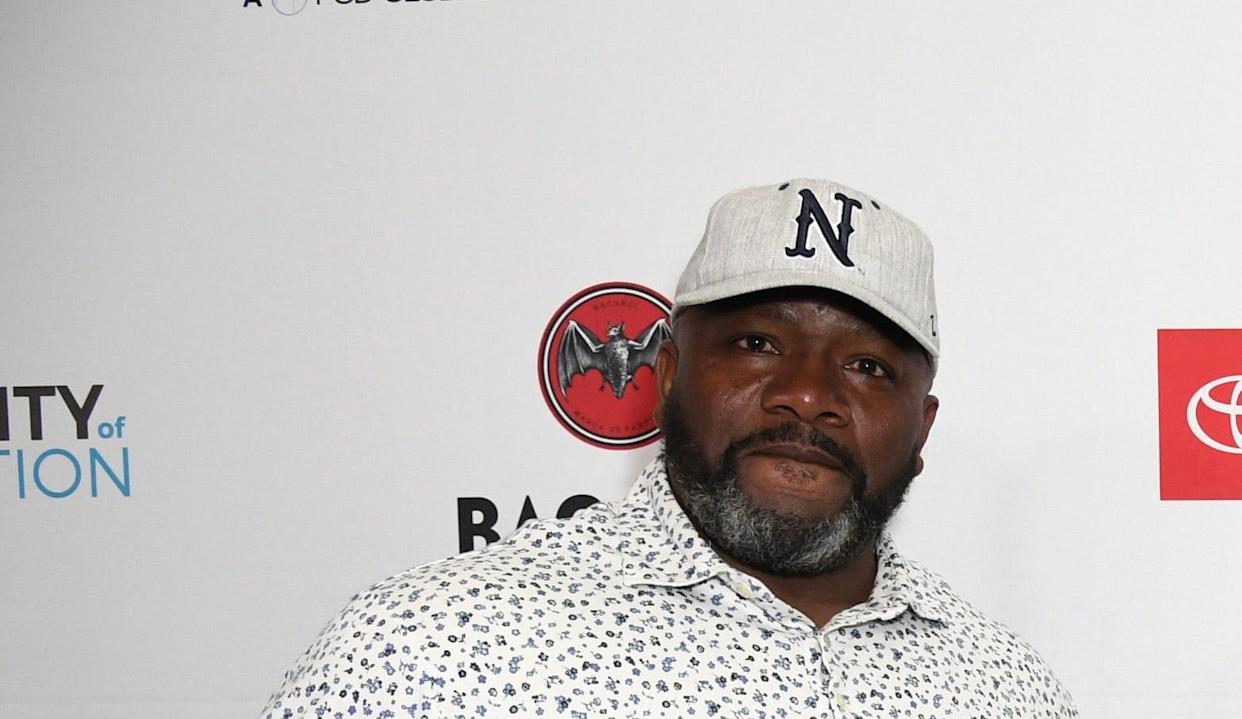
Big U has long occupied a strange and unusually powerful space in Los Angeles rap culture. He was not famous in the way rappers are famous, yet his name carried a weight that often seemed bigger than many artists’ names. Eugene “Big U” Henley became known as a South Los Angeles figure whose reach extended through street politics, entertainment access, neighborhood influence, celebrity relationships, and the mythology surrounding who did and did not need to “check in” when entering L.A. For years, that reputation made him look less like a background figure and more like part of the city’s hidden infrastructure. But once federal prosecutors unveiled a sweeping racketeering case in 2025, the story changed sharply. Big U was no longer being discussed only as a powerful gatekeeper in Nipsey Hussle’s orbit. He was now being framed through allegations that turned decades of reputation into evidence of a much darker enterprise.
Big U’s influence in Los Angeles was always bigger than music alone
What made Big U such a compelling figure was that he was never easy to place inside one lane. He was not simply a manager, not simply a neighborhood name, not simply a supposed activist, and not simply a music-business personality. His reputation sat across all those categories at once. In Los Angeles, that kind of layered identity can create unusual power. It allows someone to be seen as both insider and institution, both connector and enforcer, both cultural figure and cautionary presence.
That matters because the modern rap business often depends on unofficial power just as much as it depends on label structures. Some people control distribution. Others control access. Others control atmosphere. Big U’s name became associated with something harder to quantify but impossible to ignore: the idea that certain parts of Los Angeles still had living gatekeepers, and that entertainment, neighborhood politics, and reputation were never fully separate from one another.
For years, that reputation helped make him seem almost larger than biography. People did not necessarily know the full outline of his story, but they understood the signal his name carried. He represented one of those figures whose presence could change how people interpreted a room, a city, or a power structure. That is exactly why the later federal allegations landed so hard. They did not attach to an obscure name. They attached to a figure whose mythology had already been building for years.
The Nipsey Hussle connection pushed Big U deeper into West Coast rap mythology
One of the main reasons Big U’s name matters so much to rap audiences is his long-discussed role in helping launch Nipsey Hussle’s early career. That connection gives the story an emotional and cultural charge that goes far beyond ordinary industry networking. Nipsey is not just another artist in Los Angeles history. He became one of the city’s defining modern rap symbols: independent-minded, neighborhood-rooted, ambitious, and deeply tied to the idea of South L.A. pride.
Anyone linked to the early structure around Nipsey automatically becomes part of a larger mythology. In Big U’s case, that mythology made him look like more than a behind-the-scenes player. It reinforced the idea that he was one of the people who understood how power moved through the city, who mattered locally, and who could shape careers because he understood the environment they had to survive in.
That connection also raises the emotional stakes of the current story. Once someone is tied to a figure as beloved and symbolically important as Nipsey Hussle, every new headline involving them gets read through a wider historical lens. The public is not only evaluating the present allegations. It is re-examining an entire era of West Coast rap power, wondering how much of the mythology was community, how much was protection, and how much may have hidden more coercive forms of control.
Explore more documentary-style hip-hop coverage across Raptology’s growing archive.
“Checking in” turned Big U into a symbol of L.A. street power
Part of what made Big U’s image so durable was the idea of “checking in.” Over time, that phrase became shorthand for a whole worldview about Los Angeles: that the city was not simply a market or a performance space, but a place with local power structures outsiders had to respect. Whether spoken literally, exaggerated online, or folded into broader street mythology, the concept gave Big U an almost institutional aura. He came to represent the belief that celebrity access, neighborhood legitimacy, and physical safety were intertwined.
That symbolism mattered because it positioned him at the exact point where rap, street politics, and public fear could overlap. People did not have to know every detail to understand the message. The message was that Big U was not merely adjacent to influence. He was one of the names through which influence supposedly moved. In a city like Los Angeles, where geography and reputation can matter as much as fame, that kind of symbolic authority becomes its own form of power.
Federal prosecutors later leaned directly into that mythology. In both the complaint and indictment, the Justice Department described the alleged “Big U Enterprise” as a distinct, mafia-like organization that used Henley’s stature, his long-standing gang associations, and his public image to intimidate businesses and individuals. Prosecutors also alleged that media platforms, podcasts, documentaries, interviews, and Henley’s status as an “O.G.” were used to create fame for and stoke fear of the enterprise. Those are allegations, not findings of guilt, but they are a major reason the federal case hit with such force. The government was not simply saying Big U had a reputation. It was saying that the reputation itself was part of how the alleged enterprise operated.
The federal case changed the story because it turned mythology into allegations of organized enterprise
In March 2025, the U.S. Attorney’s Office for the Central District of California announced a federal complaint accusing Henley of leading a racketeering enterprise that allegedly committed a range of crimes including extortion, human trafficking, fraud, and the 2021 murder of an aspiring rap musician. A week later, a federal grand jury returned a 43-count indictment that expanded the case and alleged murder, extortion, robbery, fraud, tax crimes, and misuse of Henley’s anti-gang charity, Developing Options. Prosecutors alleged that the “Big U Enterprise” operated from 2010 until March 2025 and used violence, fear, fraud, and Henley’s stature to expand its reach. Those allegations represent a dramatic escalation in how Big U is publicly framed.
The force of the case came not only from the charges themselves but from how familiar the underlying public mythology already was. Big U had long been treated as a powerful, semi-legendary name in Los Angeles. The federal filings effectively recast that existing image as part of a criminal structure. They alleged that what many people had understood as street power, community influence, and gatekeeping was in fact the public-facing side of a racketeering enterprise. That is why the story changed so sharply. The case did not merely interrupt an existing narrative. It attempted to reinterpret it entirely.
There was another layer to the shock as well. The government’s allegations reached across worlds that usually get discussed separately: gang history, entertainment entrepreneurship, nonprofit fundraising, extortion, and celebrity adjacency. That breadth made the case feel bigger than a standard street-gang prosecution and more like an attempt to map an entire power ecosystem. In documentary terms, that is what makes the Big U story so gripping. The issue is no longer simply whether he had influence. The issue is what federal prosecutors say that influence was actually used to do.
The deeper documentary story is about how power gets built, protected, and eventually re-read
What makes Big U such a strong documentary subject is that the story goes beyond one case file. At its core, this is a story about how local power can harden into mythology, and how mythology can become so strong that it starts looking normal. Over time, figures like Big U become more than men. They become symbols through which outsiders interpret a city. They come to stand for the invisible rules, the unofficial authorities, and the unresolved relationship between neighborhood legitimacy and entertainment capital.
For years, that mythology made Big U look almost untouchable in a cultural sense. He was someone whose name suggested access, consequence, and importance. But federal intervention has a way of changing the public scale of a story. Once prosecutors describe someone as the head of a criminal enterprise, the mythology begins to fracture. People start re-reading the past. Actions that once looked like influence get reconsidered as control. Public image gets reconsidered as strategy. Community standing gets examined for what it may have concealed.
That does not automatically prove every allegation, and it is important not to confuse accusation with conviction. But in cultural terms, the damage to the old narrative can begin long before a case ends. Big U’s story now sits at that exact fault line. The public is no longer only asking what kind of influence he had. It is asking what that influence actually meant.
5 key themes that explain why the Big U story resonates so strongly
Big U’s story is rooted in place. His name carried weight partly because it seemed inseparable from the local map of power in South L.A.
The link to Nipsey gave Big U’s role a much larger cultural resonance and tied him to one of West Coast rap’s most emotionally charged modern stories.
That phrase turned him into a symbol of unofficial gatekeeping and gave his reputation a city-wide, even industry-wide aura.
Interviews, podcasts, documentaries, and celebrity proximity helped make the mythology visible instead of merely whispered about.
The 2025 complaint and indictment changed the story by alleging that the same reputation long seen as influence was part of a criminal enterprise.
A quick FAQ for search readers landing on the story
Because he has long been treated as a powerful South Los Angeles figure whose influence extended through street politics, celebrity access, and the early career orbit of Nipsey Hussle.
Federal prosecutors alleged that Henley led a racketeering enterprise involved in crimes including extortion, fraud, and murder. A 43-count federal indictment followed. These are allegations, not convictions.
Because it helped define Big U’s public mythology as a gatekeeping figure in Los Angeles, and prosecutors later alleged that his public reputation was part of how the enterprise exerted power.
Because it combines West Coast rap history, South L.A. power structures, Nipsey Hussle’s orbit, celebrity adjacency, and a federal case that attempts to reinterpret years of mythology.
What comes next will determine whether Big U is remembered as a gatekeeper, a myth, or a warning
The hardest part of the Big U story is that it now sits between two radically different narratives. One is the older image: a South Los Angeles power figure, community-facing personality, and behind-the-scenes force in West Coast rap mythology. The other is the federal government’s version: the alleged head of a mafia-like enterprise that used fear, reputation, and visibility as tools of criminal control. Those two versions cannot coexist comfortably forever. At some point, one will dominate public memory.
That is why this story belongs in documentary form. It is not just about a federal prosecution, and it is not just about neighborhood legend. It is about how hidden power becomes cultural legend, and how legend can later be recast as evidence. Big U matters because he sat at a crossroads most people only talk about abstractly: where rap, reputation, geography, community posture, and coercive influence may all begin to blur together.
Whether history ultimately remembers him as an overstated myth, a genuine gatekeeper, or something much darker will depend on what happens next. But the title already holds because the story has already changed: Nipsey Hussle’s orbit, L.A. street power, and the federal case. That is not just a dramatic framing. It is the exact set of forces that made Big U one of the most revealing behind-the-scenes figures in modern West Coast rap history.

Natalia is a Rap and Hip Hop enthusiast. After graduating from The New School of New York’s Public Relations Program and taking a course in Journalism at Michigan State University, she decided to dedicate her life to the music publishing business and to the discovery of new talent. She helps new artists gain exposure to the masses via online marketing and publications.


Natalia Privalova
This is dope!