
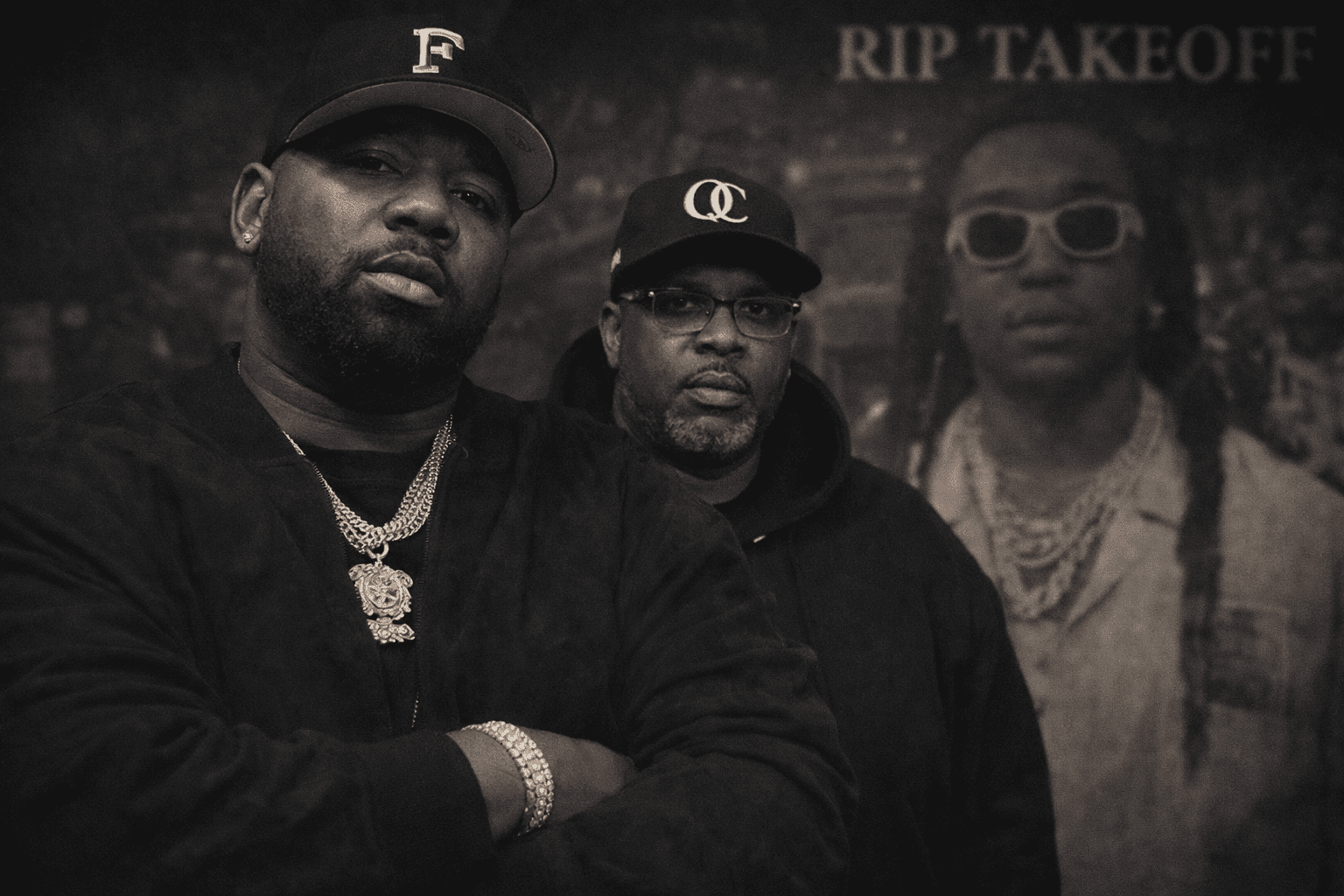
The machine worked because the roster felt connected
Labels become powerful when their stars reinforce one another. QC’s strongest years were built on exactly that effect. Migos could dominate conversation with a single visual or phrase. Lil Baby could own radio, playlists, and the street conversation at the same time. City Girls could create social-media gravity that extended well beyond release day. Lil Yachty brought cross-market visibility and a separate internet-native audience. Every artist pushed attention back toward the QC logo, and the QC logo made the next release feel bigger. Even people who did not closely follow label politics still understood the brand.
There was also a clean story to sell. Two executives with Atlanta roots and high-level management discipline had built a company that felt homegrown even while it scaled into a major operation. That balance is rare in rap. Once a label gets too corporate, fans start looking for what has been lost. QC held that line better than most, for a while. The company seemed to expand without surrendering the local code that gave it emotional credibility.
Pull Quote: QC did not fall apart in a single moment. It lost cohesion in public, then lost mystique, then lost the feeling that everybody under the roof was still pushing toward the same future.
Lil Baby’s rise gave QC a second center of gravity after Migos had already become superstars.
Takeoff’s death changed more than the music
One of the hardest truths in rap history is that tragedy does not only remove a person. It scrambles the emotional architecture around everybody connected to that person. When Takeoff was killed in 2022, the impact went beyond the obvious human devastation. It changed the emotional future of the Migos story and, by extension, the mythology around QC itself. Migos were not simply a successful group on the roster. They were one of the structural pillars that made QC feel larger than a normal label. Once that pillar was shattered, the company no longer felt like it was moving from triumph to triumph. It felt wounded.
That kind of loss is impossible to manage with branding. Fans could see the grief. They could feel the silence around what had once been effortless chemistry. The label that once specialized in energy was now linked to mourning, fragmentation, and unfinished business. In documentary terms, this is often the pivot point where a success story becomes a pressure story. Not because the label caused the tragedy, but because the tragedy exposed how much of the label’s emotional identity had been anchored to relationships that could never be neatly restored.
.jpg "Why Quality Control Fell Apart — Migos Loss, Industry Scale, and the Pressure That Changed QC 2")
Takeoff’s death did not just wound Migos. It altered the emotional identity of the entire QC story.
A verified Quality Control memorial post that keeps the article anchored to the emotional break in the label’s timeline.
Offset, business tension, and the public feeling of separation
Long before fans know contract language, they know atmosphere. One of the clearest signs that a label is losing internal unity is when the audience starts narrating separation before executives do. Offset’s disputes, long-running business questions, and the visible cooling of the old group dynamic made QC look less like a united house and more like a complicated holding company with unresolved history. Even when statements stayed careful, the feeling changed.
That shift matters because rap labels depend heavily on mythology. Cash Money had its mythology. Death Row had its mythology. Roc-A-Fella had its mythology. QC’s mythology was modern dominance with sharp executive discipline. Once the audience begins associating the company with splinters instead of force, the mythology weakens. People stop asking what the next QC wave is and begin asking what happened. That question is the beginning of decline, because labels are healthiest when the conversation is about tomorrow, not autopsy.
A verified QC post featuring Quavo and Takeoff as Unc & Phew, useful for showing how the label’s story had already shifted away from the original Migos balance.
Why this topic holds readers
It blends business power, artist chemistry, grief, contracts, loyalty, and the collapse of a modern rap dynasty. Readers stay because they want both the timeline and the emotional explanation.
What the HYBE era changed
When HYBE America acquired Quality Control in 2023, it confirmed how valuable the company had become. But every acquisition also changes the story a label tells about itself. To some fans, growth means validation. To others, it signals the end of the raw original spirit. QC had already turned itself into a major institution, but the deeper it moved into corporate scale, the harder it became to preserve the old mythology of the Atlanta power center running on instinct, relationships, and local vision.
That does not mean the deal was a mistake. In pure business terms, it was the kind of outcome most executives dream about. But in culture, every win creates a counter-story. When fans feel distance between the label’s roots and its present structure, they begin to wonder whether the machine still serves artists the same way, or whether it mostly serves the machine itself. That tension is not unique to QC. It is the price of success in rap, where authenticity is always being audited in public.
A verified Instagram post referencing the HYBE acquisition, useful for illustrating the corporate-scale phase of the QC story.
Did QC really fall apart, or did it simply stop feeling whole?
The smartest way to frame QC may not be total collapse. It may be transformation under pressure. Labels age. Waves end. Rosters shift. What made QC special was not that it could avoid time, but that for several years it looked like it had beaten it. That illusion is gone now. The roster no longer moves with the same collective electricity. The Migos story can never be restored to what it was. Lil Baby remains a giant, but one giant cannot fully recreate the old label aura by himself. And every public sign of distance invites another round of questions about whether the empire is still emotionally connected.
That is why the topic works so well as a Raptology documentary piece. It is not only about contracts or sales. It is about the point where dominance starts to look fragile. It is about what happens after a label becomes big enough to win the business game but too bruised to preserve the old feeling. QC may still matter commercially. But culturally, the mystery has changed from “how are they winning everything?” to “how did something that powerful stop feeling whole?”
FAQ
Was QC officially destroyed?
No. The stronger angle is that QC lost public cohesion and mythic momentum, not that it literally ceased to exist.
What made the decline feel bigger than normal?
The combination of Takeoff’s death, Migos fractures, artist distance, and the perception that corporate scale changed the company’s identity.
Why would this topic perform?
Because it combines rap business, loyalty, grief, internal politics, and the weakening of a machine that once felt unstoppable.
More Raptology documentaries
For readers who stay on conflict-and-collapse stories, link this piece to label downfalls, rap friendship fractures, and unfinished group legacies.

Hulda Hicks was born in Brooklyn, NY in the late ’70s, at the time when Hip-Hop music was just emerging as an art form. Her entire life was influenced by the culture, having grown up in the epicenter of the creative movement.
As a trained musician and vocalist, Hulda got exposed to the industry in her twenties and has worked on projects with iconic figures such as the Chiffons, the Last Poets, and Montell Jordan, to name a few. Her passion for music extended past the stage on to the page when she began to write ad copy and articles as a freelancer for several underground publications.
A written review from “Jubilee Huldafire” is as authentic as it gets, hailing from one creative mind that has a unique voice, on paper and in person.



Leave a Reply