MEMPHIS, Tenn. — April 6, 2026 | Raptology Documentary
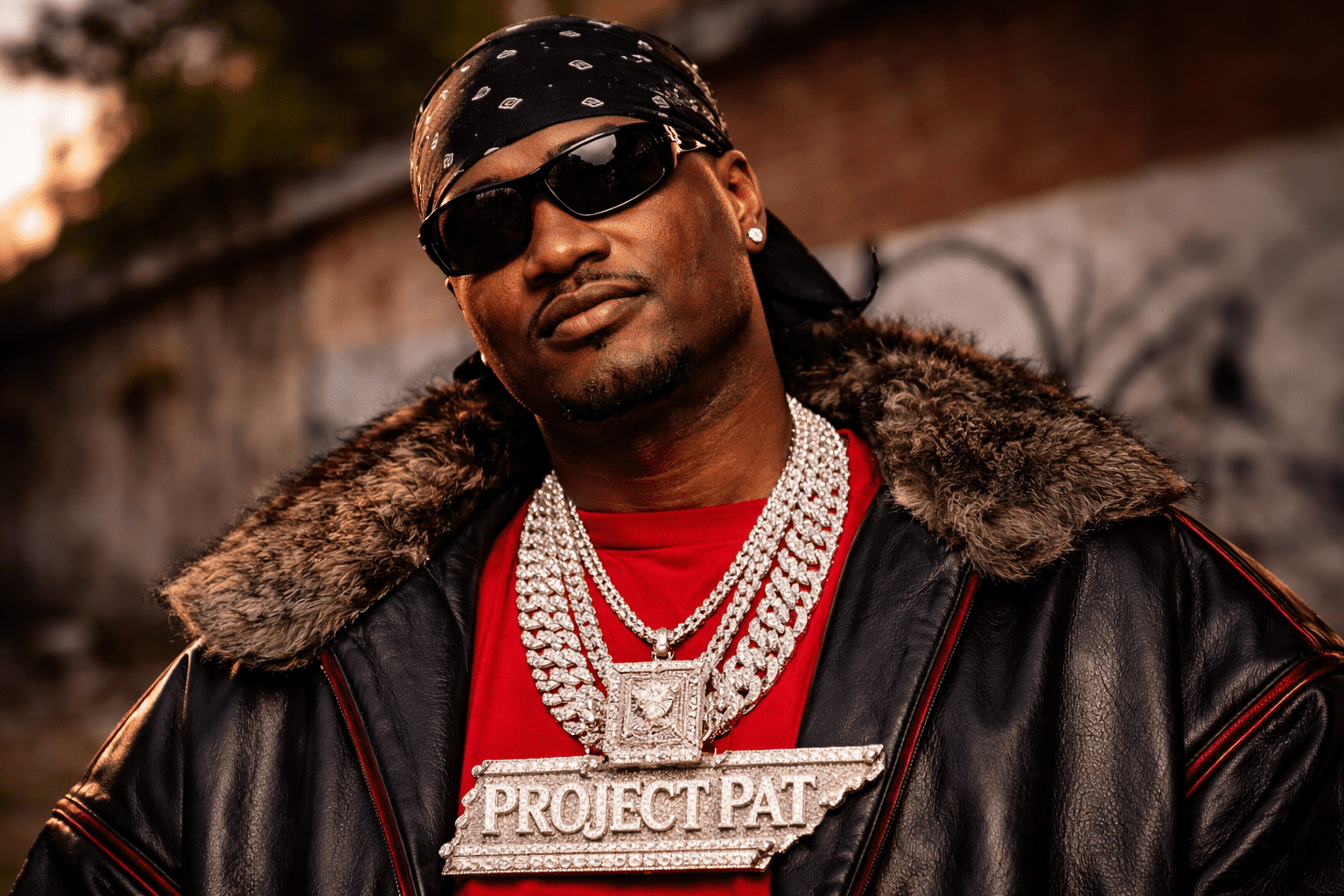
Project Pat’s story makes the most sense when it is told from the sidewalk up. Before he became one of Southern rap’s most unforgettable voices, before “Chickenhead” turned him into a national rap fixture, and before Three 6 Mafia’s empire reached its most visible commercial peak, Patrick Houston was already carrying a version of Memphis in his cadence that no other rapper could fully imitate. He sounded like North Memphis looked: dark, funny, tense, sly, prayerful, reckless, and constantly negotiating between survival and temptation. That is why his catalog still hits so hard. It never feels like a tourist version of the city. It feels like the city talking to itself.
What makes Project Pat such a powerful documentary subject is that his rise was never clean. His music arrived with prison history, street credibility, and the kind of firsthand detail that made listeners feel they were hearing somebody report from inside the pressure rather than merely perform it. He was not just orbiting Three 6 Mafia because Juicy J was his younger brother. He became essential to the wider Memphis story because his records gave the Hypnotize Minds era one of its purest storytelling voices. In a movement built on menace, mystique, chants, and dark production, Project Pat brought the crooked grin and the block-by-block narration.


Before the hit records, there was North Memphis and a life already marked by trouble
Project Pat was born Patrick Earl Houston on February 8, 1973, in Memphis, Tennessee, and his story begins in North Memphis, one of the city’s most mythologized and pressured environments. To understand Memphis rap in the 1990s, you have to understand how much of it was built not around polished industry entry points but around neighborhood realism, local hustle, and the feeling that rap might be one of the few exits available. That atmosphere shaped Project Pat long before the nation knew his name.
His life before fame already included serious legal problems. He served time on robbery-related charges before the release of his debut solo album. That pre-rap history matters because it explains why Project Pat never sounded like he was inventing darkness for effect. The details in his music had weight because listeners believed he had already lived through the systems and consequences he described. In Memphis, that kind of authenticity could not be manufactured by label styling.
By the late 1990s, the larger Memphis rap machine was forming around Three 6 Mafia, Juicy J, DJ Paul, Lord Infamous, Gangsta Boo, and a wider network of Hypnotize Minds voices. Project Pat fit into that orbit naturally, but he was never swallowed by it. His tone was too distinct. His storytelling was too sharp.

Ghetty Green was the sound of a city speaking plainly about itself
On September 14, 1999, Project Pat released Ghetty Green, his debut solo studio album. It arrived at a crucial moment. Southern rap was becoming impossible to ignore nationally, but Memphis still carried a distinct atmosphere compared with New Orleans bounce, Atlanta polish, or Houston syrup. Memphis records felt murkier, more paranoid, more gothic, and more close-range. Project Pat thrived in that environment because he sounded like somebody narrating danger from inside the room rather than describing it from a safe distance.
Ghetty Green helped define his persona in full: funny but never soft, talkative but never overly clean, menacing without sounding overly theatrical. It also made clear that he could anchor full songs and albums on his own, not just contribute standout verses around the Three 6 machine. The album’s guest list connected him to the larger Hypnotize Minds ecosystem, but the emotional center belonged to Pat himself.
The title mattered too. “Ghetty Green” was Memphis slang for money, and that local phrasing captured what made the project important. Project Pat was not translating his city for outsiders. He was letting outsiders overhear it. That distinction is part of why the album aged so well. It did not pander. It documented.
February 8, 1973: Patrick Earl Houston is born in Memphis, Tennessee.
1990s: He spends time in prison on robbery-related charges before his full solo breakout.
1998: He joins The Kaze.
September 14, 1999: Ghetty Green is released.
February 27, 2001: Mista Don’t Play: Everythangs Workin is released.
March 29, 2001: Mista Don’t Play is certified gold.
2001: He is sentenced in a gun case tied to a parole violation.
2002: Layin’ da Smack Down is released.
2005: He is released from prison.
December 5, 2006: Crook by da Book: The Fed Story is released.
March 5, 2006: Three 6 Mafia wins the Oscar for “It’s Hard out Here for a Pimp.”
Mista Don’t Play was the breakthrough, and then the door started closing
If Ghetty Green established Project Pat, Mista Don’t Play: Everythangs Workin made him undeniable. Released on February 27, 2001, the album quickly became his signature statement and remains one of the defining Southern rap albums of its era. It reached No. 4 on the Billboard 200 and was certified gold within weeks, proof that a deeply Memphis album could travel nationally without losing its local edge.
Songs like “Chickenhead,” “Don’t Save Her,” “Gorilla Pimp,” and “We Can Get Gangsta” helped turn Pat into a broader star, but the album’s staying power comes from more than singles. It is one of those records where the world feels fully built. The production from DJ Paul and Juicy J is menacing, hypnotic, and immediately recognizable, but Project Pat’s narration is what gives the album its blood flow. He speaks in details. He tells stories in scenes. He makes vice sound normal because, in the world of the songs, it is normal.
There is also a cruel irony in the timing. Just as Project Pat was reaching a new level commercially, legal trouble returned to interrupt the rise. In 2001, he was sentenced after being found with guns in his vehicle, a violation linked to his parole status. The result was another prison stretch at exactly the moment when his name should have been benefiting most from the album’s momentum.


The legal trouble did not make him famous, but it changed how the fame was remembered
Rap has always had artists whose best period gets fused to the worst timing. Project Pat belongs in that conversation. His 2001 gun case and prison sentence became inseparable from the story of his commercial ascent, not because the legal issue made the music stronger, but because it reframed the rise as something unfinished. In another version of history, he likely spends the early 2000s touring harder, releasing more aggressively, and capitalizing directly on Mista Don’t Play while the South keeps surging.
Instead, the legal trouble turned him into a more bittersweet figure. He was not a rapper who never broke through. He clearly did. But he was also not fully allowed to live inside his own momentum. The system kept cutting into the run. That tension gives his catalog a different emotional texture in hindsight. It is not just street music. It is street music haunted by interruption.
There is another reason this part of the story matters. Project Pat’s case has also been cited in later discussions about how rap lyrics and persona can be used in court to shape perception. Whether one sees him primarily as a cautionary tale or a victim of a broader cultural pattern, his life fits inside a longstanding hip-hop reality: the same details that make listeners believe the music can make institutions treat the artist as already guilty.
Why Project Pat mattered so much before Three 6 Mafia reached peak mainstream visibility
The title of this documentary angle matters because Project Pat’s biggest classic run happened before Three 6 Mafia reached the kind of national-symbol status that came with the 2006 Oscar and their broader mid-2000s crossover presence. That means he occupies a fascinating place in the story. He helped build the atmosphere, the slang, the menace, and the street credibility of the world before the world was fully rewarded by mainstream institutions.
In other words, Pat was part of the engine room. He was present during the period when Memphis rap still felt dangerous, regional, misunderstood, and too dark for a lot of gatekeepers. By the time Three 6 Mafia became Oscar winners and full pop-culture fixtures, Project Pat’s strongest foundational contributions were already on the board. He had already helped define what that universe felt like when it was still more feared than celebrated.
That is one reason he remains so respected among rap fans who care about actual musical influence rather than just awards. You can hear Project Pat’s fingerprints all over later Southern rap storytelling. The dry humor, the conversational grime, the way he can make a street anecdote feel both absurd and fatalistic, the way lust, hustle, and paranoia sit in the same verse — those qualities traveled far beyond Memphis.
He was one of rap’s best street narrators because he never sounded like he was trying too hard
One of the hardest things to explain to people who only know Project Pat through a few famous songs is how subtle his skill really was. He was not a technical showoff in the way some lyrical purists prefer. His greatness came from control of voice, setting, and detail. He knew how to make a line stick because he knew how people actually talk when fear, greed, sex, boredom, and desperation are all sharing the same room.
That is why so many of his verses have survived in the culture like sayings rather than just bars. He had a quoteable mind. He understood rhythm, but he also understood social observation. He could describe women, hustlers, addicts, scammers, and shooters in ways that felt uncomfortably specific. His songs are full of people, not just poses.
In the larger Memphis tradition, that makes him a crucial balance point. Three 6 Mafia could be apocalyptic. Lord Infamous could be spectral and feverish. Gangsta Boo could be cold and cutting. Juicy J could be hypnotically slick. Project Pat was the narrator who made the underworld feel populated by actual human habits. He was one of the best at bringing the camera down to street level.
Project Pat’s legacy lives in the details
Some rap legends are remembered through grand historical narratives. Others survive because nobody else ever figured out how to sound like them for more than a few bars. Project Pat belongs to the second category. His legacy lives in the details: the delivery, the slang, the dry comedy, the sudden threats, the perverse clarity, the neighborhood specificity, the way his voice can make a hook feel like a local sermon.
That is why his best work still feels essential in 2026. It captures a moment before Memphis was fully celebrated by mainstream institutions, before Three 6 Mafia’s empire had hit its most symbolic height, and before Southern rap’s dominance became an accepted part of music history. Pat was there when it still felt like a regional fight, when the records still had to travel through fear and rumor before they traveled through awards.
In the end, Project Pat’s story is not just about legal trouble interrupting a run. It is about how powerful that run was in the first place. He came out of North Memphis with the kind of voice that can only be earned through real proximity to the life being described. He turned that voice into classic records. Prison could not erase them. Time could not flatten them. And even though the larger Three 6 empire would go on to peak in more public ways, Project Pat’s place in the foundation remains impossible to remove.
Editorial note: This article is part of Raptology’s ongoing documentary series on rap history, crime, incarceration, regional movements, and the artists who shaped hip-hop before the mainstream fully caught up.
For editorial inquiries, artist updates, press pitches, or corrections related to this article, contact [email protected].
For factual corrections, contact [email protected].

Raphael Fonge is a journalism graduate from Kennesaw State University, where he published several articles in the university’s newspaper. He has released multiple chapters of creative writing, with aspirations to work in the entertainment industry.
Raphael is a member of the KSU Film Club and the Society of Professional Journalists.