NEW YORK, N.Y. — April 6, 2026 | Raptology Documentary
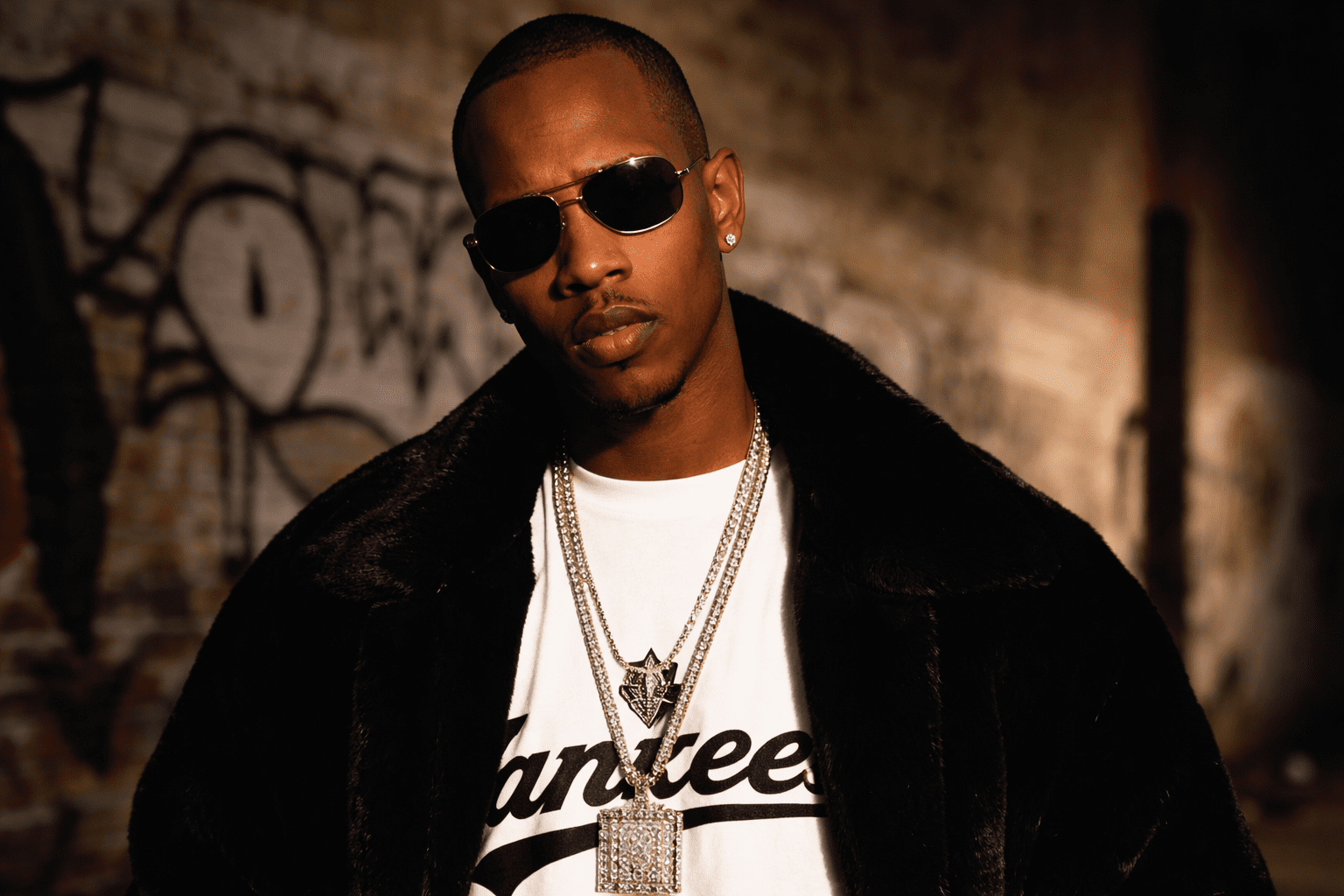
Shyne’s story never fit neatly into one rap era, one crime story, or one redemption arc. He arrived at the end of the 1990s with the kind of voice that immediately made the industry stop and listen, a deep and ominous baritone that led many people to compare him to The Notorious B.I.G.. He was young, ambitious, and positioned inside one of the most powerful machines in music at Bad Boy Records. Then, in one night, the story changed. A nightclub shooting in Manhattan turned his rise into one of the most infamous legal sagas in rap history, and the years that followed pulled him from industry promise to prison, from prison to deportation, and from deportation to a second life in Belizean politics that would have sounded unbelievable if hip-hop had not already taught people to expect the improbable.
What makes Shyne compelling in documentary form is not just the fall. Rap has seen many falls. What makes his story endure is the scale of the transformation. Very few artists have moved from a platinum-era label orbit to a prison sentence, from prison to exile, from exile to public service, and from public service to national political leadership. In a genre full of stories about reinvention, Shyne’s may still be one of the strangest and most dramatic.
Before the shooting, Shyne looked like one of Bad Boy’s most important new bets
Shyne was born Jamal Michael Barrow on November 8, 1978, in Belize City, Belize, before eventually spending much of his youth in Brooklyn. That split identity would matter later, but in the late 1990s the more important detail was how quickly he caught attention in New York. According to the established version of his early career, he was discovered while freestyling in a Brooklyn barbershop, and what people heard was impossible to ignore. His tone was heavy and dramatic, his delivery sounded older than his age, and his records arrived at a time when the industry was still reeling from the 1997 murder of Biggie.
That timing worked for him and against him at the same time. It gave him immediate intrigue, but it also encouraged the kind of comparison that can trap a young artist before he has enough catalog to define himself. Even so, the momentum was real. Sean “Puff Daddy” Combs signed him to a five-album deal with Bad Boy Records, and suddenly Shyne was inside a roster and a machine that had already shaped one of rap’s dominant label eras.
By 1999, he had guest spots, industry buzz, and the kind of reputation that made him feel like more than a typical prospect. He appeared around the Bad Boy orbit, worked on material during an era when the label still had enormous commercial force, and developed the image of an artist who could bridge street menace, label polish, and crossover visibility. At that point, Shyne was not a nostalgic figure or a cautionary tale. He was a live investment.
The night that changed everything
On the night of December 27, 1999, Shyne went to Club New York in Manhattan with Sean Combs and Jennifer Lopez. What followed became one of the most dissected incidents in rap’s legal history. An argument broke out inside the club. Gunfire followed. Three bystanders were injured. In the years since, the event has been revisited in court coverage, rap media, documentaries, interviews, and debates over accountability, loyalty, and who actually paid the highest price.
At the time, the optics alone were enough to permanently stain a rising career. This was not a local incident involving a regional rapper the mainstream barely knew. This was a flashpoint involving the head of Bad Boy, one of the most famous women in entertainment, and the artist many people believed was being groomed as a major star. The story had celebrity, violence, class tension, media spectacle, and a young artist at the center who had not yet released the album that was supposed to introduce him properly.
In March 2001, Shyne was convicted on assault, reckless endangerment, and gun possession charges in connection with the case and later served nearly a decade in prison. Sean Combs was acquitted. That split outcome shaped the way the story would be remembered forever. To many people, it marked the moment Shyne became the man who lost everything while the more powerful figure moved on. To others, it became a harder story about choices, consequences, and the brutal speed with which rap careers can collapse.
The eerie timing of his debut album made the whole story darker
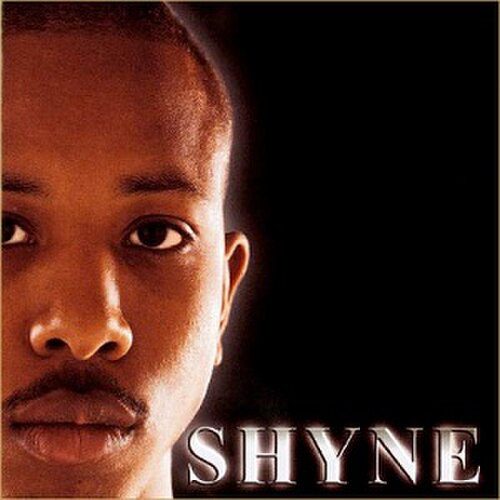
Shyne’s debut album, Shyne, arrived on September 26, 2000, while the shooting case was still looming over everything. It debuted at No. 5 on the Billboard 200 and eventually went gold, proving that the interest in him had not disappeared. But the album never got to live a normal life. It was released into a climate where the music was constantly filtered through court coverage, controversy, and the sense that the artist behind it might be headed somewhere far more permanent than the charts.
That timing gave the album a haunted quality. Songs like “Bad Boyz” and “Bonnie & Shyne,” both featuring Barrington Levy, helped define his public image, but listeners were consuming the music alongside headlines that made the record feel less like a beginning than a document from a vanishing future. In another timeline, Shyne’s debut could have launched a more conventional major-label run. In the real one, it became evidence of what had been interrupted.
There was another complication too: the comparisons to Biggie. Those comparisons made him instantly legible to a market still attached to Bad Boy mythology, but they also kept him from being judged entirely on his own terms. Shyne had skill, presence, and records that hit, but he also arrived under the weight of expectation, imitation discourse, and label-era symbolism that no young rapper could easily control.
November 8, 1978: Jamal Michael Barrow is born in Belize City, Belize.
Late 1990s: He is discovered in Brooklyn and signed to Bad Boy Records.
December 27, 1999: The Club New York shooting changes the course of his career.
September 26, 2000: His debut album Shyne is released.
March 2001: He is convicted in the Club New York case.
August 10, 2004: Godfather Buried Alive is released while he is incarcerated.
2006: He changes his name to Moses Michael Levi Barrow.
October 28, 2009: He is deported to Belize after prison.
November 11, 2020: He is elected to Belize’s House of Representatives.
November 2024: The Honorable Shyne documentary is released.
March 2025: He loses his re-election bid in Belize.
Prison did not erase him, but it changed the meaning of his music
Prison has ended many rap careers, especially when the sentence lands at the exact moment an artist is supposed to be building momentum. Shyne’s case was different in one important sense: the public never fully forgot him. In part that was because the shooting itself stayed famous. In part it was because he had already generated enough intrigue to remain part of the culture’s unfinished conversations. And in part it was because prison did not stop the industry from treating his name as valuable.
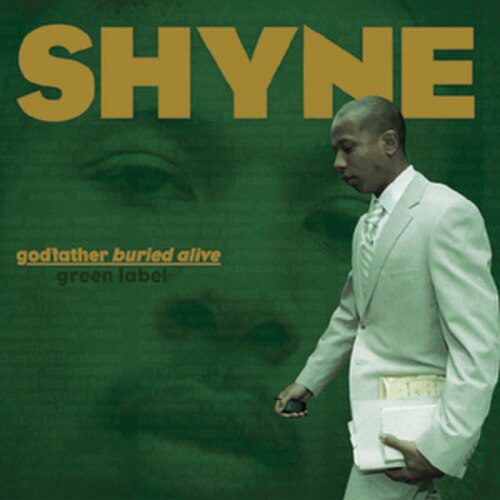
In 2004, while still incarcerated, he released Godfather Buried Alive. The project debuted at No. 3 on the Billboard 200, an extraordinary result for an artist serving a long sentence. It was also one of the strangest release contexts of the era. The album included material recorded before prison along with lines recorded over the phone from jail, turning the project into a literal artifact of confinement. It sounded like a rapper trying to remain present in a world that had already moved on without him.
That is one of the reasons the prison years matter so much in the Shyne story. His incarceration did not simply pause fame. It transformed it. He became less of a functioning mainstream rapper and more of a mythic figure, somebody discussed through fragments, old records, industry rumors, prison updates, and arguments about whether he had been betrayed or merely destroyed by a combination of environment, ego, and circumstance.
Religion, exile, and the long road away from New York
Another major turn in Shyne’s life came through religion. While in prison, he became increasingly interested in Judaism and eventually embraced Orthodox Jewish practice. In 2006, he officially changed his name to Moses Michael Levi Barrow. That shift did not look like a gimmick or a temporary publicity move. It became one of the most durable parts of his post-prison identity.
When he was released in late 2009, he was deported to Belize. That deportation mattered because it cut him off from the American rap industry at a moment when many artists in his situation would have tried to stage a comeback campaign. Instead, Shyne was forced into a far more difficult reality. He was no longer just a rapper returning from prison. He was a deportee returning to a country where he had roots, family history, and a political surname, but not the life he had built in Brooklyn’s music world.
After prison, he also spent time in Jerusalem, studying the Torah intensely and presenting himself in ways that made clear he no longer wished to be understood only through the lens of Bad Boy or the shooting. To many casual fans, the images were jarring. The man once associated with late-1990s New York label glamour was now talking about faith, discipline, and purpose from a very different geographic and spiritual center.
His second life in Belize may be the most improbable chapter of all
Plenty of rappers have spoken about politics, social change, or leadership. Very few have crossed over into real national politics with meaningful office. Shyne did. In 2010, he was appointed Belize’s Music and Goodwill Ambassador. That alone would have been a notable post-rap chapter, but it was only the beginning. Over the next decade he became more deeply embedded in Belize’s political life and eventually entered formal electoral politics.
On November 11, 2020, Shyne was elected to Belize’s House of Representatives for the Mesopotamia constituency. It was one of the most surreal full-circle moments any rapper has ever experienced. The artist once known mainly through criminal headlines and Bad Boy mythology had become an elected public official. Later, he served as Leader of the Opposition in Belize during separate stretches in 2021 and again from 2022 until March 2025.
This did not erase the old story. It complicated it. That is what makes the political chapter so fascinating. Shyne did not become a politician because the rap audience forgot who he had been. He became one despite the fact that the old story remained attached to his name. In some ways, that only made the transformation more powerful. It suggested that the version of him the public had frozen in 2001 was not the final version after all.
Why the Diddy connection still shadows everything
It is impossible to tell Shyne’s story without telling the Bad Boy version of it, and it is equally impossible to tell the Bad Boy version without confronting Sean Combs’ role in the larger public memory of the case. For years, the shooting lived in popular culture as one of those unresolved rap-era moral dramas where the legal result ended the trial but never ended the argument. Shyne’s supporters saw him as the artist who paid the steepest price while someone more powerful escaped with less damage. Others saw the case more narrowly through the verdict and the sentencing.
What is certain is that the relationship between Shyne and Combs never recovered into anything simple or stable. At various points there were gestures of reconciliation, but the wound always remained part of the story. In later years, as Diddy’s own legal troubles and public scrutiny expanded, the old Club New York case returned to public conversation with renewed force, and Shyne again became central to the discussion.
That renewed interest also helped drive attention toward the 2024 documentary The Honorable Shyne, which reframed his life not merely as a rise-and-fall rap story, but as a larger saga of punishment, exile, faith, and political transformation. By then, the culture was ready to revisit him not just as a former Bad Boy artist, but as a man whose entire biography had become stranger and more layered with time.
Shyne’s legacy is bigger than the career he was originally supposed to have
There is a temptation to frame Shyne only as wasted potential. That view is understandable. He absolutely lost years that most artists never get back. He lost momentum during the precise window when rap careers usually become fixed in public memory. He lost the chance to build a more normal catalog, a more normal touring life, and a more normal relationship to fame. In that sense, the tragedy is real.
But “wasted potential” is too small a phrase for a life this unusual. Shyne’s legacy now exists in several layers at once. He is part of Bad Boy history. He is part of rap’s legal history. He is part of the conversation about artists whose careers were altered by incarceration. He is part of a much smaller club of rappers who entered serious politics. He is part of the story of exile and return. And whether people admire every turn he took or not, they still recognize that almost nobody else in hip-hop has traveled a route this extreme.
That is why his story still works so well as a documentary subject. It has ambition, celebrity, violence, betrayal, punishment, reinvention, religion, family tension, national politics, and unresolved questions about how the culture remembers guilt and survival. Most rap biographies only contain two or three of those things. Shyne’s contains all of them.
In the end, the most striking thing about Shyne may be that he refused to remain frozen in his most notorious moment. The shooting made him famous in a way he never wanted. Prison could have defined him forever. Deportation could have reduced him to a footnote. Instead, he kept forcing his story into new forms. Whether history ultimately remembers him as an artist undone, a survivor reborn, or a politician with one of rap’s strangest backstories, the fact remains that his second life was real. And in hip-hop, that alone makes him unforgettable.
Editorial note: This article is part of Raptology’s ongoing documentary series on rap history, crime, incarceration, street politics, and the long-term consequences of fame.
For editorial inquiries, artist updates, press pitches, or corrections related to this article, contact [email protected].
For factual corrections, contact [email protected].
Jose Zamora is a writer and creator from Boston, MA. He has been a music nerd since middle school when he started his record collection. His passion for Hip-hop began when he discovered legends like Nas and Gang Starr and became obsessed with up-and-coming acts like Kendrick Lamar and A$AP Mob.
He is a recently graduated, up-coming journalist, passionate about music and culture. He is always keeping an eye out for the next big thing and is eager to put their talent in the spotlight for others to enjoy. He believes firmly that “Good art deserves to be talked about.”