
What Is Flow in Rap?
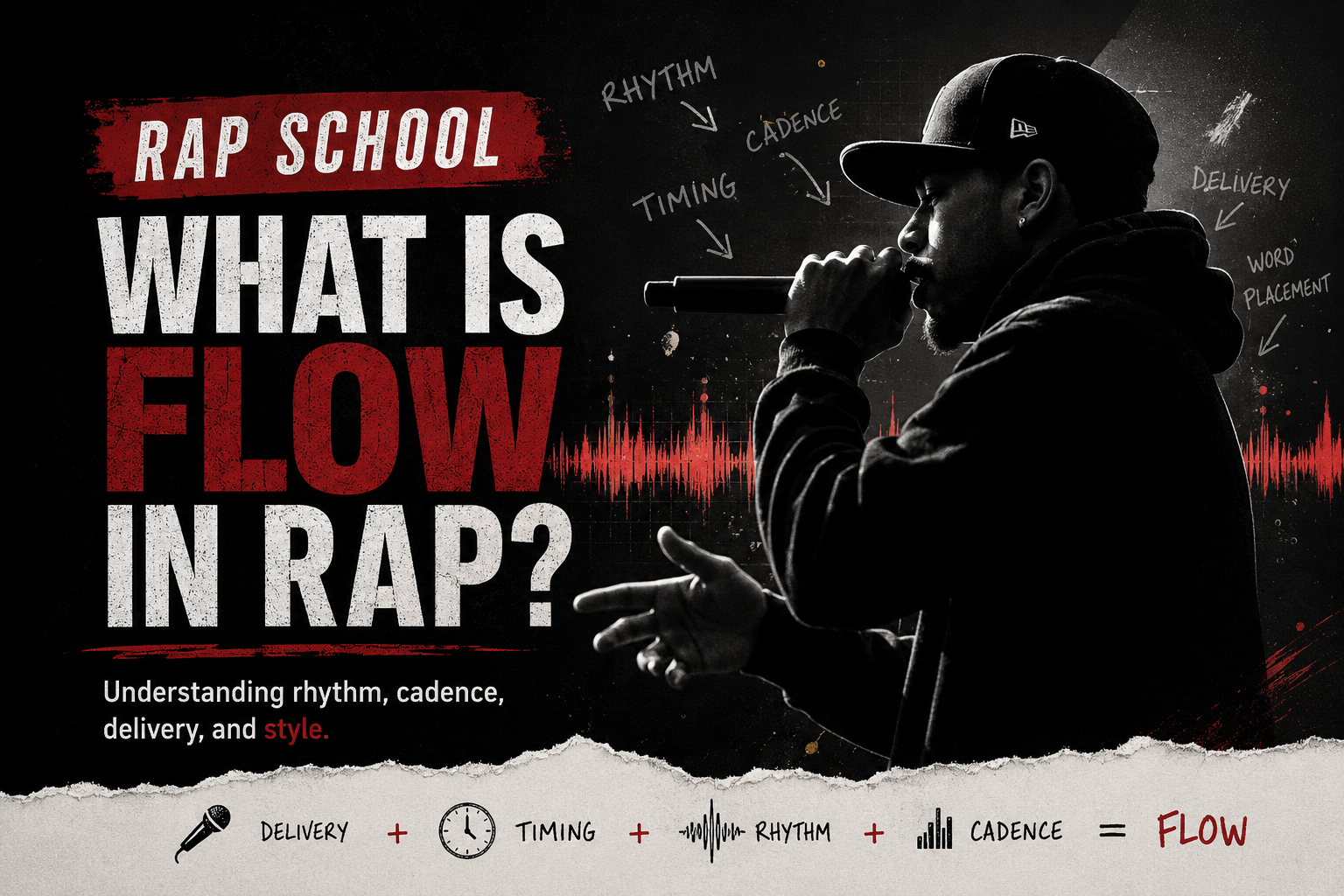
Flow is the way a rapper rides the beat through rhythm, cadence, timing, pauses, delivery, and word placement. It is one of the main reasons some verses feel effortless, exciting, emotional, or unforgettable.
Flow is one of the most important skills in rap music. When people say a rapper has a great flow, they are usually talking about how naturally that artist moves across the beat. The lyrics matter, but the way those lyrics are delivered can completely change how the song feels.
A rapper with strong flow knows how to place words inside the rhythm of the instrumental. They understand when to speed up, slow down, pause, stretch a syllable, attack a line, or let the beat breathe. That control is what turns written lyrics into a performance.
Simple definition: Flow in rap is the rhythmic pattern, vocal movement, and timing a rapper uses to deliver lyrics over a beat.
What Does Flow Mean in Rap?
Flow means how a rapper’s words move with the music. It includes the rhythm of the lyrics, the speed of the delivery, the placement of rhymes, the tone of the voice, and the way each bar connects to the next. Two rappers can say similar words over the same beat, but their flows can make the verses feel completely different.
Think of the beat as a road and the rapper as the driver. Some rappers drive smoothly in the center of the lane. Others speed up, brake suddenly, drift around corners, or switch lanes in unexpected ways. The best rappers do this with control, not by accident.
The Main Parts of Rap Flow
Rhythm
Rhythm is the foundation of flow. It controls how the words land against the beat. A rapper can follow the drum pattern closely or create tension by placing syllables in unexpected spots.
Cadence
Cadence is the rise, fall, and movement of the rapper’s voice. Some cadences sound aggressive, some sound laid-back, and some feel melodic. Cadence helps give a rapper personality.
Timing
Timing is about when the rapper starts and stops each phrase. Some rappers rap directly on the beat, while others come slightly before or after it. Good timing makes a verse feel intentional and controlled.
Pauses
Pauses are part of flow too. A well-placed silence can make a punchline hit harder, create suspense, or give the listener a moment to absorb the line.
Word Placement
Word placement refers to where syllables and rhymes land inside each bar. This is why changing just a few words can make a verse sound smoother or more awkward.
Why Flow Matters
Many new rappers focus only on lyrics, but listeners often feel the flow before they fully process the words. A strong flow can make a song catchy, memorable, and replayable. A weak flow can make even good lyrics sound stiff.
Flow also helps shape emotion. A slow, relaxed flow can sound reflective or confident. A fast, sharp flow can create urgency and intensity. A melodic flow can make a song feel more emotional or radio-friendly.
Rap School Example
If a rapper writes a sad verse but delivers it with the wrong rhythm or energy, the emotion may not connect. If the same lyrics are delivered with the right pacing, pauses, and tone, the listener is more likely to feel the message.
Common Types of Rap Flow
- Straight flow: A simple, clear rhythm that follows the beat closely.
- Double-time flow: A faster style where more syllables are packed into each bar.
- Triplet flow: A bouncing rhythm often associated with trap music and modern Southern rap.
- Melodic flow: A style that blends rapping with singing and melody.
- Switch flow: A technique where the rapper changes rhythm or cadence during the verse.
Examples of Rap Flow Styles
Different artists are known for different approaches to flow. Nas is often praised for smooth storytelling delivery that lets the listener follow the picture he is painting. Eminem is known for technical patterns, internal rhymes, and fast cadence changes. Lil Wayne often uses unpredictable pauses and punchline-driven timing.
Kendrick Lamar is known for switching flows, vocal tones, and character-like deliveries inside the same song. Future helped shape a modern melodic style where rhythm, melody, and emotion blend together. These examples show that there is no single correct flow. The best flow is the one that fits the beat, the artist, and the message.
Flow vs. Lyrics
Flow and lyrics work together. Lyrics are what the rapper says. Flow is how the rapper says it. A verse with strong lyrics but weak flow may feel hard to listen to. A verse with great flow but empty lyrics may sound good at first but lose impact over time.
The strongest rappers usually understand both sides. They know how to write meaningful lines and deliver them in a way that sounds natural, musical, and memorable.
How to Improve Your Rap Flow
The best way to improve your flow is to practice over different types of beats. Try rapping over slow beats, fast beats, trap beats, boom bap beats, and melodic instrumentals. Each style will force you to use rhythm differently.
Recording yourself is also important. Many rappers do not notice awkward timing until they hear the verse played back. Listen for places where the words feel rushed, crowded, flat, or off-beat. Then rewrite or re-record until the verse sits better in the music.
Another useful exercise is to write one verse and perform it three different ways. Try one version slow and relaxed, one version faster and more aggressive, and one version with more pauses. This helps train flexibility and shows how much flow can change the same lyrics.
Final Thoughts
Flow is the heartbeat of rap performance. It controls how lyrics move, how the beat feels, and how the listener receives the message. A rapper’s flow can be smooth, aggressive, melodic, technical, simple, complex, fast, slow, or constantly changing.
For new artists, learning flow is just as important as learning rhyme schemes or writing punchlines. The more control a rapper has over rhythm, cadence, timing, and delivery, the more powerful their music becomes.
Continue Learning in Rap School
Visit the Rap School hub for more lessons on rap lyrics, songwriting, music business, royalties, promotion, and hip-hop history.
Recommended next lessons: How to Count Bars, What Is a 16-Bar Verse?, and How to Write Rap Lyrics.