
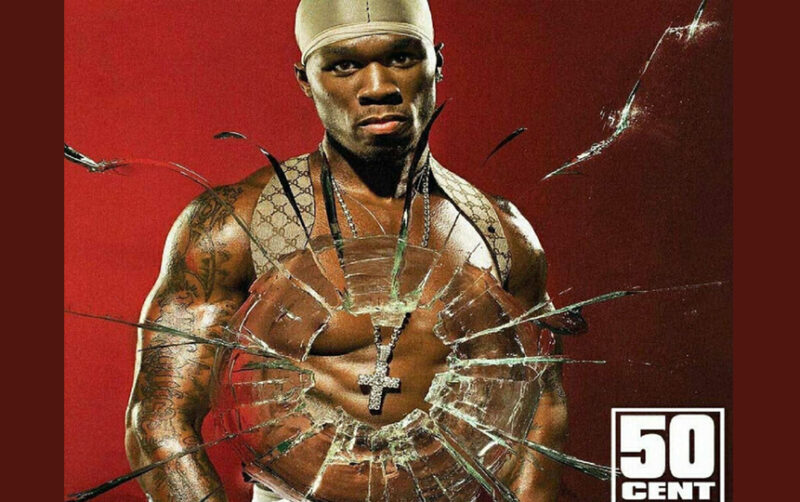
50 Cent is one of the clearest examples of hip-hop survival turning into power. His story moves from South Jamaica, Queens, to a near-fatal shooting, to mixtape warfare, to one of the biggest debut albums in rap history, to G-Unit, television, spirits, merch, film, and long-term business control.
Born Curtis James Jackson III on July 6, 1975, 50 Cent became a defining figure of early-2000s rap by combining street credibility, marketing instinct, hook-driven songwriting, conflict, humor, and corporate strategy. This Raptology Rap Hall of Fame profile is built as a living 50 Cent hub, covering his biography, albums, songs, career timeline, G-Unit, feuds, net worth, business empire, social media, Spotify, YouTube videos, and legacy in hip-hop.
Why 50 Cent belongs in the Raptology Rap Hall of Fame: He changed the mixtape economy, delivered a classic debut with Get Rich or Die Tryin, built G-Unit into a movement, turned beef into marketing, and proved that rappers could expand into television, liquor, apparel, film, and ownership without losing their core identity.

Who Is 50 Cent?
50 Cent is an American rapper, actor, television producer, entrepreneur, and media figure from Queens, New York. He first became a major force through underground mixtapes, then exploded into the mainstream after Eminem and Dr. Dre backed his major-label debut. His arrival felt different because his music came with a story that listeners could immediately understand: survival, revenge, discipline, humor, and the hunger to turn danger into power.
His career is not only about records. 50 Cent became one of hip-hop’s sharpest brand builders, using controversy, street mythology, business partnerships, product placement, television development, social media, and public rivalry as tools. He is one of the few rappers whose legacy is almost equally divided between music, marketing, and business.
Official 50 Cent Links
For readers who want to follow 50 Cent directly, his official website is 50cent.com. His verified Spotify artist page is 50 Cent on Spotify, his official YouTube channel is 50 Cent on YouTube, his Instagram is @50cent, and his X account is @50cent.
His official site connects fans to music, spirits, film, philanthropy, booking, Sire Spirits, G-Unity, and related brand activity. G-Unit Brands also remains part of the larger 50 Cent ecosystem, connecting his music legacy to merch and lifestyle branding.
Listen to 50 Cent on Spotify
50 Cent’s official Spotify artist page
Get Rich Or Die Tryin
The Massacre
Curtis
Early Life: South Jamaica, Queens, and Survival
50 Cent was born Curtis James Jackson III in Queens, New York. He grew up in South Jamaica, a neighborhood that became central to his identity, music, and public image. His mother, Sabrina, died when he was young, and he was raised by his grandparents. The instability of his childhood later became part of the emotional and narrative foundation of his music.
Before becoming famous, 50 Cent was tied to the street economy that shaped much of his early worldview. His music did not present that world as fantasy. It presented it as a survival system, filled with betrayal, violence, calculation, and consequences. That is why his early records landed with such force. They sounded like strategy from someone who had already lived through danger.

The Shooting That Became Part of Rap History
One of the most documented turning points in 50 Cent’s life came in 2000, when he was shot multiple times in Queens. The incident nearly ended his life, but it also changed the way the public understood him once he returned to music. In hip-hop, survival stories can become mythology, but 50 Cent’s story was tied to visible evidence, a changed voice, a harder public image, and a sense that he had already survived the worst outcome.
That experience shaped the emotional core of songs like “Many Men,” where paranoia, revenge, faith, and survival all sit inside the same record. It also gave his debut era a level of intensity that marketing alone could not create. Listeners did not just hear a rapper promoting toughness. They heard someone who had lived through a real brush with death and turned it into momentum.
The Mixtape Years: 50 Cent Learns the Market
Before streaming changed everything, mixtapes were one of the most important tools in hip-hop. 50 Cent understood that world early. He used mixtapes to build demand, attack rivals, test flows, flip popular beats, flood the streets, and keep his name active before major-label radio fully embraced him.
Projects like Guess Who’s Back? helped bring him back into industry conversation after his original major-label situation stalled. Eminem heard the project, connected with 50’s voice and story, and helped bring him into the Shady Records and Aftermath system. That chain of events turned 50 Cent from a dangerous underground name into one of the most anticipated new artists in the world.
Career Timeline
| Year | Moment | Why It Matters |
|---|---|---|
| 1975 | Curtis Jackson is born in Queens, New York | South Jamaica becomes the foundation of his story and identity. |
| 2000 | 50 Cent survives a near-fatal shooting | The incident becomes a defining part of his music, image, and mythology. |
| 2002 | Guess Who’s Back? | The project helps attract attention from Eminem and Dr. Dre. |
| 2003 | Get Rich or Die Tryin | His debut becomes one of the most powerful arrivals in rap history. |
| 2003 | G-Unit releases Beg for Mercy | The movement expands from one artist into a group and brand ecosystem. |
| 2005 | The Massacre | 50 Cent continues commercial dominance with another major album cycle. |
| 2005 | Get Rich or Die Tryin film | His life story crosses into Hollywood and expands the brand. |
| 2007 | Curtis | The Kanye West sales battle becomes a famous turning point in rap’s commercial shift. |
| 2009 | Before I Self Destruct | 50 Cent leans back into darker material during a changing rap landscape. |
| 2014 | Power premieres | He becomes a major force in television as executive producer and actor. |
| 2023 | The Final Lap Tour celebrates 20 years of Get Rich or Die Tryin | The anniversary confirms the album’s lasting value and global demand. |
Get Rich or Die Tryin: The Debut That Changed Everything
Get Rich or Die Tryin, released in 2003, is the centerpiece of 50 Cent’s music legacy. It arrived with the force of a movie, a warning, and a business launch all at once. Backed by Eminem, Dr. Dre, Shady Records, Aftermath, and Interscope, the album turned 50 Cent into a global star almost immediately.
The album worked because it balanced menace and melody. “In Da Club” became a universal celebration record, while “Many Men” gave the project its darkest emotional weight. “21 Questions” showed that 50 could make a love song without losing his identity, and “P.I.M.P.” gave him another crossover hit. The project was street, commercial, cinematic, catchy, and brutally efficient.
Commercially, the album was massive. It debuted at No. 1 on the Billboard 200 and became one of the most important rap albums of the 2000s. More than two decades later, it still functions as the measuring stick for a perfect rap debut: strong singles, strong image, strong story, strong production, and no wasted momentum.
The Massacre: Commercial Power After the Breakthrough
The Massacre, released in 2005, proved that 50 Cent’s first album was not a one-time explosion. The album produced records like “Candy Shop,” “Just a Lil Bit,” and “Disco Inferno,” continuing his run as one of the most dominant hitmakers in rap.
Critically, fans still debate whether The Massacre reached the artistic level of Get Rich or Die Tryin. Commercially, there is no debate about its impact. It kept 50 Cent at the center of mainstream rap and showed that his formula could still move radio, clubs, videos, and albums at the same time.
G-Unit: From Crew to Movement
50 Cent’s rise was not only a solo story. G-Unit became a full movement around him, with Lloyd Banks, Tony Yayo, Young Buck, and later other artists tied to the brand. The group’s mixtapes, album releases, clothing, visuals, and street presence made G-Unit one of the most recognizable rap crews of the 2000s.
The strength of G-Unit came from its ecosystem. 50 Cent was the star, but the crew gave fans a larger world to follow. Lloyd Banks brought punchlines, Tony Yayo brought loyalty and personality, Young Buck brought Southern energy, and 50 controlled the strategy. At its peak, G-Unit was not just music. It was clothing, attitude, language, marketing, and a sense of belonging for fans.

Watch 50 Cent Videos
50 Cent – In Da Club
50 Cent – Many Men
50 Cent – Candy Shop featuring Olivia
50 Cent – P.I.M.P.
50 Cent Albums and Projects
50 Cent’s discography includes classic studio albums, G-Unit projects, mixtapes, soundtracks, and television-connected music. For SEO and reader usefulness, the table below focuses on the key projects that explain his rise, dominance, and later evolution.
| Year | Project | Type | Key Songs and Notes |
|---|---|---|---|
| 2002 | Guess Who’s Back? | Compilation / Mixtape-era project | Helped revive his career and attract attention from Eminem. |
| 2002 | 50 Cent Is the Future | Mixtape | A major street-level project that helped build G-Unit momentum. |
| 2003 | Get Rich or Die Tryin | Studio Album | “In Da Club,” “Many Men,” “21 Questions,” “P.I.M.P.” |
| 2003 | Beg for Mercy | G-Unit Album | Expanded the movement through Lloyd Banks, Tony Yayo, Young Buck, and 50 Cent. |
| 2005 | The Massacre | Studio Album | “Candy Shop,” “Just a Lil Bit,” “Disco Inferno,” “Outta Control.” |
| 2005 | Get Rich or Die Tryin soundtrack | Soundtrack | Included music connected to the semi-autobiographical film. |
| 2007 | Curtis | Studio Album | “Ayo Technology,” “I Get Money,” and the Kanye West sales battle era. |
| 2008 | T.O.S: Terminate on Sight | G-Unit Album | A later G-Unit project during a changed industry climate. |
| 2009 | Before I Self Destruct | Studio Album | Darker material released as his music career entered a new phase. |
| 2014 | Animal Ambition | Studio Album | Released independently through G-Unit Records and Caroline. |
Most Important 50 Cent Songs
50 Cent’s greatest songs work because they do different jobs. “In Da Club” is the global anthem. “Many Men” is the survival record. “21 Questions” is the crossover love song. “P.I.M.P.” is the lifestyle record. “Candy Shop” is the pop-rap hit. “I Get Money” is the business flex. “Big Rich Town” became the television theme that connected his music legacy to the Power universe.
| Song | Era | Why It Matters |
|---|---|---|
| “In Da Club” | Get Rich or Die Tryin | The global hit that turned 50 Cent into a superstar. |
| “Many Men” | Get Rich or Die Tryin | The emotional center of his survival mythology. |
| “21 Questions” | Get Rich or Die Tryin | Showed his ability to make melodic relationship records without losing street credibility. |
| “P.I.M.P.” | Get Rich or Die Tryin | A crossover single that became one of his signature records. |
| “Candy Shop” | The Massacre | A huge commercial single that extended his radio dominance. |
| “Just a Lil Bit” | The Massacre | A club record that continued his mid-2000s hit streak. |
| “I Get Money” | Curtis | A business anthem tied to 50 Cent’s image as a financial strategist. |
| “Big Rich Town” | Power era | Helped connect 50 Cent’s music identity to his television empire. |
Feuds, Battles, and Public Strategy
50 Cent is one of the most strategic public antagonists in rap history. His feud with Ja Rule and Murder Inc. became one of the defining conflicts of the early 2000s, mixing diss records, interviews, street tension, label politics, public perception, and fan loyalty. The battle helped shape 50 Cent’s image as someone who did not just respond to conflict. He weaponized it.
He also had public tensions with Fat Joe, Jadakiss, The Game, Cam’ron, Rick Ross, and others across different periods. These feuds were often messy, personal, and aggressive, but they also kept 50 Cent in constant conversation. His ability to turn conflict into attention became part of his brand, especially as social media made public rivalry even more immediate.
What makes 50 Cent different from many rivals is that he understood timing. He knew when to release music, when to provoke, when to mock, when to pivot, and when to turn a public argument into promotional fuel. That instinct made him one of rap’s most dangerous marketers.
Business Empire: From Vitaminwater to Television
50 Cent’s business reputation grew far beyond music. One of the most famous examples is his relationship with Vitaminwater, which became part of hip-hop business mythology after the company’s sale to Coca-Cola. The exact details have been reported in different ways over the years, but the larger point remains clear: 50 Cent became a symbol of the rapper as investor, not just endorser.
His official brand world now includes music, spirits, film, philanthropy, G-Unit, Sire Spirits, and related ventures. Branson Cognac and Le Chemin du Roi champagne became part of his luxury and spirits push, while G-Unit Brands connects his name to merch, apparel, and lifestyle products.
Television may be his most important second act. Power, created with Courtney A. Kemp and executive produced by Curtis Jackson, became a major Starz franchise. The show and its spin-offs helped reposition 50 Cent as a serious television producer, not just a rapper making cameos. For a generation of fans, 50 Cent is now as connected to the Power universe as he is to Get Rich or Die Tryin.
50 Cent Net Worth
50 Cent’s exact net worth changes depending on the source, business valuations, legal history, assets, and current ventures, so any public estimate should be treated carefully. Most celebrity wealth estimates place him in the tens of millions, while his long-term business story includes major earnings from music, touring, merchandise, brand partnerships, Vitaminwater, film, television, spirits, and production deals.
The more important story is not one number. It is his ability to rebuild, pivot, and monetize attention. Even after financial setbacks, 50 Cent remained culturally relevant because he kept creating new lanes: television, spirits, social media commentary, touring, merch, and documentary-style projects. That ability to survive commercially mirrors the survival story that made him famous musically.
Why 50 Cent Is So Important to Hip-Hop Marketing
50 Cent’s influence on marketing is one of the biggest reasons he belongs in the Rap Hall of Fame. Before many artists understood personal branding as a full-time job, 50 Cent was already using mixtapes, interviews, beefs, clothing, crews, videos, endorsements, and street reputation as one connected system.
He showed that a rapper could dominate before the album dropped. By the time Get Rich or Die Tryin arrived, the public already understood the story. They knew the shooting. They knew the danger. They knew the co-signs. They knew the enemies. They knew the crew. The album did not introduce 50 Cent. It confirmed a movement that had already been built.
Television Legacy: Power, BMF, and the Producer Era
The Power universe gave 50 Cent a second cultural machine. As an executive producer and actor, he helped build a franchise centered on crime, family, ambition, betrayal, and street politics. Those themes were already part of his music, which made the move into scripted television feel natural rather than forced.
His later work around BMF and other television projects showed that he could keep developing stories that connect with hip-hop audiences while also reaching broader entertainment markets. For Raptology readers, this matters because it proves 50 Cent’s legacy did not freeze in 2003. He continued adapting to new platforms and new attention economies.
50 Cent’s Place in Rap History
50 Cent’s place in rap history is built on impact, not only technical lyricism. He was never positioned as the most complex writer in New York. His strength came from voice, timing, hooks, presence, threat, humor, and narrative control. He knew how to make listeners believe the stakes were real.
His debut run is one of the strongest in hip-hop history. His mixtape strategy influenced artist development. His G-Unit movement shaped crew branding. His beefs changed public rap conflict. His Vitaminwater story changed how rappers talked about equity. His television work changed what a rapper’s second act could look like.
Why 50 Cent Is Raptology Rap Hall of Fame Pillar Content
For Raptology, 50 Cent is not just an artist profile. He is a pillar topic because his story connects to some of the most searchable subjects in hip-hop: Queens rap, G-Unit, Eminem, Dr. Dre, Ja Rule, Murder Inc., Get Rich or Die Tryin, Vitaminwater, Power, BMF, rap beef, net worth, street survival, and hip-hop business strategy.
This page should be treated as a living hub. Every future Raptology story about 50 Cent, G-Unit, Ja Rule, Eminem, Dr. Dre, Power, BMF, or hip-hop business should link back to this page. At the same time, this page should link out to those newer stories so Google sees a clear internal cluster around 50 Cent and his world.
Read Next on Raptology:
- Rap Hall of Fame
- Drake: Rap Hall of Fame
- Raptology Documentaries
- Featured Stories
- More 50 Cent Coverage on Raptology
FAQ About 50 Cent
What is 50 Cent’s real name?
50 Cent’s real name is Curtis James Jackson III. The name 50 Cent became one of the most recognizable artist names in rap because it sounded simple, street-rooted, and instantly memorable.
Where is 50 Cent from?
50 Cent is from South Jamaica, Queens, New York. His Queens background is central to his music, public image, and early survival story.
What was 50 Cent’s breakout album?
50 Cent’s breakout album was Get Rich or Die Tryin, released in 2003. The album included “In Da Club,” “Many Men,” “21 Questions,” and “P.I.M.P.”
What is 50 Cent’s biggest song?
“In Da Club” is widely considered 50 Cent’s biggest song. It became a global anthem and remains one of the most recognizable rap singles of the 2000s.
What is G-Unit?
G-Unit is the rap group and brand associated with 50 Cent, Lloyd Banks, Tony Yayo, Young Buck, and other artists connected to the movement. It became one of the most important rap crews of the early 2000s.
Why is 50 Cent important outside music?
50 Cent is important outside music because of his business ventures, spirits brands, merchandise, film work, television production, and role in building the Power universe. His career helped redefine what a rapper could become after commercial music dominance.