
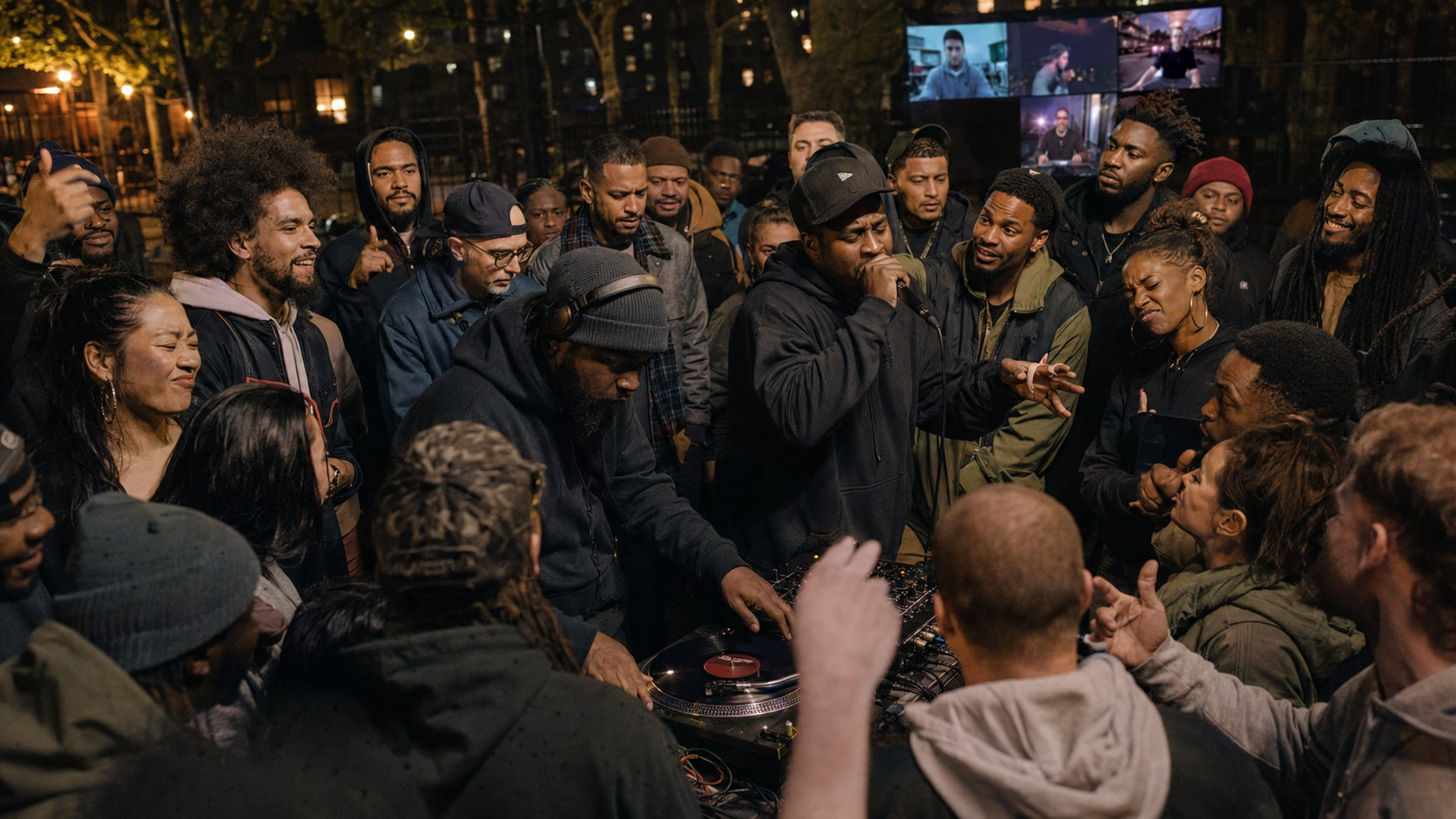
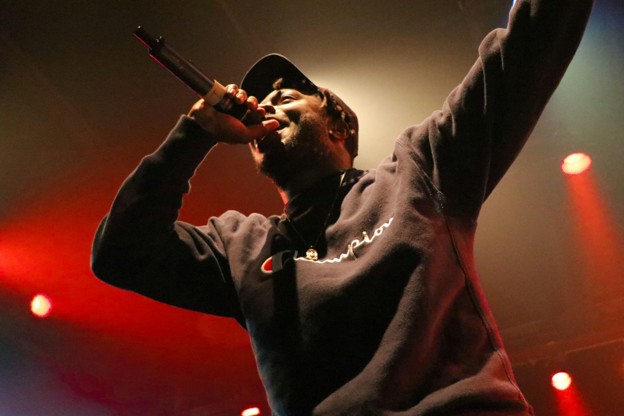
Picture the original distribution format: a park jam in the Bronx, one DJ, one MC, and a crowd whose reaction decided on the spot whether a routine lived or died. No uploads, no comments section, no waiting. The verdict arrived in real time, on faces, and everybody could see it.
Fifty years later the genre owns the charts and the verdict arrives by algorithm. Rap adapted to every format change the industry threw at it, but something in the culture keeps reaching back for that instant, visible reaction. Lately it’s been finding one.
Big Numbers, Quiet Rooms
By the count in Billboard’s coverage of Luminate’s midyear report, R&B/hip-hop pulled close to 180 billion US streams in the first half of 2026 — about one of every four streams in the country (Billboard). Dominance, by any measure. Also: billions of hours of people listening completely alone, in earbuds, with nobody to turn to when the beat switch hits.
That’s the strange bargain streaming made with a call-and-response culture. Maximum reach, minimum response. A fire verse deserves a witness, and a play counter is not a witness.
What the Culture Did About It
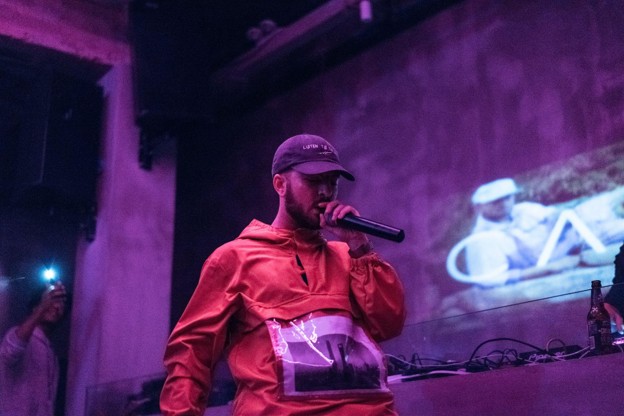
Verzuz was the loudest answer: two catalogs going hit-for-hit in front of millions, live, where the crowd reactions were half the show. The format worked because it restored the thing charts can’t measure — watching legends react to each other’s records in the moment, no edit, no do-over. Beat battles and cook-up streams filled the mid-tier, producers stacking drums while chat renders judgment in real time, one eight-bar loop at a time.
The smallest version is the one closest to the original park jam, though. A producer plays a rough beat for one trusted ear and reads the eyebrows. An MC runs new bars past a friend who moved away years ago. Two fans who met over a shared obsession with the same era settle a top-five argument on a live video chat, chosen company instead of a comment section, and the loser’s face concedes before his mouth does.
The Face Is Part of the Music
Rap fandom argues for sport. Everybody knows the comment-section version of the GOAT debate: two hundred replies, zero movement. On camera the same argument becomes something else entirely. Certainty wavers audibly. Concessions happen mid-sentence. The smirk before a counterargument does work no keyboard can.
Producers have always known this. Ask one where the truest review of a beat comes from and the answer is the first three seconds of a listener’s face. Not the numbers, not the emoji string. The face.
There’s a reason the culture’s vocabulary of respect is physical — the head nod, the screwface, the run-it-back gesture. None of it survives translation into text.
Same Circle, Bigger Radius
None of this is nostalgia for the park jam; the park jam had a radius of one city block. Its modern descendant seats an MC in Atlanta, a producer in London, and a superfan in Manila in the same live moment, faces visible, verdicts instant.
The circle got bigger. The rules didn’t change: bring bars, watch the faces, respect the verdict.

Guest Account for Paid And Sponsored Content on Raptology.com. Posts by Guest Authors are independent of our regular editorial content.













Leave a Reply