
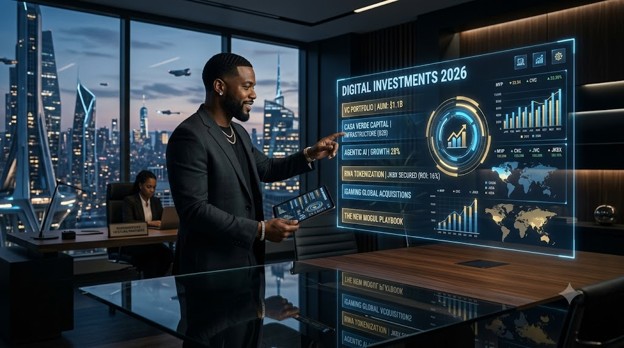
The MarcyPen Leviathan and the Death of the Brand Ambassador
The days of a rapper posing with a vodka bottle for a two percent equity sliver are officially dead. Let’s be real; the 2026 venture landscape demands actual institutional leverage. Shawn “JAY-Z” Carter figured this out years ago, but the recent evolution of Marcy Venture Partners into MarcyPen Capital Partners changes the math entirely. A $1.1 billion AUM vehicle does not just write small syndicate checks. The firm dictates terms as a lead investor.
Carter and Robbie Robinson recently orchestrated MarcyPen Asia, an aggressive joint venture with South Korean heavyweight Hanwha Asset Management. They did not just walk into Seoul and ask for a seat at the table. MarcyPen demanded and secured a 60 percent majority stake. Hanwha handles the local regulatory nightmares and domestic networks, while MarcyPen scales K-culture and Western consumer brands across a massive trans-Pacific pipeline. The reality is that hip-hop’s cultural equity is now a macroeconomic force, moving far beyond the domestic United States market. South Korea’s cosmetics exports alone cracked $10.2 billion back in 2024, and MarcyPen Asia is positioned right at the nexus of American marketing muscle and Asian manufacturing velocity.
B2B Isolationism: Snoop’s Toll Booth Strategy
Retail cannabis remains an absolute bloodbath of fragmented state laws, brand commoditization, and black-market margins. Casa Verde Capital—co-founded by Snoop Dogg, Karan Wadhera, and Ted Chung—knows this better than anyone on Sand Hill Road. You will never see the firm touch consumer-facing weed brands. They buy the infrastructure instead. Dutchie, Eaze, and LeafLink represent the digital toll booths of the entire cannabis industry. Dispensaries have to use this software whether they are highly profitable or actively going bankrupt. Snoop’s cultural authenticity brings top-tier founders to the table; however, the fund’s deployment strategy is ruthlessly corporate.
Casa Verde essentially built an iron wall between its returns and retail volatility. The catch? Discipline is required to ignore the flashy dispensary deals. Snoop’s personal portfolio (packed with early tech hits like Robinhood, Klarna, and MoonPay) proves he intuitively understands the backend plumbing of modern digital finance. He recognizes that the picks and shovels generate the most reliable yield during a gold rush.
Cultural Arbitrage Graduates to Deep Tech
Nasir Jones and QueensBridge Venture Partners built their reputation on a specific kind of street-level intuition. Robinhood and Ring solved immediate friction points for underserved communities long before the broader venture consensus woke up to the total addressable market. Look closer at their 2025 and 2026 cap tables, however, and a completely different narrative emerges. The seed-stage cultural bets have matured into massive, late-stage enterprise rounds. We are talking about $260 million Series E checks for legal tech like Filevine and heavy capital injections into ophthalmic therapeutics via Spyglass Pharma.
Nas is no longer just picking the next cool consumer app. QBVP sits alongside institutional giants like Redmile Group and NEA, moving serious weight in highly regulated, capital-intensive life sciences. The transition from cultural arbitrage to deep-tech syndicate lead is fully complete. They recognized early that massive cultural reach provides a safety net to take heavier swings in highly technical sectors.
Agentic AI and the Distribution Moat
Artificial intelligence is currently burning through $300 billion in global venture capital, yet customer acquisition remains the absolute bottleneck. A pristine large language model means absolutely nothing if marketing costs bleed the startup dry. Meek Mill just raised a $20 million Series A from a16z for “The Liberty Line,” locking in an estimated $100 million post-money valuation. The specific technical details are fiercely guarded, but venture capitalists genuinely do not care. Investors know a massive built-in audience bypasses traditional digital marketing friction. Will.i.am took a highly calculated, alternative route with FYI.AI and its educational arm, EDU.FYI. His 16-week course at Arizona State University teaches non-engineers how to build autonomous AI systems using synthetic voice prompts. The rapper brought in heavyweights from OpenAI and Nvidia to bridge the gap between elite engineering and community application. This academic integration secured a highly defensible B2B and government pipeline, insulating his company from the brutal consumer AI application wars.
The ‘Anti-Label’ Eats the Ad Agency
Kendrick Lamar and Dave Free fundamentally inverted the corporate food chain with pgLang. Historically, major corporate brands hired musical artists as talent to endorse products. Project 3 Agency, pgLang’s recently launched global creative house, acts as the agency of record itself. They acquired the international studio Frosty in 2025 and immediately began capturing the massive margins historically hoarded by Madison Avenue.
Lamar is not generating intellectual property for a corporate platform to exploit. He owns the actual infrastructure that commercializes the culture. It is a ruthless, brilliant extraction of enterprise value that entirely decouples an artist’s wealth from streaming royalties. The agency secures diverse, high-margin revenue streams on its own uncompromising terms through independent vendor contracts and strategic partnerships.
Surviving the Web3 Slaughter to Securitize Royalties
The 2021 music NFT craze was an unmitigated disaster of unregistered securities and speculative hype. Sound.xyz shut down its core marketplace in January 2026, and Royal.io collapsed under the regulatory weight of the Howey Test. Speculators simply wanted to flip digital assets for a quick profit, not support artists long-term. Frankly, the required liquidity evaporated the moment the macroeconomic climate tightened. The void was quickly filled by SEC-compliant, real-world asset tokenization.
JKBX leads this space, utilizing Regulation A+ to issue fractional royalty shares backed by actual major music catalogs. It functions less like the unregulated wild west of crypto and more like the heavily scrutinized, KYC-compliant digital economies seen on mainstream iGaming platforms like DraftKings Casino. The platform does not sell unregulated tokens; it sells contractual rights to pro-rata income streams. Institutional buyers demand massive discounts on these long-duration cash flows today, especially as streaming platforms constantly lobby to compress mechanical payouts. Yet, JKBX proved that rigorous compliance is the only viable way to scale digital asset marketplaces.
The Subcontinent’s Hyper-Localized Blueprint
India’s hip-hop elite are executing this exact institutional playbook, tailored for a market projected to explode in direct-to-consumer goods and wearable tech. Urban Monkey bootstrapped its way to total market dominance by outfitting Mumbai’s underground cyphers. Yash Gangwal deliberately avoided dilutive venture capital, partnered organically with DIVINE, and transitioned to a pre-paid online model to kill massive cash-on-delivery losses. DIVINE parlayed that localized ecosystem into Gully Gang and recently launched a massive streetwear eyewear collection with Lenskart. Badshah took his capital straight to the longevity sector instead. He joined Norwest Venture Partners to back GABIT, a health-tech startup pushing AI-powered smart rings and voice-based food logging. The man understands that wearable tech and specialized hardware are where the real multiples live in the Indian subcontinent. King realized D2C personal care has insane margins, so he partnered with House of X to launch Blanko. This backend partnership offloaded the supply chain headaches to operational experts, allowing King to hit a ₹1 crore monthly run rate almost instantly.
The Cap Table Is the New Billboard
The era of the vanity check is definitively over. Rap’s financial elite no longer seek validation through proximity to Silicon Valley; they are actively underwriting its future. The playbook is rigid but wildly effective. You isolate risk in B2B infrastructure, command the creative agency of record, and force strict regulatory compliance on digital assets. Anyone still fighting for a bigger cash advance from a legacy record label is entirely missing the plot. The real leverage lies in owning the digital plumbing, and in 2026, the culture holds the master key.

Guest Account for Paid And Sponsored Content on Raptology.com. Posts by Guest Authors are independent of our regular editorial content.






Leave a Reply