
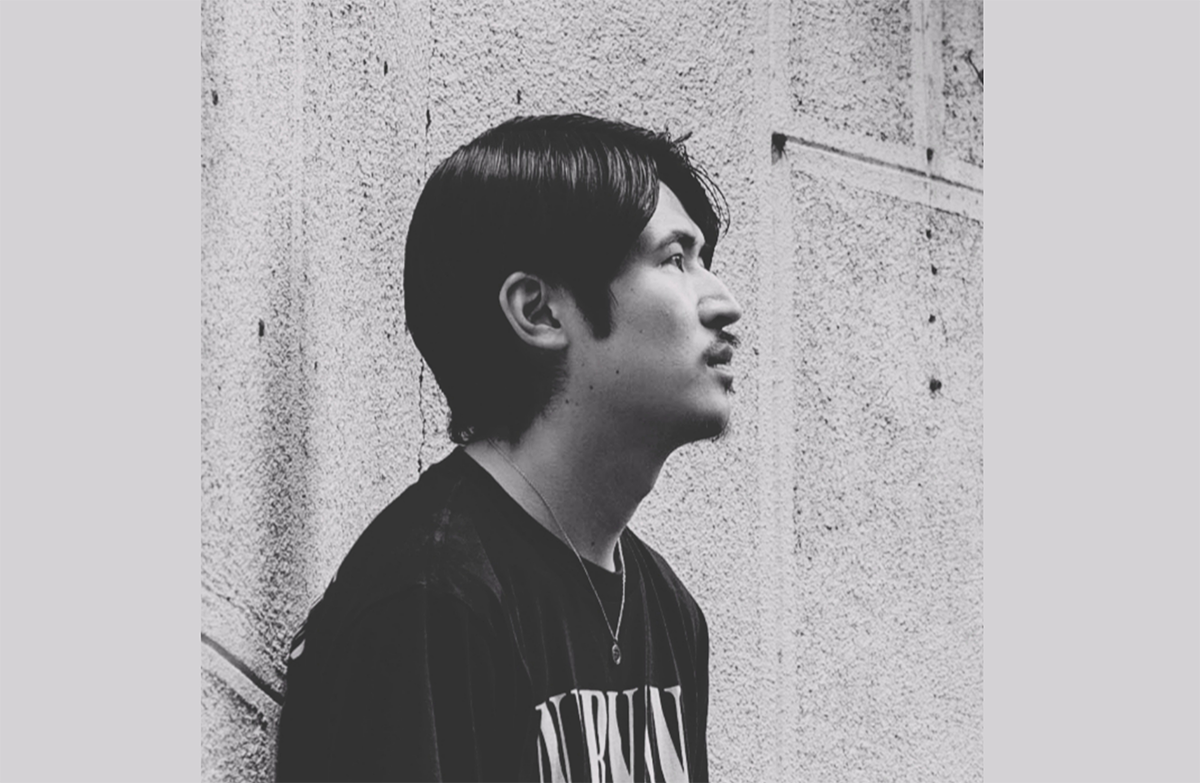
The Japanese independent hip-hop artist explores the tension between wanting success and learning to let go of what holds him back.
For Japanese independent hip-hop artist GranMon, ambition and self-reflection are not opposites.
He wants success. He wants to perform in bigger venues. He wants his music to reach more people and create a lasting impact. At the same time, he has become increasingly aware of how easily the desire for recognition can become a burden.
That tension sits at the heart of two of his recent works, “Kaika” and “Mu no Kyouchi.”
Rather than presenting a simple story of overcoming doubt, GranMon’s music captures something more complicated: the desire to reach the highest level while learning how to separate genuine ambition from the need for constant approval.
“Kaika” – Growing Without Losing Yourself
“Kaika,” meaning “blooming” or “blossoming,” is a deeply personal reflection on change, self-doubt, ambition, and the desire to move forward.
The song begins from a place of sensitivity. GranMon describes a sensitive inner sensor reacting to negativity and the pressure surrounding him. As those feelings build, he reaches a point where he has to decide whether to surrender or break the cycle.
The answer is clear: “Don’t lose to yourself.”
Throughout the song, GranMon confronts the parts of himself that have held him back. He reflects on the past 29 years of his life, his struggles with overthinking, and the cost of constantly seeking approval.
But “Kaika” is not a song about giving up ambition. Quite the opposite.
GranMon openly talks about aiming for the highest level, making his venues bigger, gaining support through his sound, and creating emotion through his music.
He is still chasing success.
What changes is why he wants it.
Instead of allowing the desire for approval to control him, he wants to create something meaningful enough that recognition becomes a result of the work rather than the reason for it.
That idea is captured in the image of seeds scattered everywhere, waiting to bloom.
The song’s recurring vision is optimistic but impatient: the seeds have been planted, success is somewhere ahead, and GranMon is ready to meet it.
He even admits that patience does not come naturally to him. He wants the dream to become reality now.
That restlessness is part of the song’s character.
“Mu no Kyouchi” – Clearing the Noise
If “Kaika” is about moving toward the future, “Mu no Kyouchi” looks inward.
The title can be understood as “the state of nothingness,” but the concept is not about becoming empty or abandoning ambition.
Instead, GranMon explores what happens when unnecessary noise is removed.
The song begins with an observation about familiar things and unfamiliar forms. What is familiar can become still and predictable, while the unfamiliar can move, change, and reveal new possibilities.
For GranMon, boredom becomes something to fight against.
He describes life almost like a vast program: how much boredom can we remove from it? That curiosity extends into his own identity.
He questions the idea of presenting a false version of himself, recognizing that when the image is disconnected from reality, words and actions can begin to feel dishonest.
So he chooses to strip away the appearance. To remove the unnecessary layers.
To confront his own immaturity and weakness.
The song also acknowledges darker moments. Lack of emotional space can expose weakness, while negative impulses can quietly grow inside the mind.
But instead of running from those feelings, GranMon turns toward creation. He records the works that live inside him.
He searches for something that feels genuine.
He describes his artistic philosophy as expressing a beautiful, rough-edged honesty — a rawness reminiscent of rock music, translated through his own hip-hop language.
The goal is not to become detached from life. It is to become more conscious of it.
The repeated idea of “gaining the state of nothingness, discarding the madness, and shortening the distance to the dream” captures the central idea of the song.
Let go of what is unnecessary. Clear the mind.
Move closer to the dream.
Two Sides of the Same Journey
“Kaika” and “Mu no Kyouchi” approach GranMon’s journey from different directions.
“Kaika” looks outward: toward success, bigger stages, recognition, and the future he wants to create.
“Mu no Kyouchi” looks inward: toward self-awareness, emotional control, creativity, and removing the things that interfere with that future.
Together, they reveal an artist who is not trying to choose between ambition and inner peace. He is trying to find a way to pursue both.
GranMon does not pretend that recognition does not matter. He wants his music to be heard.
He wants to create an emotional response.
He wants more people to stand behind his sound. He wants to reach the highest level.
But he is also questioning what happens when the desire for recognition becomes more important than the work itself.
That distinction is central to his current artistic direction. The goal is not simply to be seen.
The goal is to create something worth seeing.
For an independent artist from Japan, that means building a path on his own terms while continuing to challenge himself creatively.
There is no perfect ending to the story yet. There is still doubt.
There is still impatience.
There are still moments when negativity gets in the way. But there is also movement.
The seeds have been planted. The dream remains in sight.
And GranMon is still moving toward it.
“Kaika” is the bloom.
“Mu no Kyouchi” is the process of clearing the ground.
Together, they represent an artist learning to remove what holds him back without removing the ambition that drives him forward.
Spotify:
https://open.spotify.com/intl-ja/track/4aoKIYoo9s0oms4irM2E3i
Lyrics Video:
https://www.instagram.com/reel/DYjf1eQyDS2/

Raphael Fonge is a journalism graduate from Kennesaw State University, where he published several articles in the university’s newspaper. He has released multiple chapters of creative writing, with aspirations to work in the entertainment industry.
Raphael is a member of the KSU Film Club and the Society of Professional Journalists.






















Leave a Reply