


Inside This Featured Profile
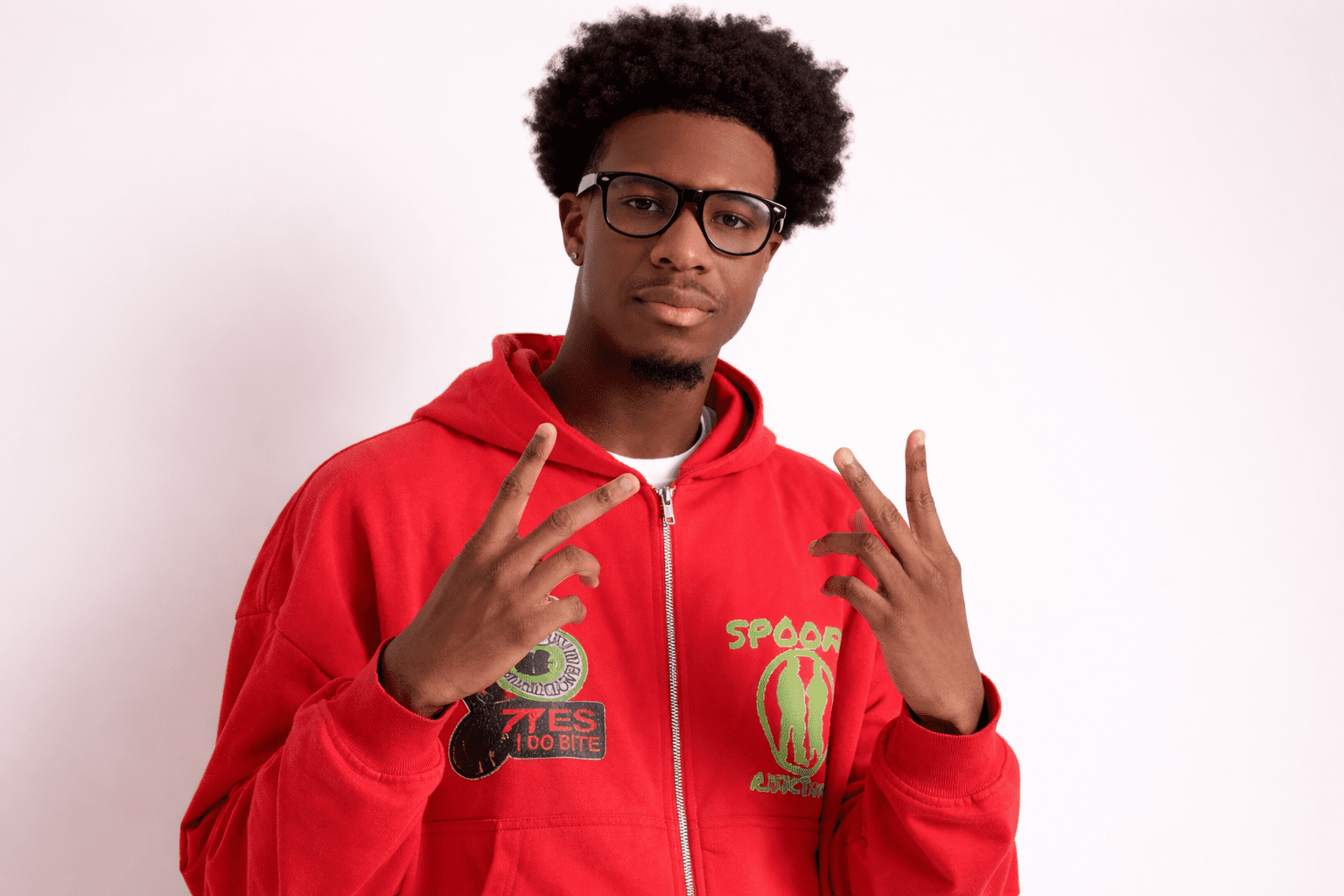
Fakemink is moving fast. Here is the short guide to why his name is suddenly everywhere.
Most rap fans over 30 may still be asking the same question: who is Fakemink? But for younger listeners living on TikTok clips, Spotify rabbit holes, underground Discords, festival lineups, and fashion-coded rap pages, Fakemink already feels like one of the most important new names to watch.
The UK artist has become a rising symbol of where underground rap is heading in 2026. His sound is hazy, melodic, strange, stylish, and internet-native without feeling like a simple trend chase. Fakemink does not move like a traditional rap prospect waiting for one radio single to change his life. He moves like a world-builder, someone whose songs, visuals, clothes, mystery, and fan culture all feed into the same larger image.
That is why his rise matters for Raptology readers. Fakemink is not just another new rapper with playlist momentum. He represents a new kind of artist development, where the co-signs come from global stars, the audience forms online first, and the music lives somewhere between cloud rap, electronic nostalgia, UK underground energy, and the kind of bedroom-made experimentation that no major label could fully manufacture.
Independent Artist? Get Seen By Raptology Readers
Fakemink’s rise shows how quickly a distinctive artist identity can travel online. If you are building your own sound and need more visibility, submit your music to Raptology for editorial consideration.
Submit Your MusicWho Is Fakemink?
Fakemink is a UK rapper, producer, and underground internet artist associated with London’s new wave of experimental rap. He is often described through a mix of cloud rap, internet rap, electronic textures, luxury-coded aesthetics, and left-field youth culture. That description may sound chaotic, but that is also the point. Fakemink’s appeal comes from the way he makes different worlds feel connected.
He is part of a generation that does not draw hard lines between rap, fashion, electronic music, gaming edits, runway imagery, and social-media mythology. His songs can feel raw and unfinished in the best way, like the listener is catching a scene while it is still being built. That looseness gives the music a living quality, especially to young fans who are tired of over-polished industry rollouts.
His name began spreading through underground circles before larger media outlets started paying attention. Complex named him among breakout rappers to watch in 2026, Billboard included him in its 2026 artists-to-watch coverage, and Spotify selected him for its 2026 Artists to Watch list. Those placements matter because they show that his momentum is no longer limited to niche internet spaces.
Why Raptology is covering him now: Fakemink is in the early-stage hype window where search interest is rising, major outlets are noticing, and many casual rap fans are still trying to figure out who he is.
Why Fakemink Sounds Different
Fakemink’s music stands out because it does not sound like it was built for one obvious lane. Some songs lean into cloud rap haze, while others pull from electronic textures, jerk-adjacent movement, blog-era nostalgia, and underground UK cool. Instead of trying to sound like American mainstream rap, he sounds like someone building a parallel universe next to it.
That approach is important because UK rap has often been judged internationally through grime, drill, and road rap frameworks. Fakemink does not fit cleanly into any of those boxes. His appeal is closer to a digital moodboard: designer references, teenage bravado, strange melodies, glossy production, and an emotional weirdness that makes the music feel more personal than the lyrics might suggest at first listen.
For a U.S. rap audience, the closest comparison may not be one specific artist. It is the feeling of early internet eras where scenes formed before the industry understood them. Fakemink has that same quality. By the time mainstream publications explain him, his core fans already feel like they discovered something private.

Why “Easter Pink” Became The Breakout Moment
Every new artist needs a record that gives people an entry point. For Fakemink, that record was “Easter Pink.” The song became one of his most important releases because it translated his strange appeal into something immediately shareable. It had enough melody to travel, enough attitude to feel like rap, and enough texture to separate itself from standard playlist music.
Pitchfork described “Easter Pink” as pulling from late-2000s bloghouse and early-2010s cloud rap, which helps explain why the record connected across different listener groups. For some fans, it sounded futuristic. For others, it sounded nostalgic. For the youngest listeners, it simply sounded like their internet.
The song also worked visually. Fakemink’s world is not only sonic. It is clip-friendly, edit-friendly, and image-friendly. That matters in 2026 because songs do not break only through audio anymore. They break through moments, edits, screenshots, reactions, fashion cues, and the feeling that an artist belongs to a scene bigger than one track.
“MAKKA” And The Internet-Crossover Moment
If “Easter Pink” gave listeners an entry point, “MAKKA” widened the world. The collaboration with Ecco2k and Mechatok connected Fakemink to a broader experimental lane that includes internet rap, electronic music, and fashion-adjacent underground culture. For fans who already follow Drain Gang, cloud rap, and electronic-leaning rap spaces, the collaboration made sense immediately.
What makes “MAKKA” important is that it does not flatten Fakemink into a traditional rap prospect. It highlights the opposite. It shows that his future may not depend on chasing a standard rap-hit formula. His strongest lane may be the hybrid space where underground rap fans, electronic listeners, fashion kids, and internet-native audiences overlap.
That is why a song like “MAKKA” can feel more important than chart numbers alone suggest. It strengthens the identity. It tells listeners what kind of world Fakemink is building, and it signals that he can stand next to artists who already understand how to make niche music feel larger than niche.
The Co-Signs: Drake, Frank Ocean, Playboi Carti, And The Fashion World
One reason Fakemink’s name keeps spreading is the co-sign economy around him. Complex highlighted the attention he has received from major cultural figures, including Drake and Frank Ocean, while other coverage and fan discussion have connected his rise to the kind of tastemaker recognition that can move an artist from underground curiosity to broader obsession.
Co-signs can be overrated when the music does not support them, but in Fakemink’s case they helped validate what his fans already believed. Drake’s attention matters because he has spent years platforming artists before they become obvious to the mainstream. Frank Ocean’s attention matters because he rarely engages loudly with new artists, so even a subtle sign of approval can send fans digging. Playboi Carti’s orbit matters because Carti has become one of the most influential figures in youth-driven rap aesthetics.
For an artist like Fakemink, those signals are powerful because his music is built for discovery culture. He does not need every casual fan to understand him immediately. He needs the right people to make listeners curious enough to search, click, and fall into the world.
Why Drake Matters
Drake’s co-signs often introduce underground or regional artists to a global audience. For Fakemink, that attention helped move him from niche conversation to broader rap curiosity.
Why Frank Ocean Matters
Frank Ocean’s taste carries cultural weight because he rarely moves loudly. When fans connect him to a rising artist, it instantly creates mystery and search demand.
Why Gen Z Is Connecting With Fakemink
Fakemink’s rise makes more sense when viewed through Gen Z listening habits. Younger fans do not discover artists the same way older rap audiences did. They are not waiting for radio, XXL covers, BET countdowns, or traditional magazine rollouts. They discover artists through fragments: a 12-second clip, a fan edit, a festival video, a Discord recommendation, a Spotify algorithm, or a friend posting a song with no explanation.
Fakemink’s music fits that environment because it leaves room for interpretation. The songs feel stylish but not sterile. The vocals feel casual but not careless. The production feels familiar and strange at the same time. That combination makes fans feel like they are entering a scene, not just hearing a single.
This is also why his fashion energy matters. In modern underground rap, the clothes, visuals, fonts, colors, and world-building can be just as important as the hook. Fakemink understands that instinctively. He gives listeners something to hear, but also something to screenshot, repost, imitate, and argue about.
More Raptology Featured Stories
The Terrified Era: What Comes Next?
Fakemink’s 2026 momentum is centered around *The Boy Who Cried Terrified* and the larger anticipation around *Terrified*. Pitchfork reported that *The Boy Who Cried Terrified* was announced for January 29, 2026, through EtnaVeraVela, while also noting that a separate *Terrified* album was being teased for 2026. That gives him something many rising artists need: a storyline.
The challenge now is whether Fakemink can turn underground heat into a longer career without losing the weirdness that made people care in the first place. That is a difficult balance. If he becomes too polished, the core fans may feel like the world has been cleaned up. If he stays too obscure, the mainstream may never fully arrive. The next phase will test whether he can expand without becoming predictable.
That tension is exactly what makes him interesting. Fakemink does not feel like a finished product yet, and that may be his greatest advantage. Listeners are not just watching an artist promote an album. They are watching a scene form around him in real time.
Enter The Raptology Rap Contest
Fakemink’s rise shows how quickly a distinctive sound can break through online. If you are an artist with your own lane, the Raptology Rap Contest gives you another way to get discovered.
Enter The ContestWhy Fakemink Belongs On Raptology’s Radar
Raptology covers rap history, breaking stories, and the artists shaping what comes next. Fakemink belongs in the Featured section because he is not simply another name on a playlist. He is part of a broader shift in how rap scenes develop, how young audiences discover artists, and how underground music becomes mainstream without asking permission from traditional gatekeepers.
His rise also creates a useful lesson for independent artists. The goal is not to sound like everyone else. The goal is to build something recognizable. Fakemink’s voice, visuals, production choices, and public mystery all work together. That is why people are not only listening to the songs. They are asking who he is.
That question is the most valuable kind of attention a rising artist can generate. Once listeners start searching the name, the story has already begun.

Frequently Asked Questions
Who is Fakemink?
Fakemink is a UK rapper and producer connected to the new wave of internet-driven underground rap. His music blends cloud rap, electronic textures, fashion aesthetics, and Gen Z digital culture.
What song made Fakemink popular?
“Easter Pink” became one of Fakemink’s key breakout records. The song helped introduce more listeners to his sound and became a major entry point into his catalog.
What is “MAKKA”?
“MAKKA” is a collaboration with Ecco2k and Mechatok. The record helped connect Fakemink to a wider experimental rap and electronic audience.
Why is Fakemink getting attention?
Fakemink is getting attention because of his distinctive sound, viral records, underground fan base, major media coverage, festival momentum, and high-profile co-signs.
Reader Poll: What Makes Fakemink Stand Out Most?
Want A Featured Story Like This?
Raptology covers rising artists, independent rappers, producers, DJs, and new voices in hip-hop. If you want your story in front of a rap-focused audience, start by submitting your music.
Submit Your MusicContinue Exploring Raptology

Natalia is a Rap and Hip Hop enthusiast. After graduating from The New School of New York’s Public Relations Program and taking a course in Journalism at Michigan State University, she decided to dedicate her life to the music publishing business and to the discovery of new talent. She helps new artists gain exposure to the masses via online marketing and publications.


















Leave a Reply