
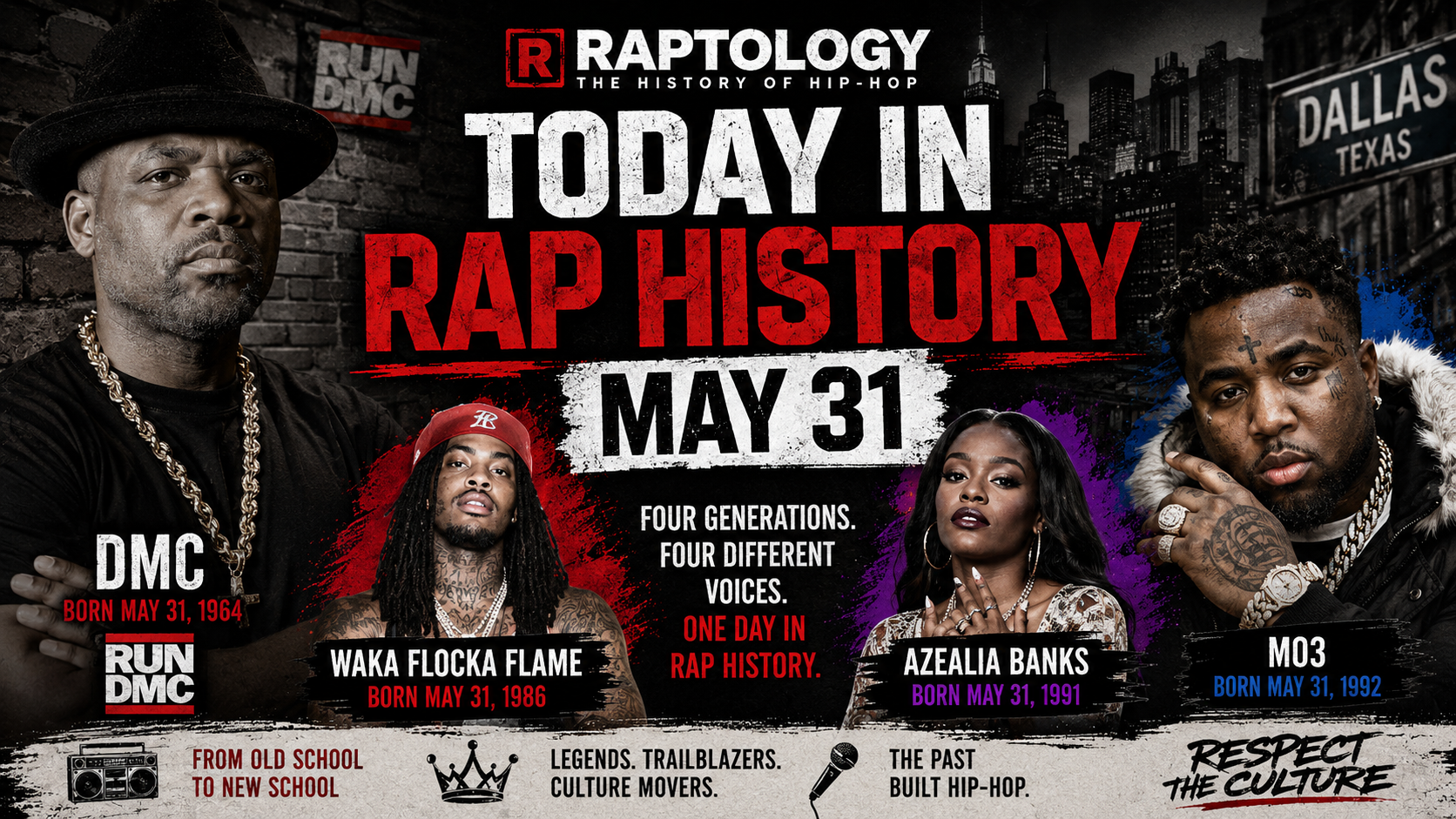
May 31 holds a special place in rap history because it connects several different generations of hip-hop. It is the birthday of Darryl “DMC” McDaniels, one of the founding voices of Run-DMC and one of the artists who helped push rap from New York street culture into the global mainstream. The date also belongs to Waka Flocka Flame, Azealia Banks and the late Dallas rapper Mo3, making May 31 a day that touches old-school innovation, trap energy, internet-era disruption and Southern street storytelling.
What makes this date interesting is the range. May 31 is not just about one artist or one sound. It connects Hollis, Queens to Atlanta’s trap movement, Harlem’s genre-bending blog era and Dallas’ emotional street rap scene. In that sense, the date becomes a small snapshot of how hip-hop keeps reinventing itself while still carrying pieces of its earliest foundation.
Today in Rap History: May 31 is led by the birthday of DMC of Run-DMC, born May 31, 1964. The date also marks the birthdays of Waka Flocka Flame, Azealia Banks and Mo3, giving hip-hop fans a reason to look at how different eras and regions helped shape the culture.
DMC Was Born On May 31, 1964
Darryl “DMC” McDaniels was born on May 31, 1964, and became one of the most recognizable voices in early hip-hop. As a founding member of Run-DMC, he helped create a new blueprint for what rap groups could sound like, look like and represent. The group’s stripped-down production, hard drums, black hats, Adidas sneakers and direct vocal style made them stand apart from the disco-influenced sound that dominated parts of early rap.
Run-DMC helped bring hip-hop into arenas, onto MTV and into the center of American pop culture. Their music proved that rap could be aggressive, minimal, stylish and commercially powerful at the same time. DMC’s voice was a major part of that identity because his delivery carried weight without needing unnecessary flash.
Before rap became a global industry, Run-DMC helped show record labels, television networks and mainstream audiences that hip-hop was not a passing trend. They helped turn the MC into a cultural figure and gave future generations a model for branding, group chemistry, stage presence and crossover success.
Why DMC’s Legacy Still Matters
DMC’s importance goes beyond nostalgia. Run-DMC changed how rap was presented to the world, and their impact can still be felt in modern hip-hop marketing. The idea that a rap act could have a visual uniform, a powerful logo-like identity and a sound that immediately signaled authenticity became part of the music business playbook.
The group’s influence also helped bridge rap and rock audiences. Their work with Aerosmith on “Walk This Way” became one of the most famous crossover moments in music history, but the deeper lesson was bigger than one song. It showed that hip-hop could enter spaces where it had previously been excluded and still keep its own energy intact.
Are You An Independent Artist?
Raptology covers hip-hop history, rising artists and the stories behind the culture. If you are building a release, video, album campaign or artist brand, submit your music for possible coverage and promotion.
Waka Flocka Flame And The Energy Of Modern Trap
May 31 is also the birthday of Waka Flocka Flame, whose rise helped define a loud, physical and high-energy era of trap music. Emerging from the Gucci Mane and Brick Squad orbit, Waka became known for records that were built for clubs, concerts, street speakers and chaotic live performances. His style did not rely on technical lyricism in the traditional sense. It relied on force, instinct and crowd impact.
That approach helped shift the way people understood rap performance in the early 2010s. Songs like “O Let’s Do It” and “Hard in da Paint” were not just singles. They were events, records that turned venues into pressure cookers and made production as important as the verse itself. Waka’s success helped open more space for energy-first rap, rage-ready hooks and trap production that hit with stadium-level intensity.
Waka Flocka Flame’s place in hip-hop history is sometimes underrated because his biggest records were so immediate and physical. But that is exactly why they mattered. He helped prove that raw energy could become its own kind of artistry, especially when matched with the right beats, the right scene and the right movement.
Azealia Banks And The Blog-Era Explosion
Azealia Banks, also born on May 31, represents a different kind of hip-hop impact. Her breakout moment came during an era when blogs, fashion circles, electronic music scenes and rap audiences were starting to overlap in new ways. “212” became one of the defining tracks of that period because it sounded like it came from several worlds at once.
Banks brought Harlem confidence, dance music influence, rapid-fire flow and sharp personality into one package. Her career has also been surrounded by controversy, but her musical impact from the early 2010s remains part of the conversation. She showed how a rapper could move through club music, internet culture, fashion and underground credibility without fitting neatly into one category.
In the larger story of hip-hop, Azealia Banks is a reminder that influence is not always measured only by chart runs. Sometimes it comes from changing the sound of the room, pushing language forward or creating a record that still feels ahead of its time years later.
Remembering Mo3
May 31 is also the birthday of Mo3, the Dallas rapper and singer whose voice carried pain, melody and street experience. Mo3 developed a devoted following by blending Southern rap realism with emotional delivery, and his music often sounded like it was coming from a place of survival rather than performance.
His death in 2020 cut short a career that was still growing, but his catalog continued to reach listeners after his passing. For many fans, Mo3’s music remains connected to grief, loyalty, struggle and the realities of Dallas street life. His ability to sing and rap with urgency made him stand out in a crowded Southern rap landscape.
Including Mo3 in May 31 rap history matters because hip-hop history is not only about the biggest commercial winners. It is also about regional voices who gave their cities a sound and left behind music that fans still return to. Mo3’s story is part of that larger tradition.
May 31 Rap History Timeline
1964: Darryl “DMC” McDaniels is born. He would later become one of the founding members of Run-DMC and one of hip-hop’s early mainstream pioneers.
1986: Waka Flocka Flame is born. His rise through Brick Squad helped define a high-energy era of trap music and Atlanta-adjacent rap culture.
1991: Azealia Banks is born. Her breakout single “212” became a defining record of the blog era and helped merge rap with dance and fashion-world energy.
1992: Mo3 is born. The Dallas rapper later became known for emotionally charged street records and a loyal fan base that continued to support his music after his death.
Raptology Rap Contest
Raptology is built for hip-hop fans and independent artists. If you are an artist looking for visibility, competition and a chance to reach new listeners, check out the Raptology Rap Contest and see how to enter.
Why May 31 Matters In Hip-Hop
May 31 matters because it shows how hip-hop history is built across generations. DMC represents the culture’s foundation and the moment rap became impossible for the mainstream to ignore. Waka Flocka Flame represents the explosive trap era that changed club rap, festival energy and internet-era street music. Azealia Banks represents a period when blogs, fashion and underground dance culture reshaped how rap traveled online. Mo3 represents the emotional Southern street-rap tradition that continues to connect deeply with real listeners.
Together, those names make May 31 more than a birthday list. They show how hip-hop can move from Queens to Atlanta, Harlem to Dallas, early MTV to SoundCloud-era discovery and stadium-level influence to regional street testimony. That is what makes the date worth remembering.
Every day in rap history carries a different lesson. May 31 reminds fans that the culture is not one sound, one city or one generation. It is a living archive of voices that keep reshaping what rap can be.
Reader Poll
Get Featured On Raptology
Raptology covers the past, present and future of hip-hop. If you are an artist, producer, manager or label representative with a story to tell, submit your music and press materials for possible editorial consideration.
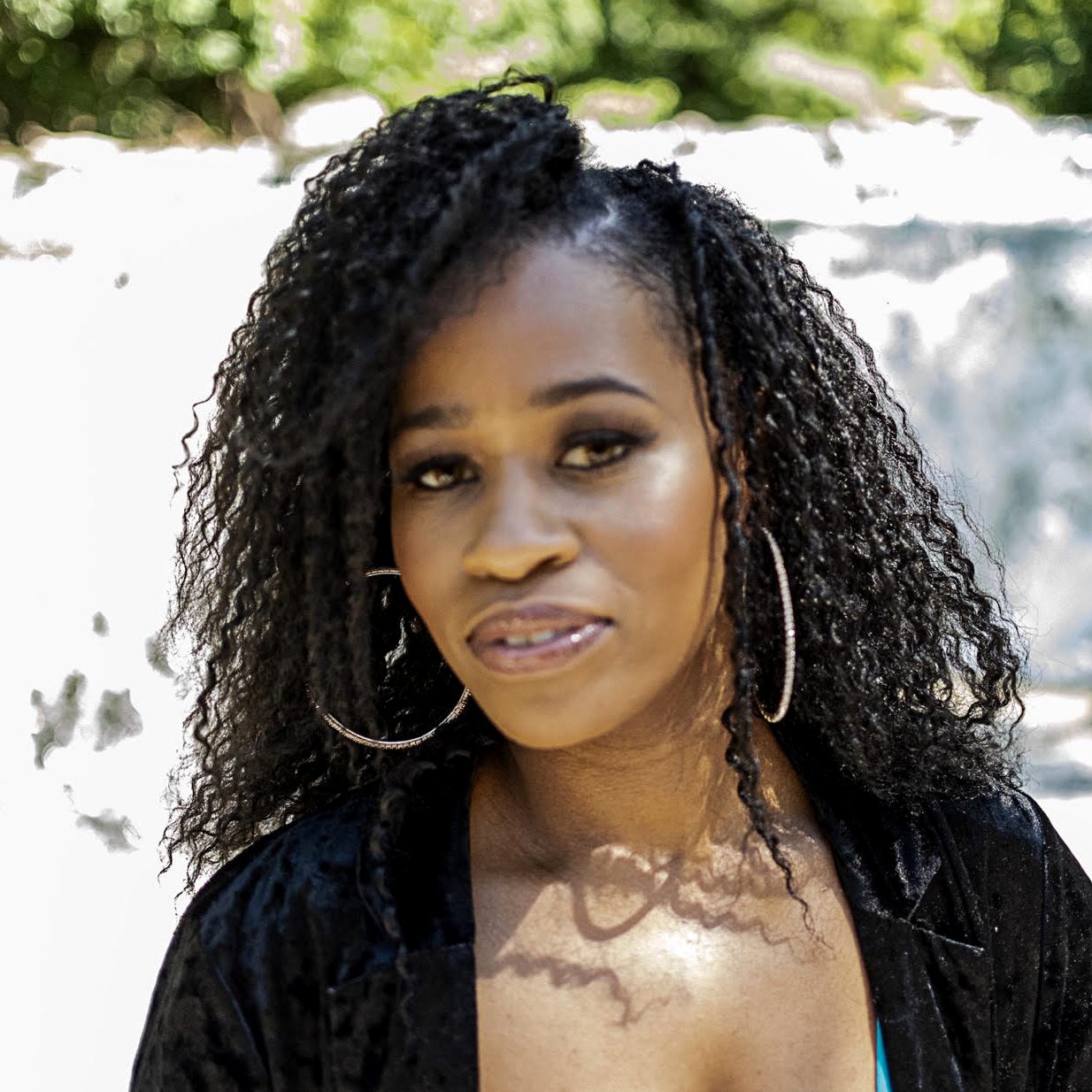
Hulda Hicks was born in Brooklyn, NY in the late ’70s, at the time when Hip-Hop music was just emerging as an art form. Her entire life was influenced by the culture, having grown up in the epicenter of the creative movement.
As a trained musician and vocalist, Hulda got exposed to the industry in her twenties and has worked on projects with iconic figures such as the Chiffons, the Last Poets, and Montell Jordan, to name a few. Her passion for music extended past the stage on to the page when she began to write ad copy and articles as a freelancer for several underground publications.
A written review from “Jubilee Huldafire” is as authentic as it gets, hailing from one creative mind that has a unique voice, on paper and in person.


Leave a Reply