
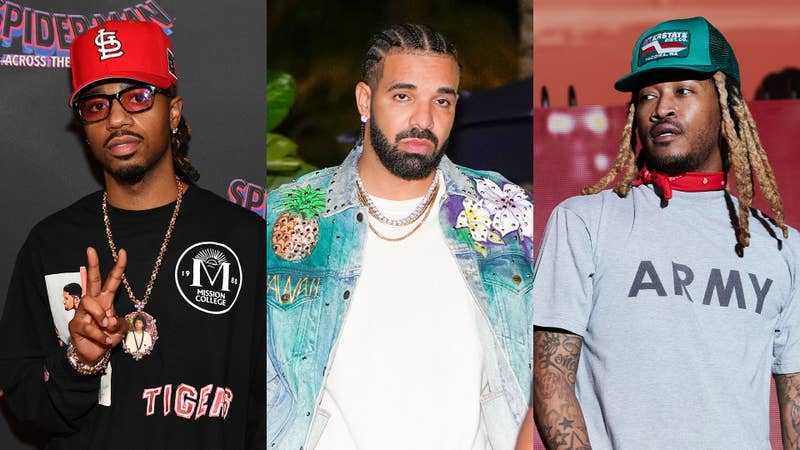
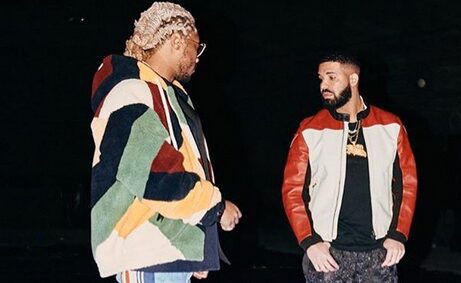
NEW YORK — April 22, 2026 — Drake’s Iceman rollout has kicked open one of rap’s most unresolved tensions again, with fans suddenly re-reading old alliances, resurfacing past comments, and treating every new Drake move like a possible signal aimed at Future and Metro Boomin. In an era when album promotion and rap politics blend almost instantly, that kind of ambiguity is exactly what keeps a story alive.
The rollout itself is real. Drake has officially confirmed Iceman for May 15, and that announcement has thrown fresh attention onto a relationship fracture that never really got a clean public ending. Future and Metro Boomin helped define an era alongside Drake, and when that bond cracked, the fallout felt bigger than a routine rap disagreement. It felt like a shift in the power structure at the top of the genre.
What makes this story click is not a fully confirmed new diss record sitting in plain sight. It is the atmosphere around the rollout. When a superstar like Drake returns to full release mode after a very public period of rap warfare, listeners do not just wait for songs. They wait for subtext. They listen for bitterness, coded references, broken friendships, and any line that sounds like it was written with unfinished business in mind.
That is exactly why Future and Metro Boomin are back in the same conversation. Metro previously described the break with Drake as something personal that genuinely hurt him, which gave the fallout emotional weight beyond ordinary rap competition. Future, meanwhile, mostly sidestepped the drama publicly, and that refusal to fully unpack the situation has only made fans more obsessed with trying to decode it on their own.
Why this tension still matters
- Drake’s Iceman rollout has revived scrutiny around old alliances and unresolved fallout.
- Future and Drake were once one of rap’s most commercially powerful pairings.
- Metro Boomin’s earlier comments made the split feel personal, not just strategic.
- Because no major public reconciliation has happened, every new Drake release invites fresh interpretation.

That history is why the tension still feels valuable as a news story. Drake, Future, and Metro Boomin were not just names linked by a temporary chart run. Together, they represented a cluster of influence that helped shape the sound, mood, and commercial direction of modern rap. When artists at that level drift apart, fans treat it less like celebrity gossip and more like a power realignment. That is why even silence becomes meaningful. A missing collaboration can say as much as an open shot.
There is also a reason unresolved rap friction tends to last longer online than settled conflict. Closure ends speculation. Distance feeds it. Every vague lyric, every solo move, and every resurfaced interview extends the life of the narrative. That is what Drake’s rollout has done here. It has not proven a brand-new battle is underway, but it has reopened a storyline that never fully cooled off in the public imagination.
For Raptology readers, the bigger angle is not whether one line on Iceman names names. It is whether Drake uses the album to address loyalty, distance, betrayal, or fractured inner circles in a way that fans will immediately connect back to Future and Metro. The moment he leans into those themes, even indirectly, the story gets new oxygen. That is how modern rap coverage works now. The bars land, the internet theorizes, and the narrative starts moving before anyone officially confirms anything.

The industry angle makes the story even stronger. Metro Boomin is not just another artist orbiting the feud economy. He is one of the defining producers of the last decade, and his creative relationship with Future carried huge weight on its own before Drake was factored back into the conversation. Once those lines blurred into open tension, the fallout started feeling like something larger than just bruised egos. It started looking like a fracture inside rap’s upper tier.
That is why the Iceman rollout matters beyond a simple album announcement. It gives fans a new live moment to project onto, analyze, and argue over. It also arrives at a time when rap audiences are more trained than ever to search for hidden intent in rollout clips, single choices, guest appearances, and emotional tone. In other words, the music is only part of the story. The surrounding mood is the other half.

Need more rap fallout coverage?
Raptology’s Featured and News sections stay locked on the stories that keep hip-hop fans talking longest, from rap wars and industry fractures to legal drama and documentary-style breakdowns.
Explore Raptology FeaturedWhat happens next depends on the music. If Drake leans reflective, fans will search for emotional residue. If he leans aggressive, they will search for targets. If he avoids the subject completely, that absence may become part of the headline too. The underlying tension is what makes all three outcomes interesting. With no clean public reset between the camps, the story stays open by default.
That is why this remains one of the more clickable breaking rap news angles right now. It connects a fresh, verified album move to an older conflict that still has emotional and commercial weight. It involves three elite names, a fan base trained to interpret every move, and a rollout environment built for obsessive speculation. Even without a direct new diss, that is more than enough to keep readers locked in.
Reader Poll
Developing angle: if Drake addresses loyalty, betrayal, old friendships, or broken alliances more directly as Iceman approaches, this story could move fast again.

Hulda Hicks was born in Brooklyn, NY in the late ’70s, at the time when Hip-Hop music was just emerging as an art form. Her entire life was influenced by the culture, having grown up in the epicenter of the creative movement.
As a trained musician and vocalist, Hulda got exposed to the industry in her twenties and has worked on projects with iconic figures such as the Chiffons, the Last Poets, and Montell Jordan, to name a few. Her passion for music extended past the stage on to the page when she began to write ad copy and articles as a freelancer for several underground publications.
A written review from “Jubilee Huldafire” is as authentic as it gets, hailing from one creative mind that has a unique voice, on paper and in person.







Leave a Reply